Cycle syncing is often presented as a colourful calendar of food, exercise and work rules. This guide takes a more flexible approach: understand the cycle, notice your own experiences and try one manageable change. You do not need to reorganise your whole life or buy a supplement bundle.
What cycle syncing is—and its limits
Cycle syncing describes organising food, movement and everyday routines around menstrual-cycle changes. The term became popular through Alisa Vitti and WomanCode. Oestrogen, progesterone, FSH and LH change during an ovulatory cycle, but that fact does not establish a prescribed menu or workout for each day.
The NHS explanation of the menstrual cycle provides the physiological background. People may notice appetite, sleep or other changes, with considerable individual variation. A cycle phase does not reliably predict your mood, productivity or personality.
Cycle syncing is not a treatment for PCOS, endometriosis, thyroid disease or missing periods. It is not a rule to eat six foods on day 14 or avoid strength training on day 22. Studies of individual nutrients or cycle-related changes cannot validate the whole method. At most, use the framework to organise observations and meal ideas without treating it as an exact science.
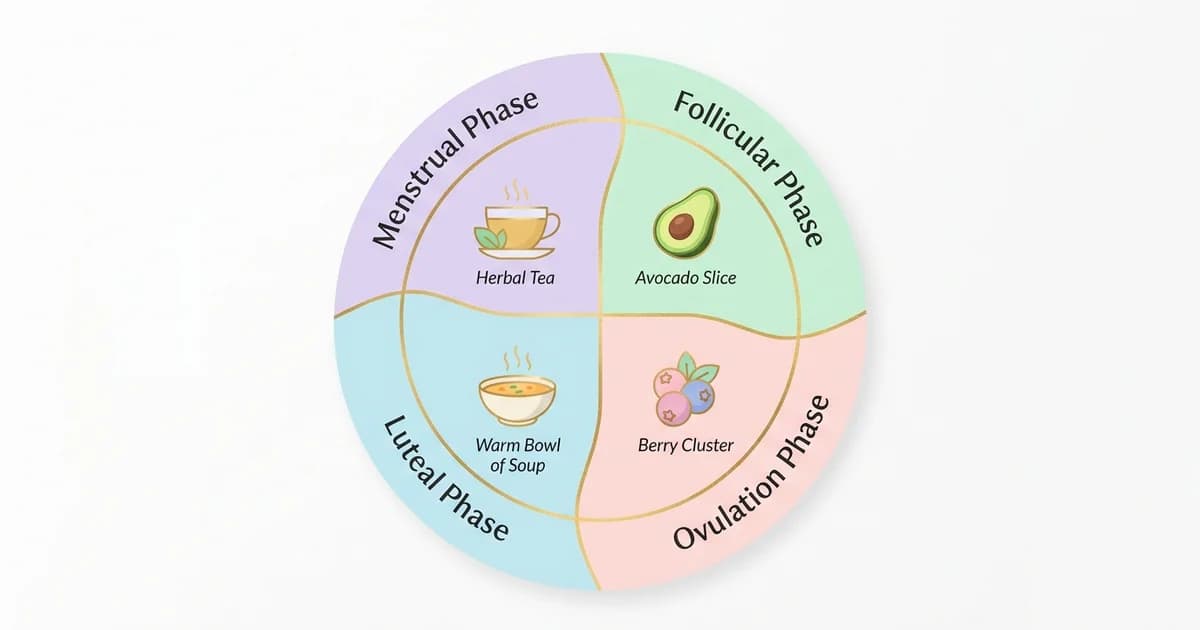
The four phases in plain language
The familiar 28-day diagram is an illustration. Actual timing varies, and menstruation overlaps biologically with the follicular phase. Ovulation is an event; “ovulatory phase” usually means the days around it in a food guide.
1. Menstruation: beginning on day one of bleeding
Oestrogen and progesterone fall before bleeding and the uterine lining is shed. Some people feel tired or have cramps, while others feel relief from premenstrual symptoms. Neither experience is compulsory.
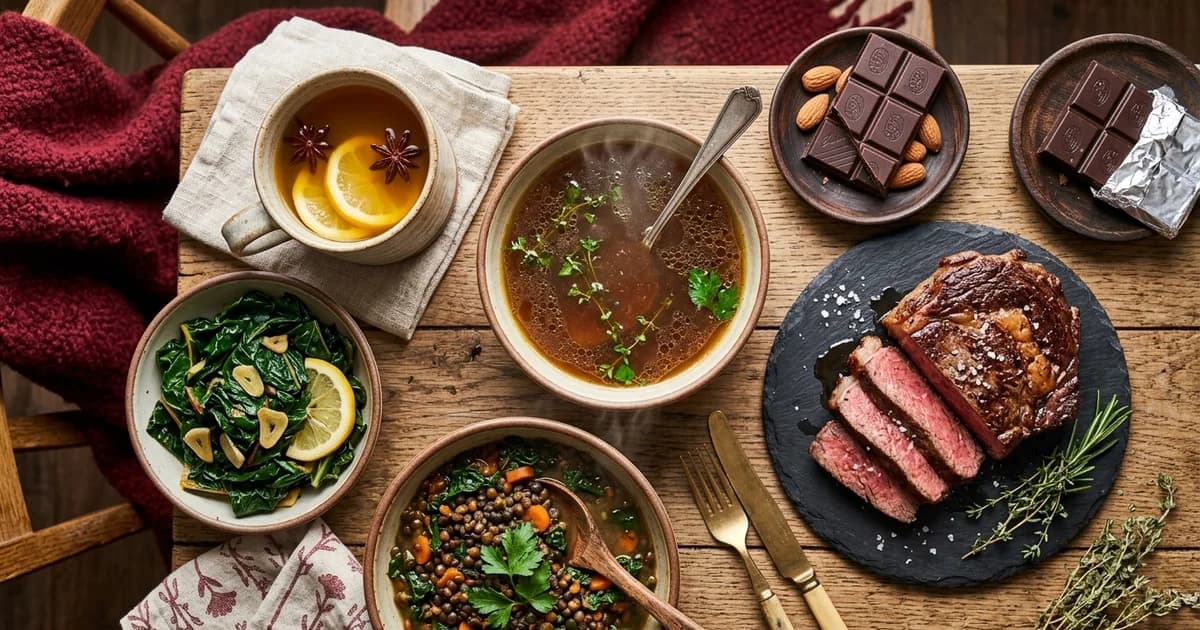
Food ideas: lentils, millet, greens or beef if you eat it can contribute iron. Pair plant sources with vitamin-C-containing foods. Menstrual blood loss can contribute to iron needs, particularly with heavy bleeding, but it does not automatically diagnose deficiency. The NIH iron fact sheet explains absorption and risk factors.
Warm oats, soup or stew may be comfortable choices. Ginger can flavour food or tea, but supplement research does not mean a cup treats cramps. There is no general ban on cold meals, salad or spice; adapt to tolerance. Read more about food during menstruation.
2. Follicular phase: from bleeding to ovulation
FSH helps follicles develop and oestrogen generally rises before ovulation. Guides often focus on the days after bleeding, but the phase does not begin only on day six. Feeling more energetic, social or mentally sharp is not universal, and a phase does not make carbohydrates newly “allowed”.
Food ideas: vegetables, grains, legumes, protein sources and fruit. Sauerkraut, kimchi, yoghurt or kefir are optional fermented choices if enjoyed and tolerated. Sprouting is not required for nutrient absorption; follow food-safety guidance and cook sprouts thoroughly. There is no established daily fermented-food dose for clearing oestrogen.
You can try a new recipe whenever it fits your day, without assuming the gut handles raw foods better in this phase. See follicular food ideas.
3. Ovulation: timing varies
Hormonal signals, including an LH surge, lead to an egg being released. A calendar alone cannot confirm this or set it to day 14. Appetite, mood and energy may vary without identifying the ovulation day.
Food ideas: berries, citrus, colourful vegetables, broccoli, cauliflower, avocado and nuts offer variety. Include protein and enough food rather than eating less because a guide calls this a “light” phase. Salmon provides EPA/DHA; flaxseed mainly provides ALA, so they are different omega-3 sources. Fluids and fibre are relevant throughout the month, not a detox programme for an oestrogen peak.
Explore food around ovulation for meal examples.
4. Luteal phase: after ovulation
The corpus luteum produces progesterone. If pregnancy does not occur, hormone levels fall before the next period. Some people experience cravings, bloating, breast tenderness or mood symptoms; severe symptoms deserve care.
The review of cycle-related energy intake, PMID 36367830, describes variable findings. It does not prescribe every person 100–300 extra calories or a fixed carbohydrate increase.
Food ideas: sweet potatoes, oats, quinoa, rice and legumes can make substantial meals. Pumpkin seeds, cashews, almonds, cocoa, bananas and greens contribute nutrients in different amounts. Include protein and respond to hunger, but do not expect a recipe to stabilise serotonin or prevent all cravings. Magnesium’s normal biological role does not make supplementation compulsory.
Try ten luteal recipes or our PMS guide with ten recipes.
A realistic first week
Days 1–3: observe without buying or changing anything
Write a few notes about energy, hunger and mood in the morning or evening. Record the first day of bleeding and, if useful, sleep and rough meal notes. Words such as high, medium and low are enough; a 1–5 scale is another option. These are days of your first observation week, not necessarily cycle days one to three.
A notebook, calendar or notes app works. Tracking does not need to be exhaustive, and stop or simplify if it becomes stressful.
Days 4–5: consider where you might be
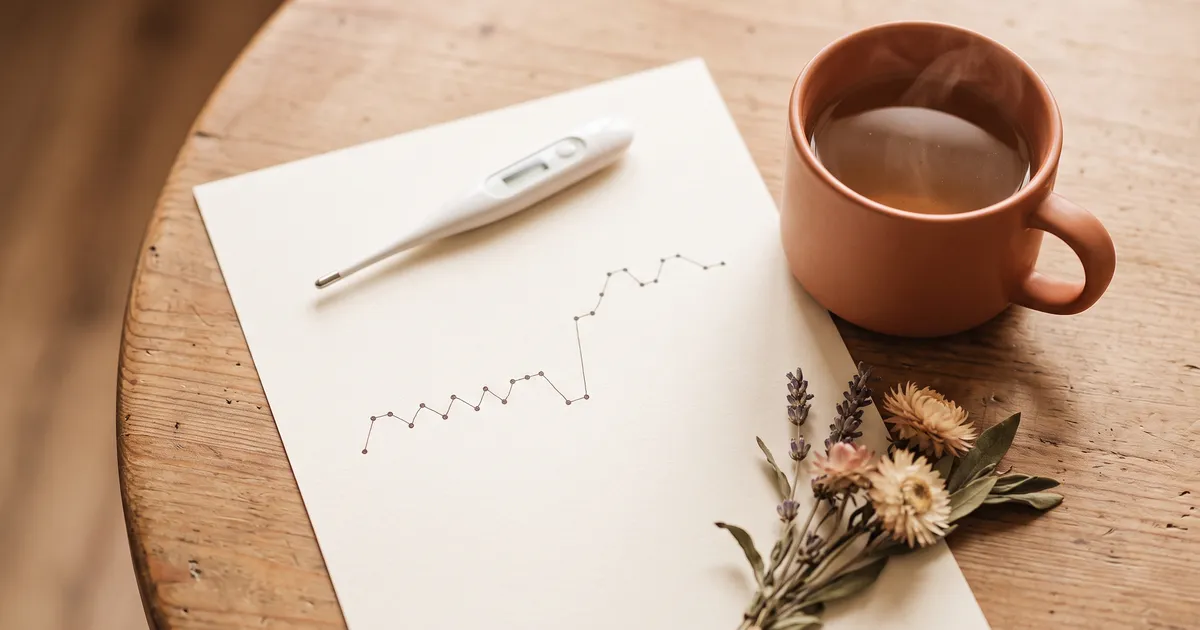
Count from the last period and look at the information you have. Bleeding identifies menstruation, but later phases cannot be confirmed from a day number alone. LH tests, cervical mucus observations and basal temperature have different uses and limitations; buying them is not necessary for choosing a meal.
The cycle phase calculator provides an estimate. Read basal temperature basics if you want more detail. Neither this meal framework nor a calendar is contraceptive guidance.
Days 6–7: change one manageable thing
Choose breakfast, for example: yoghurt with berries and flaxseed, or warm oats with banana and cashew butter. Our twenty breakfast ideas include quick and make-ahead options. Both breakfasts work on other cycle days too.
Other possibilities for later weeks include adding lemon or pepper alongside lentils, trying a fermented food you like, cooking broccoli with dinner or adding pumpkin seeds to oats. These are options to explore across time, not four phases to complete in one week. There is no need to replace a sweet snack you enjoy simply to satisfy a phase rule.
Keep observations flexible
If useful, continue across more than one cycle. A diary may reveal recurring experiences, but no pattern or benefit is guaranteed after two or three months. Changes in work, illness, sleep or stress can also affect what you notice. Do not delay care while waiting to collect enough data.
What the research can and cannot tell us
Established nutrient functions and cycle physiology are different from evidence for a complete lifestyle protocol. Iron nutrition matters for people who menstruate, but an iron-rich meal is not treatment for diagnosed deficiency. Studies of magnesium or omega-3 supplements cannot establish the effect of a food schedule.
Energy-intake studies report variation; they do not create a personal calorie prescription. Claims that complex carbohydrates reliably improve mood through serotonin, or that specific foods “balance hormones”, need more qualification than social-media charts usually provide. Seed cycling is another example where studies of an ingredient do not test the whole rotation.
For exercise, the systematic review and meta-analysis, PMID 32661839, found low-quality evidence and substantial variation, supporting an individual approach rather than universal phase-based instructions. You do not have to replace a comfortable run with yoga because of your period.
What cycle syncing cannot do
It cannot cure PCOS, correct an underactive thyroid or replace investigation of missing periods. Symptoms that interfere with everyday life deserve assessment. Observation can provide vocabulary for a conversation with a clinician; it cannot prove the cause of fatigue or pain.
Hormonal contraception can alter bleeding patterns and suppress ovulation, depending on the method. Do not assume every method works identically or that a natural four-phase model applies. Food variety and attention to comfort can remain useful without phase labels.
Common mistakes to avoid
Changing everything at once: food, workouts, meetings and sleep do not need a simultaneous overhaul. Begin with one habit if you want to experiment.
Assuming a 28-day cycle: use your own information and accept uncertainty. Even repeated lengths do not confirm ovulation timing.
Expecting results on a deadline: observation is not a treatment trial. No improvement does not mean you failed.
Punishing “wrong” foods: ice cream during bleeding or the same breakfast all month does not break a rule. These are meal ideas, not a test.
Ignoring the basics or symptoms: enough food, rest and appropriate care matter more than an exact vegetable on an estimated cycle day.
Where the Bauchgefühl app fits
Bauchgefühl offers cycle tracking, recipes by cycle phase and articles. It can help organise those resources in one place. A paper journal remains a valid option; it does not become inadequate after three months. Calendar estimates do not automatically detect ovulation, and an app is not required for observing your cycle.
Frequently asked questions
Must I eat completely differently in each phase?
No. Adequate food, protein sources, fats, fibre and variety matter throughout the month. Repeat meals you like. A phase does not require a special food group or a different breakfast.
What if my cycle is irregular?
The food ideas still work, but calendar estimates are less certain. Body signals also have limits. Persistent irregularity, missing periods or changes that worry you deserve medical advice rather than an increasingly detailed food schedule.
Are there studies proving cycle syncing works?
The sources above concern physiology, nutrients or exercise outcomes. They do not establish this whole food-and-lifestyle system as a treatment. Do not infer a proven protocol from one nutrient study.
Should I change my training too?
Adjust to your comfort, goals and any medical advice. There is no requirement to avoid strength training or running in a particular phase. The exercise review supports individual decisions, not a universal monthly plan.
Do I need a particular tracker?
No. A simple calendar or notebook is enough to start. If you choose an app, consider the features and privacy you need; the brand does not make observations more medically certain.
How long until I notice results?
There is no reliable deadline or guaranteed health effect. Recording experiences may be useful on its own. Seek help for concerning symptoms rather than waiting two or three cycles for a food change to work.
Can I use these ideas while taking hormonal contraception?
Yes, as ordinary meal ideas. The phase model may not apply, depending on the method and whether ovulation occurs. Do not force the calendar to match a withdrawal bleed.
Do I need supplements?
No supplement bundle is required. Individual deficiencies or other indications need appropriate advice, not a purchase based on a cycle phase.
Start with a manageable observation or meal idea. Read more about magnesium, seed cycling and PMS. This article is general information and does not replace individual medical care.