The first day of a period may bring cramps, fatigue, digestive changes or little change at all. A warm meal can be comforting if that is what you want, but cold food is not automatically harmful. This guide covers iron, vitamin C, magnesium, omega-3, practical meals and when food advice is not enough.
The essentials
- Menstrual blood loss can contribute to iron needs, especially when bleeding is heavy. It does not automatically diagnose deficiency.
- Choose warm or cold meals according to preference and tolerance, with enough food overall.
- Vitamin C can help absorption of plant iron; the effect is not a fixed multiplier for every meal.
What happens during menstruation?
Oestrogen and progesterone fall before menstrual bleeding, and the uterine lining is shed. The NHS cycle overview explains this sequence. Prostaglandins involved in contractions can also be associated with digestive symptoms. New, severe or persistent pain should not be dismissed as normal simply because it occurs during a period.
Blood loss varies, and measuring it precisely at home is difficult. Heavy bleeding, ongoing fatigue or other concerns deserve assessment. The cause and management of iron deficiency cannot be determined from a menu.
Why choose warm food?
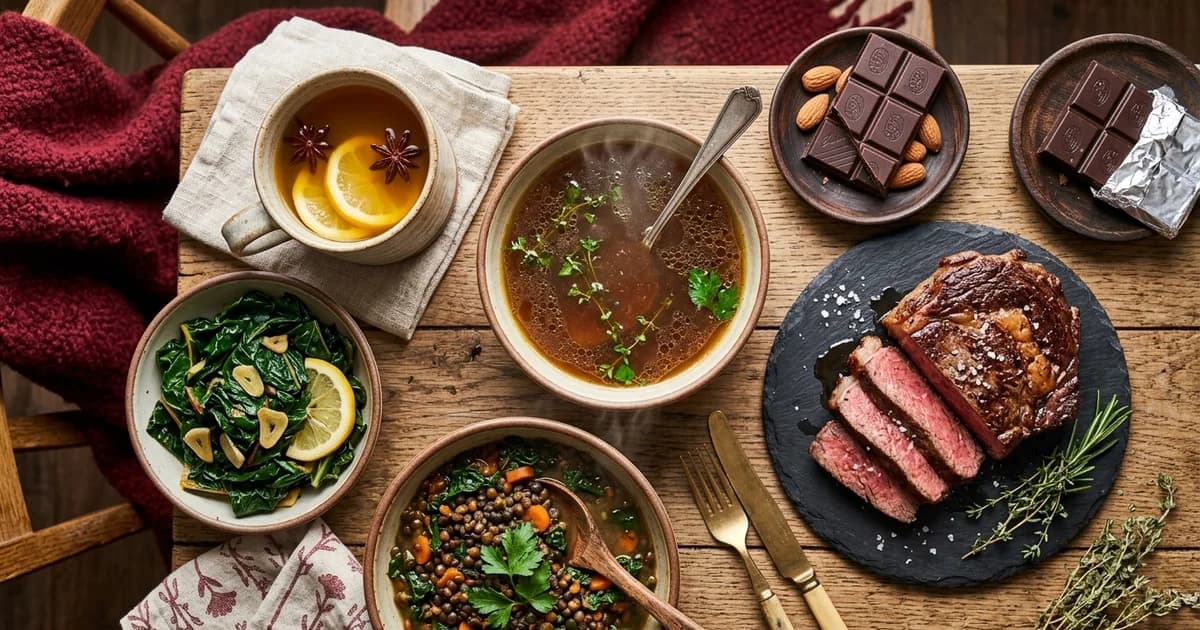
Soup, porridge or stew may feel pleasant and practical, especially when appetite is low. Cooking changes texture and may make some foods easier to tolerate. That is different from saying all cooked food is easier for everyone or that raw food worsens cramps.
Choose what you can comfortably eat. You do not need to wait until day four before having a salad or a cold drink.
Nutrients to consider
Iron
Meat and other animal sources can contain haem iron; plant sources provide non-haem iron. Absorption depends on more than the amount printed in a food table, including the overall meal and iron status.
Lentils, chickpeas, pumpkin seeds, tofu, tempeh, oats, quinoa, amaranth and greens are different plant options. If you eat meat, beef can be another choice. Liver is not a universal recommendation, particularly with pregnancy-related restrictions. Compare foods using the same preparation state: dry lentils and cooked lentils are not equivalent weights.
Vitamin C
Lemon on lentils, pepper beside a bowl or fruit with breakfast can accompany plant iron. The NIH iron fact sheet describes factors affecting absorption. It does not mean a squeeze of lemon guarantees a particular increase for every person.
Things that can affect absorption
Coffee and tea contain polyphenols that can reduce plant iron absorption from a meal. Calcium can also affect absorption in some circumstances. The overall diet and long-term status matter; this is not a reason to remove dairy or every cup of tea. Follow individual timing advice if taking prescribed iron.
Magnesium
Seeds, nuts, oats, greens and cocoa can contribute magnesium. Normal muscle function does not establish that chocolate treats cramps or that everyone should take a supplement during bleeding. Our magnesium guide explains evidence and supplement limits separately.
Omega-3
Flaxseed, chia and walnuts provide ALA. Oily fish and some algae oils provide EPA/DHA, with only limited conversion from ALA. These forms are not interchangeable. Supplement studies do not prove that one meal relieves pain. See omega-3 and the cycle.
Warm meals and a sample day
Breakfast: oats cooked with oat milk, grated apple, pumpkin seeds and almond butter, with flaxseed prepared according to its package.
Lunch: red lentil dal with turmeric, ginger, cumin and coconut milk, served with pepper or lemon. Lentils contribute plant protein as well as iron; portion size and the rest of the meal matter.
Dinner: broth with sweet potato, kale or spinach, a safely prepared egg or other protein, and miso stirred in for flavour. Add bread, rice or another food if needed to make it enough for you.
These are flexible ideas rather than a promise to keep you full for a specified number of hours. Our ten period recipes include complete quantities and steps.
Spices and simple ginger tea
Ginger, cinnamon, turmeric, cumin, fennel, cardamom and black pepper can add flavour. Research into concentrated ginger preparations should not be treated as proof that a homemade tea equals a pain medicine.
For a simple tea, slice a thumb-sized piece of ginger, add boiling water and steep for about ten minutes. Add lemon or honey if you wish. Choose the amount you enjoy and tolerate; no therapeutic number of cups is prescribed.
Drinks
Water, tea and other drinks can fit your needs. Warm drinks may feel comforting, but cold water is not inherently harmful. Heat, activity and medical conditions affect fluid needs. Persistent headaches or excessive thirst deserve more than an assumption of dehydration.
What to adjust rather than ban
Notice whether alcohol, late caffeine, very salty meals or particular foods affect your sleep or comfort. A repeated pattern can be worth discussing, but one dessert or iced drink is not a cause of failure.
Do not replace adequate meals with strict restrictions. If appetite is low, smaller practical meals may work better. If you have a prescribed dietary restriction, follow that individual plan.
When digestion changes too
Some people notice looser stools, constipation or sensitivity around menstruation. Adapt texture and fibre amounts to tolerance and keep drinks available. Magnesium supplements can themselves cause diarrhoea, so they are not a universal digestive solution.
Persistent symptoms, blood in stools or marked changes need assessment. The gut health guide discusses ordinary habits, not a diagnosis.
Frequently asked questions
What should I eat on the first day?
Something you enjoy and can tolerate: porridge, lentil dal, a bowl with vegetables and protein, or a cold meal if preferred. Include enough overall rather than trying to obey a «warm food only» rule.
Which foods must I avoid?
There is no universal menstrual forbidden-food list. Adjust for tolerance, allergies, medical needs and practical comfort. Persistent symptoms should not lead to progressively removing more foods without support.
Does dark chocolate help with cramps?
It contains magnesium and cocoa compounds, but a piece of chocolate is not an established treatment. Enjoy it if you want it without expecting pain relief or choosing a compulsory cocoa percentage.
Why can periods affect iron status?
Blood contains iron, and repeated loss can contribute to deficiency, especially with heavy bleeding. The amount varies. Food may support intake, but diagnosed deficiency or heavy bleeding may require treatment of both the deficit and its cause.
Should I take iron tablets?
Do not start just because you menstruate. A clinician can assess symptoms, blood tests and the need for treatment. Excess iron can be harmful and cause gastrointestinal effects. Follow an individual plan if supplementation is recommended.
For more ideas, see PMS meals, vegetarian iron-source recipes and cycle syncing basics. The app information page describes recipes and cycle tracking without promising symptom relief. This article does not replace medical care for heavy bleeding, severe pain or other concerning symptoms.