Food can be one part of looking after yourself before a period, alongside sleep, movement and medical care when needed. This guide covers five nutrition themes, practical meal planning and ten complete recipes. They are cooking ideas, not a treatment plan or a promise that PMS will disappear.
Why discuss food and PMS together?
PMS can involve physical and emotional symptoms before a period. Its cause is not fully understood, and people respond differently to normal hormonal changes. The NHS overview of PMS describes symptoms, everyday measures and treatment options.
Nutrients have normal roles in nerve function, muscle function and metabolism. That is different from proving that a deficiency explains every symptom or that a particular food will relieve it. The systematic review of nutritional interventions, PMID 38684926, found that more consistent trials and clearer reporting are needed for conclusive recommendations on psychological PMS symptoms.
Five nutrition themes
Magnesium
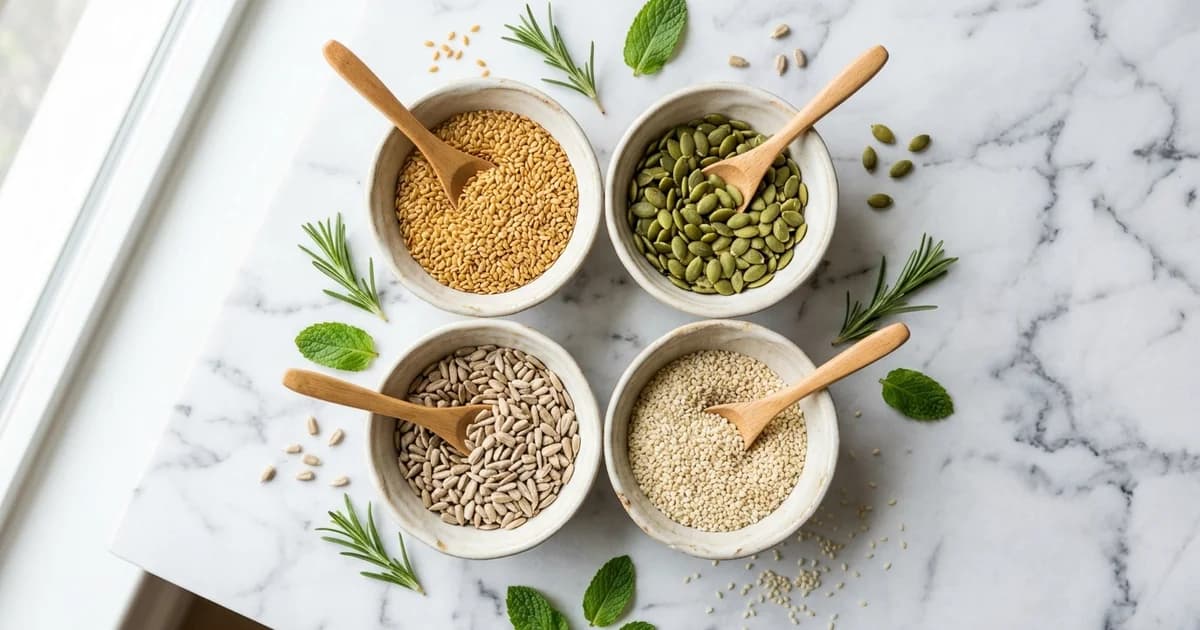
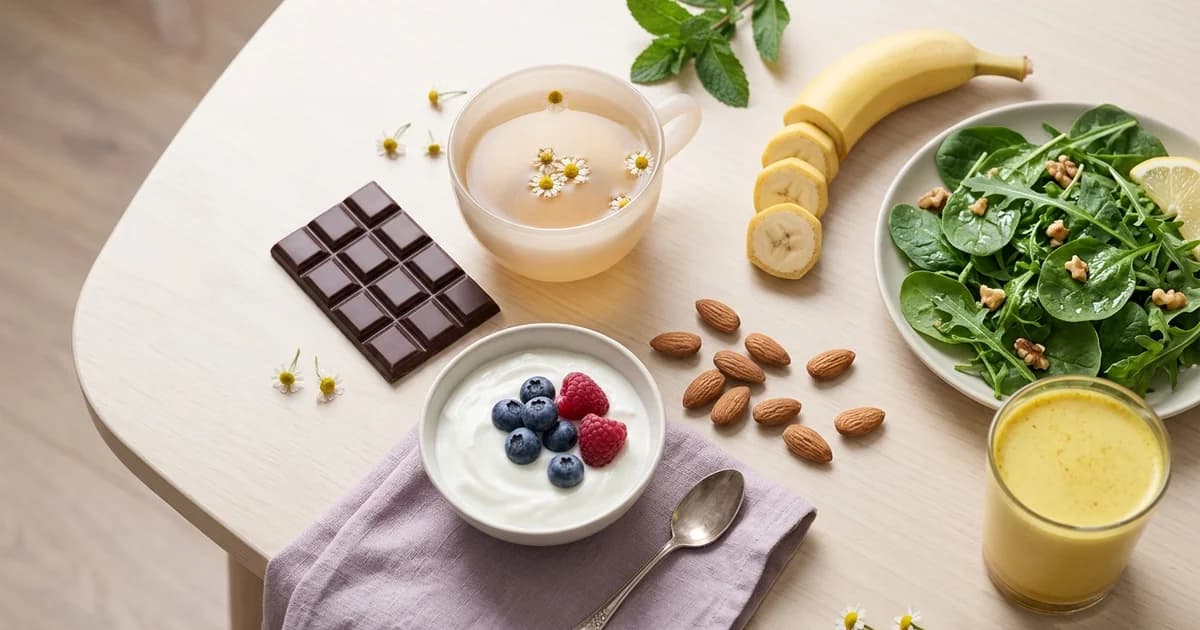
Pumpkin seeds, cashews, almonds, dark chocolate, spinach, oats and bananas can contribute to intake in different amounts. Add them according to taste rather than treating a handful as a therapeutic dose.
Magnesium is involved in muscle and nerve function. Supplement research does not establish that everyone has a luteal-phase deficiency or that a meal prevents bloating. Our magnesium guide separates food, status and the limits of supplement evidence.
Calcium, with vitamin D in the wider picture
Yoghurt, kefir, fortified plant drinks, sesame, almonds, broccoli and kale can contribute calcium. Amounts and absorption differ; check labels for fortification. Dairy is not compulsory if you do not tolerate it.
Calcium has been studied in PMS, but a supplement trial does not make a high-dose product appropriate for everyone. Vitamin D is relevant to calcium metabolism and wider nutritional care; it is not an automatic PMS prescription. Discuss a suspected deficiency or supplement need individually.
Vitamin B6
Chicken, salmon, potatoes, chickpeas, bananas and avocado are examples of B6-containing foods. B6 contributes to normal metabolism and nervous-system function; that does not prove a craving diagnoses deficiency.
The NHS B-vitamin guidance explains supplement precautions. Excess B6 can damage nerves. Do not interpret 100 mg—or another online threshold—as a universally safe dose, and check for B6 in multiple products.
Omega-3 fats
Salmon, mackerel and sardines provide EPA and DHA. Flaxseed, walnuts and chia mainly provide ALA, with limited conversion to EPA/DHA. These sources are not interchangeable gram for gram.
A PMS meta-analysis, PMID 35266254, reported possible benefit from omega-3 supplementation but substantial variation between studies. It does not demonstrate that a serving of fish or nuts treats PMS. See our omega-3 guide for food and supplement distinctions.
Carbohydrates and regular, sufficient meals
Brown rice, oats, sweet potatoes, quinoa and legumes offer starch and other nutrients. Combine them with foods you enjoy for a satisfying meal. Bread, ordinary pasta and dessert do not become forbidden before a period.
Hunger and cravings have several influences. It is too simple to say a craving means your body needs serotonin or that wholegrains prevent every blood-sugar fluctuation. Long gaps between meals may leave you hungry; choose a rhythm that fits rather than forcing an intermittent-fasting window.
Iron and potassium are part of the wider diet too
Lentils, beans, tofu and meat are different iron sources; vitamin C can accompany plant iron. Heavy menstrual bleeding can contribute to iron deficiency, but a menu cannot diagnose or treat it. Read the iron guide.
Bananas, potatoes, beans and avocado provide potassium. Water retention alone does not diagnose a potassium shortage or justify supplements, especially when medical conditions or medicines affect potassium handling.
What might be worth adjusting?
Sugar and snack-only meals: look at the overall pattern. Adding substantial meals may be useful when snacks leave you hungry, but a chocolate bar is not a failure or proof of a harmful “crash”.
Caffeine: notice whether it affects sleep, anxiety or your own symptoms. Cup sizes and sensitivity differ; there is no universal one-cup PMS rule.
Salt: if very salty ready-made foods dominate meals, vary your choices. Cooking can help you choose the amount, but salt is not inherently forbidden and water retention is not always dietary.
Alcohol: consider its effects on sleep and your overall health. There is no special cycle phase in which it becomes harmless. None of these adjustments guarantees relief.
Ten recipes for the days before your period—or any other day
Check serving sizes, timings and allergens on each card. The first five and the following five are distinct recipes; for example, the chickpea curry contains coconut milk while the stew uses passata.
1. Golden Sweet Potato and Lentil Soup
Sweet potato and lentils make a warm soup with ginger and turmeric for flavour. Pumpkin seeds add texture. It is an option for a simple dinner without assigning an anti-inflammatory treatment effect to the spices.
Golden Sweet Potato and Lentil Soup
Ingredients
- 2 medium sweet potatoes, peeled and cubed
- 150 g red lentils, rinsed
- 1 small onion, diced
- 2 cloves garlic, minced
- 1 tbsp fresh ginger, grated
- 1 tsp turmeric
- 750 ml vegetable broth
- 1 tbsp olive oil
- Salt and pepper to taste
- Handful of pumpkin seeds for topping
Instructions
- 1Heat olive oil in a large pot over medium heat. Sauté the onion for 3 minutes until soft.
- 2Add garlic, ginger, and turmeric. Stir for 1 minute.
- 3Add sweet potatoes, lentils, and vegetable broth. Bring to a boil.
- 4Reduce heat and simmer for 20 minutes until lentils and sweet potatoes are tender.
- 5Blend until smooth (or leave partly chunky). Season with salt and pepper.
- 6Serve topped with pumpkin seeds.
Nutrition: 270 kcal · 13 g protein · 38 g carbs · 8 g fat
View recipe →2. Salmon and Avocado Rice Bowl
Combine salmon, avocado, rice and edamame for a bowl with contrasting textures. Cook the fish fully and allow the rice its stated cooking time. These ingredients provide different nutrients without guaranteeing steady energy or mood.
Salmon and Avocado Rice Bowl
Ingredients
- 2 salmon fillets (about 150 g each)
- 200 g brown rice
- 1 ripe avocado, sliced
- 100 g edamame beans
- 1 tbsp soy sauce or tamari
- 1 tsp sesame oil
- 1 tbsp sesame seeds
- Half a cucumber, sliced
- Juice of 1 lime
Instructions
- 1Cook brown rice according to package directions.
- 2Season salmon with a pinch of salt and pepper. Pan-fry skin-side down in a hot pan with a little olive oil for 4 minutes, flip, and cook 3 minutes more.
- 3Toss edamame with sesame oil and soy sauce.
- 4Divide rice into bowls. Top with flaked salmon, avocado slices, edamame, and cucumber.
- 5Drizzle with lime juice and sprinkle sesame seeds on top.
Nutrition: 640 kcal · 40 g protein · 34 g carbs · 38 g fat
View recipe →3. Dark Chocolate and Almond Energy Bites
Cocoa, almond butter, oats and flaxseed make a sweet snack. Make a batch if convenient, refrigerate appropriately and check ingredient storage guidance. The bites do not have to eliminate a craving to be enjoyable.
Dark Chocolate and Almond Energy Bites
Ingredients
- 100 g rolled oats
- 80 g almond butter
- 2 tbsp raw cacao powder
- 2 tbsp honey or maple syrup
- 30 g dark chocolate chips (70%+)
- 2 tbsp ground flaxseed
- Pinch of sea salt
Instructions
- 1Combine oats, cacao powder, ground flaxseed, and salt in a bowl.
- 2Add almond butter and honey. Mix until everything holds together.
- 3Fold in dark chocolate chips.
- 4Roll into 12 small balls. Place on a lined tray.
- 5Refrigerate for at least 30 minutes before eating. Store in the fridge for up to 5 days.
Nutrition: 110 kcal · 3 g protein · 11 g carbs · 6 g fat
View recipe →4. Chickpea and Spinach Curry
Chickpeas, spinach and coconut milk make a rich curry. The spices add flavour, and the legumes contribute protein and fibre. Adjust seasoning to taste and follow the complete card below.
Chickpea and Spinach Curry
Ingredients
- 1 can (400 g) chickpeas, drained and rinsed
- 200 g fresh spinach
- 1 can (400 ml) coconut milk
- 1 small onion, diced
- 2 cloves garlic, minced
- 1 tbsp curry powder
- 1 tsp ground cumin
- 1 tbsp olive oil
- 200 g brown rice or quinoa for serving
- Salt to taste
Instructions
- 1Heat olive oil in a large pan over medium heat. Sauté onion for 3 minutes.
- 2Add garlic, curry powder, and cumin. Stir for 1 minute until fragrant.
- 3Pour in coconut milk and bring to a gentle simmer.
- 4Add chickpeas and cook for 10 minutes.
- 5Stir in spinach and cook for 2 more minutes until wilted. Season with salt.
- 6Serve over brown rice or quinoa.
Nutrition: 680 kcal · 16 g protein · 76 g carbs · 33 g fat
View recipe →5. Banana Oat Pancakes with Walnuts
Banana, oats and eggs form the pancake base, with walnuts for texture. Make small pancakes and cook the centre through. They can be breakfast or a warm snack; no special cycle day is required.
Banana Oat Pancakes with Walnuts
Ingredients
- 2 ripe bananas, mashed
- 2 eggs
- 80 g rolled oats
- 1 tsp cinnamon
- 1 tbsp coconut oil for the pan
- Handful of walnuts, roughly chopped
- Optional: a drizzle of honey or a dollop of Greek yogurt
Instructions
- 1Blend or mash the bananas until smooth. Beat in the eggs.
- 2Stir in the oats and cinnamon. Let the batter rest for 5 minutes.
- 3Heat coconut oil in a non-stick pan over medium heat.
- 4Pour small rounds of batter (about 2 tbsp each). Cook for 2 minutes until bubbles form, then flip and cook 1 more minute.
- 5Top with chopped walnuts and serve with yogurt or a small drizzle of honey.
Nutrition: 490 kcal · 15 g protein · 54 g carbs · 25 g fat
View recipe →6. Banana, cashew and cocoa smoothie
Blend banana, oat drink, cashew butter, cocoa, spinach and flaxseed suitable for this preparation. It is a quick breakfast option when you prefer something drinkable. The ingredients contribute different nutrients, not a guaranteed magnesium treatment.
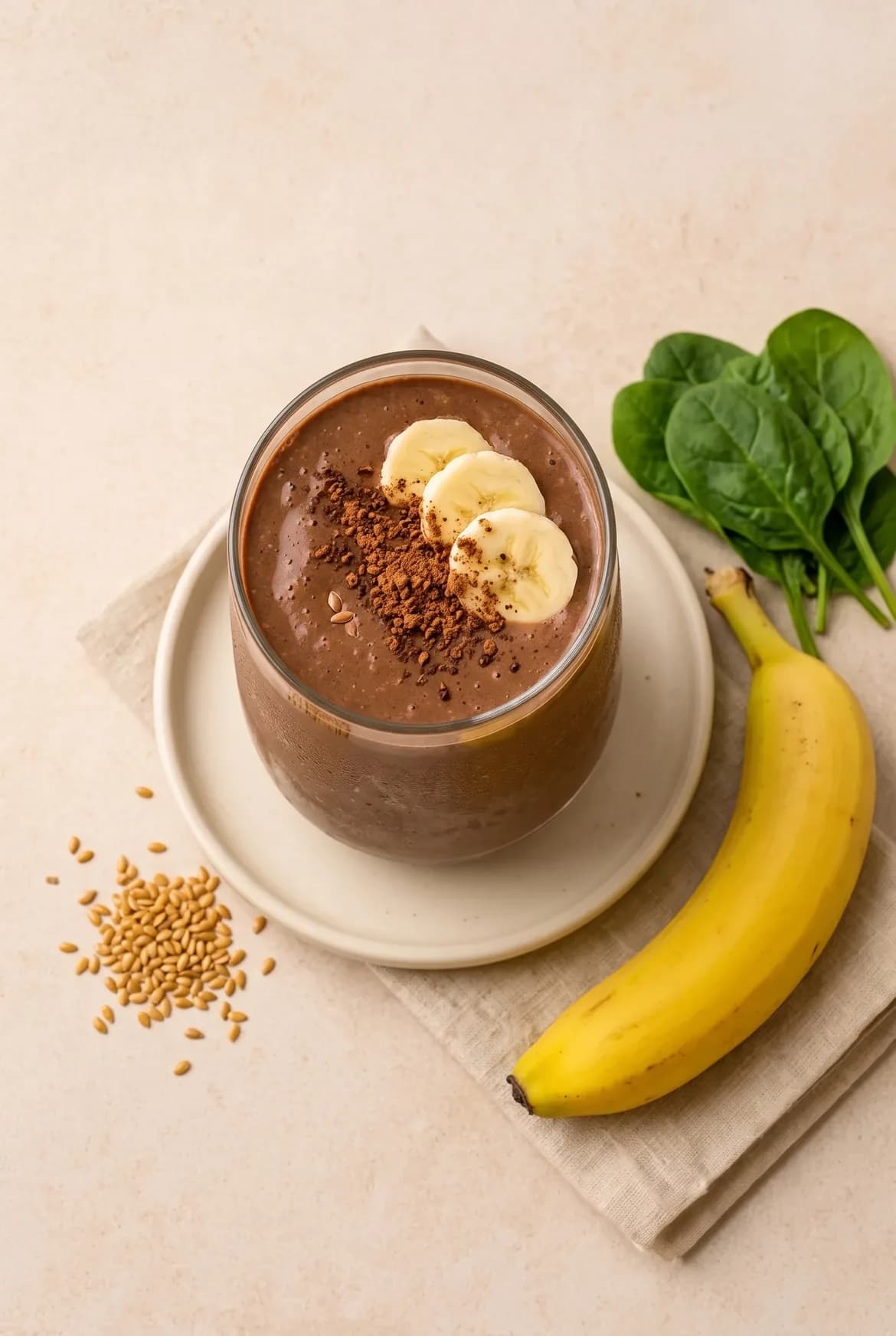
Banana, cashew and cocoa smoothie
Ingredients
- 1 ripe banana
- 200 ml oat drink
- 1 tbsp cashew butter
- 1 tsp unsweetened cocoa
- 1 handful spinach
- 1 tbsp flaxseed
Instructions
- 1Put all the ingredients in a blender.
- 2Blend on the highest setting for 30 seconds until creamy.
- 3Pour into a glass and drink immediately.
Nutrition: 355 kcal · 9 g protein · 48 g carbs · 15 g fat
View recipe →7. Salmon bowl with sweet potato and broccoli
Sweet potato, salmon and broccoli make a bowl that can be prepared in stages. Turmeric adds flavour. Cook the fish fully; if preparing ahead, cool and refrigerate promptly and follow safe storage guidance rather than leaving the bowl at room temperature.
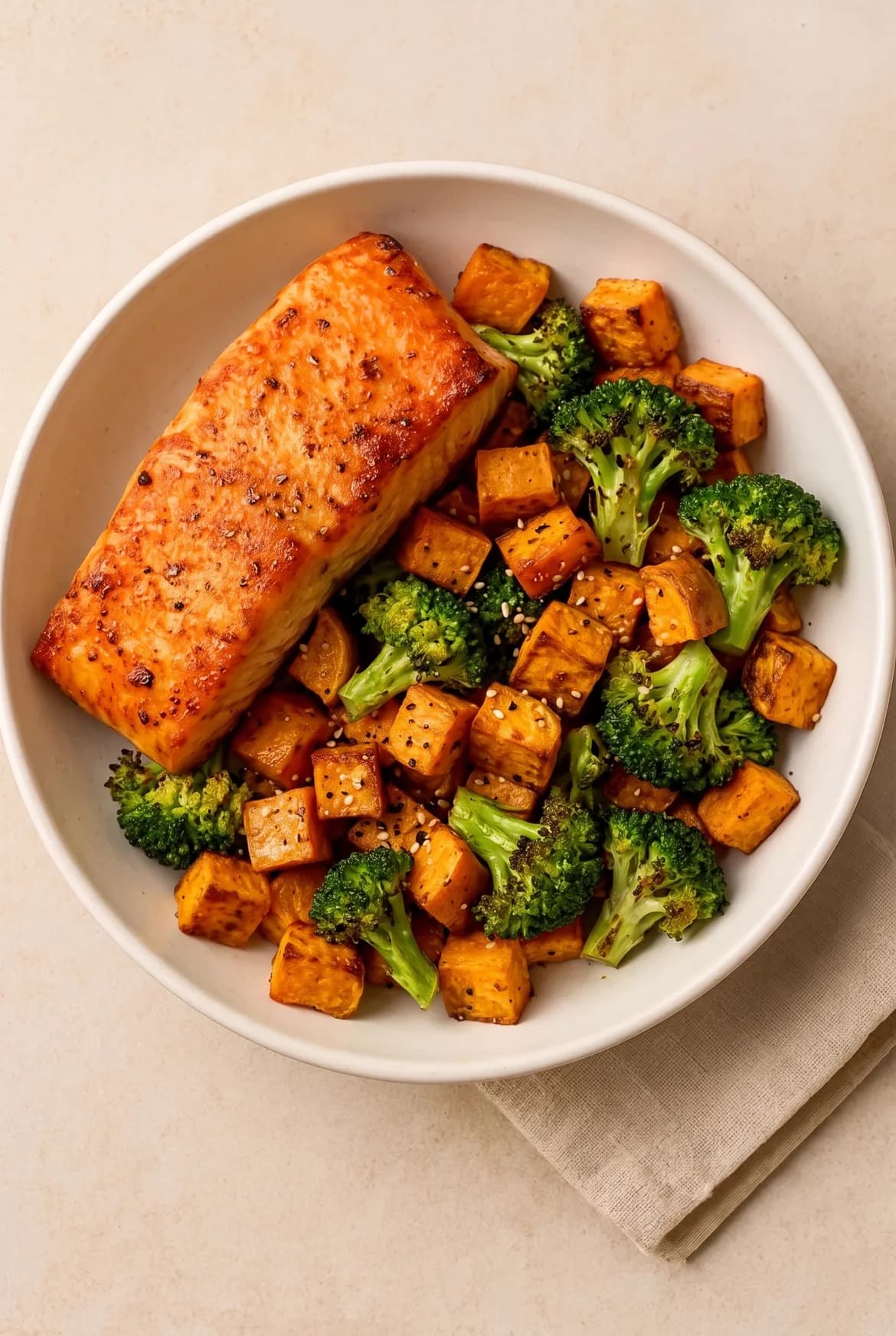
Salmon bowl with sweet potato and broccoli
Ingredients
- 150 g salmon fillet
- 200 g sweet potato
- 150 g broccoli
- 1 tbsp olive oil
- 1 tsp turmeric
- Salt and pepper
- 1 tbsp sesame seeds
Instructions
- 1Peel and dice the sweet potato. Toss with olive oil and turmeric and roast at 200°C for about 25 minutes.
- 2Divide the broccoli into florets and add it for the last 10 minutes of roasting.
- 3Pan-fry the salmon over medium heat for 3–4 minutes on each side.
- 4Arrange everything in a bowl and sprinkle with sesame seeds.
Nutrition: 640 kcal · 42 g protein · 45 g carbs · 33 g fat
View recipe →8. Chickpea and spinach stew with passata
Chickpeas contribute plant protein, with spinach and tomatoes in a warm stew. This version uses passata, so follow its own ingredient list rather than borrowing the coconut milk from the curry. It is a practical option for an evening when you want straightforward cooking.
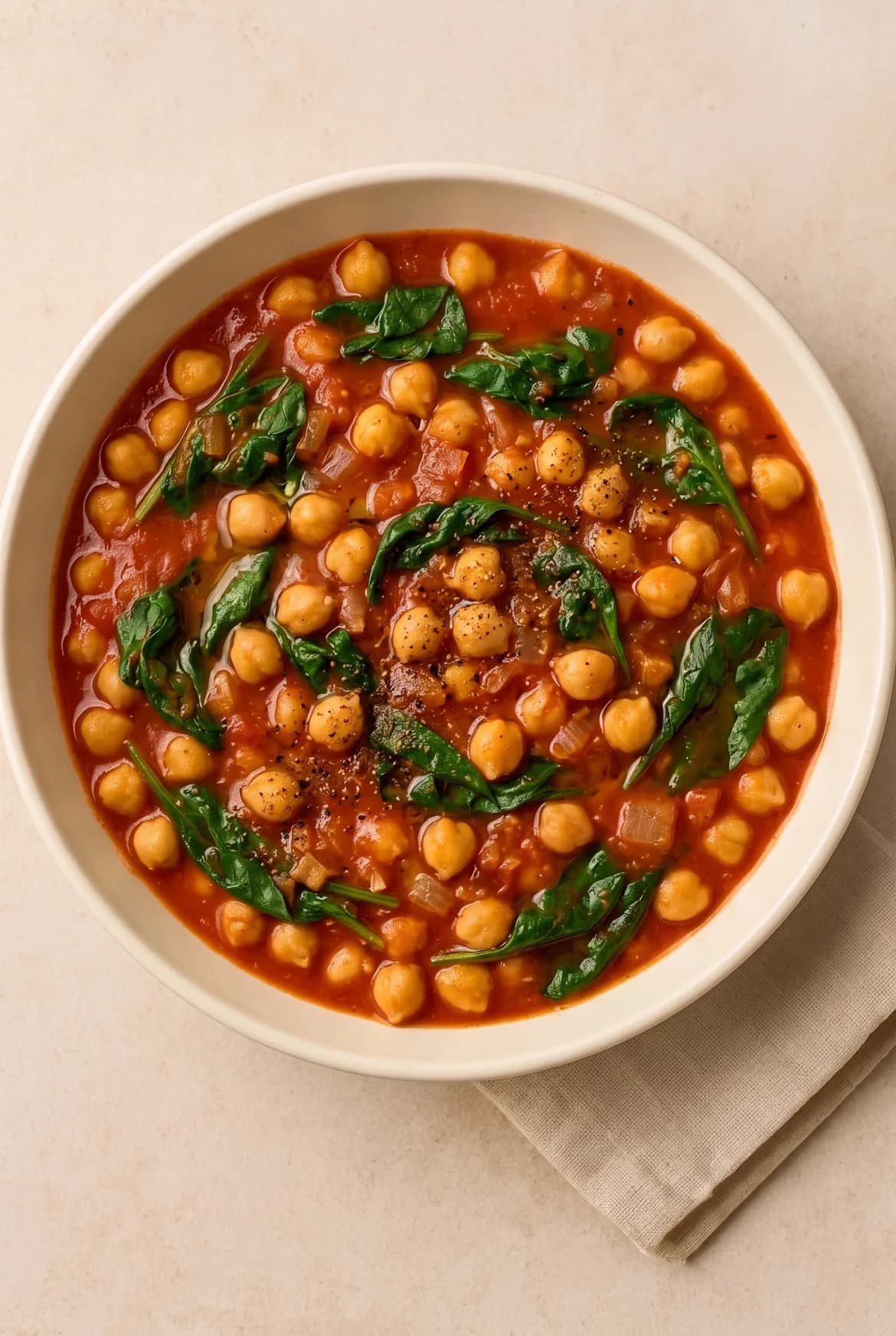
Chickpea and spinach stew with passata
Ingredients
- 1 can chickpeas (240 g drained weight)
- 200 g fresh spinach
- 1 onion
- 2 garlic cloves
- 400 ml passata
- 1 tsp cumin
- 1 tbsp olive oil
- Salt and pepper
Instructions
- 1Finely chop the onion and garlic and sauté in olive oil until translucent.
- 2Briefly toast the cumin until fragrant.
- 3Add the passata and drained chickpeas and simmer for 15 minutes.
- 4Fold in the spinach and let it wilt. Season with salt and pepper.
Nutrition: 358 kcal · 13 g protein · 40 g carbs · 14 g fat
View recipe →9. Oat and date balls with peanut butter
Dates sweeten the oats, cocoa and peanut butter mixture. The recipe makes twelve pieces and needs at least 30 minutes of chilling after preparation. Nutrition is stated per piece; the balls are a snack option, not a promise to prevent blood-sugar changes.
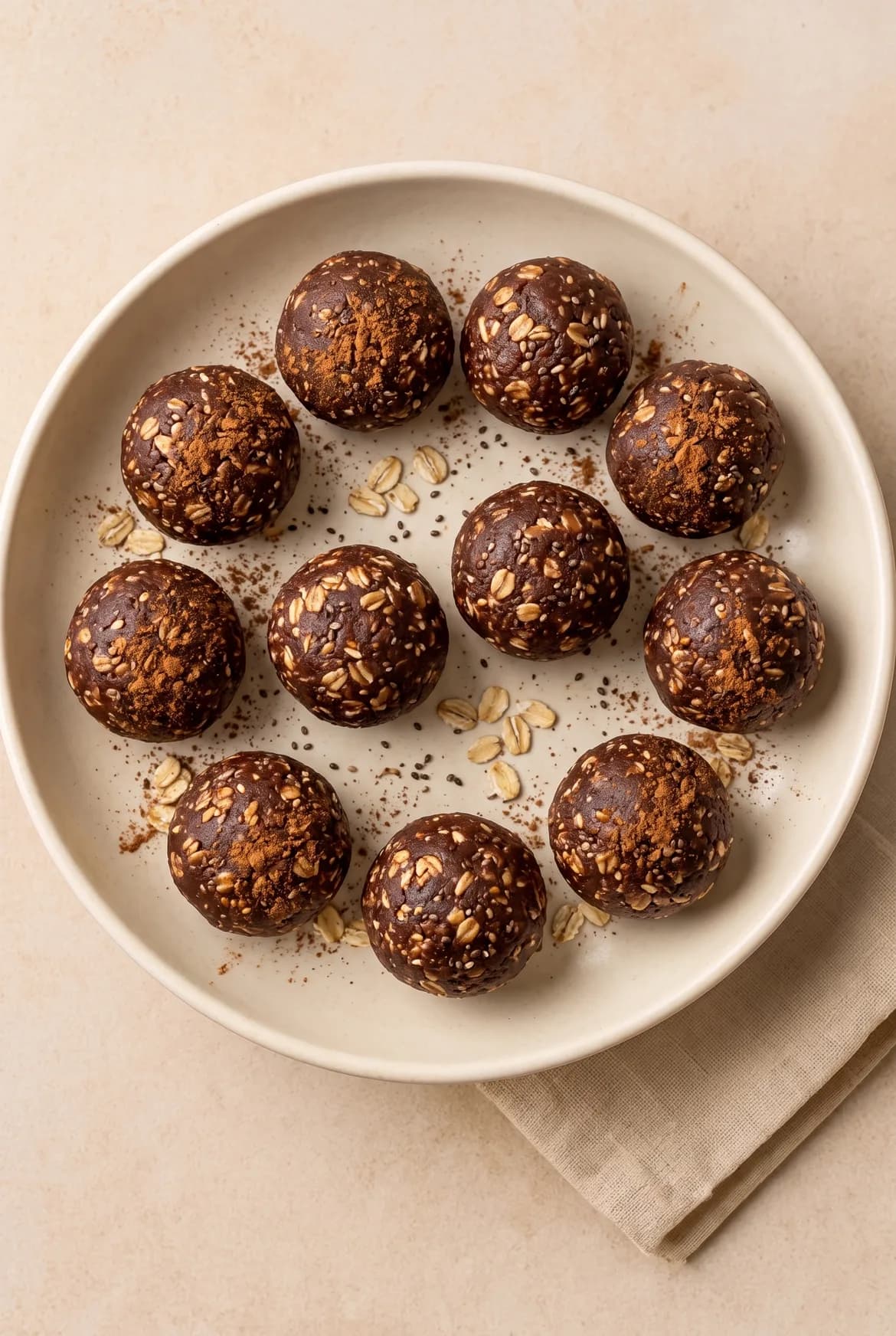
Oat and date balls with peanut butter
Ingredients
- 100 g fine oats
- 80 g pitted Medjool dates
- 2 tbsp peanut butter
- 1 tbsp unsweetened cocoa
- 1 tbsp chia seeds
- 1 pinch cinnamon
Instructions
- 1Roughly chop the dates and put them in a food processor with all the other ingredients.
- 2Pulse until a sticky mixture forms.
- 3Use damp hands to shape 12 small balls.
- 4Refrigerate for at least 30 minutes until firm.
Nutrition: 72 kcal · 2 g protein · 10 g carbs · 3 g fat
View recipe →10. Warm lentil salad with walnuts
Beluga lentils, walnuts and rocket offer contrasting textures, with balsamic vinegar and olive oil. Serve warm according to the card. Lentils and walnuts provide different nutrients without making the salad a treatment for PMS or cravings.
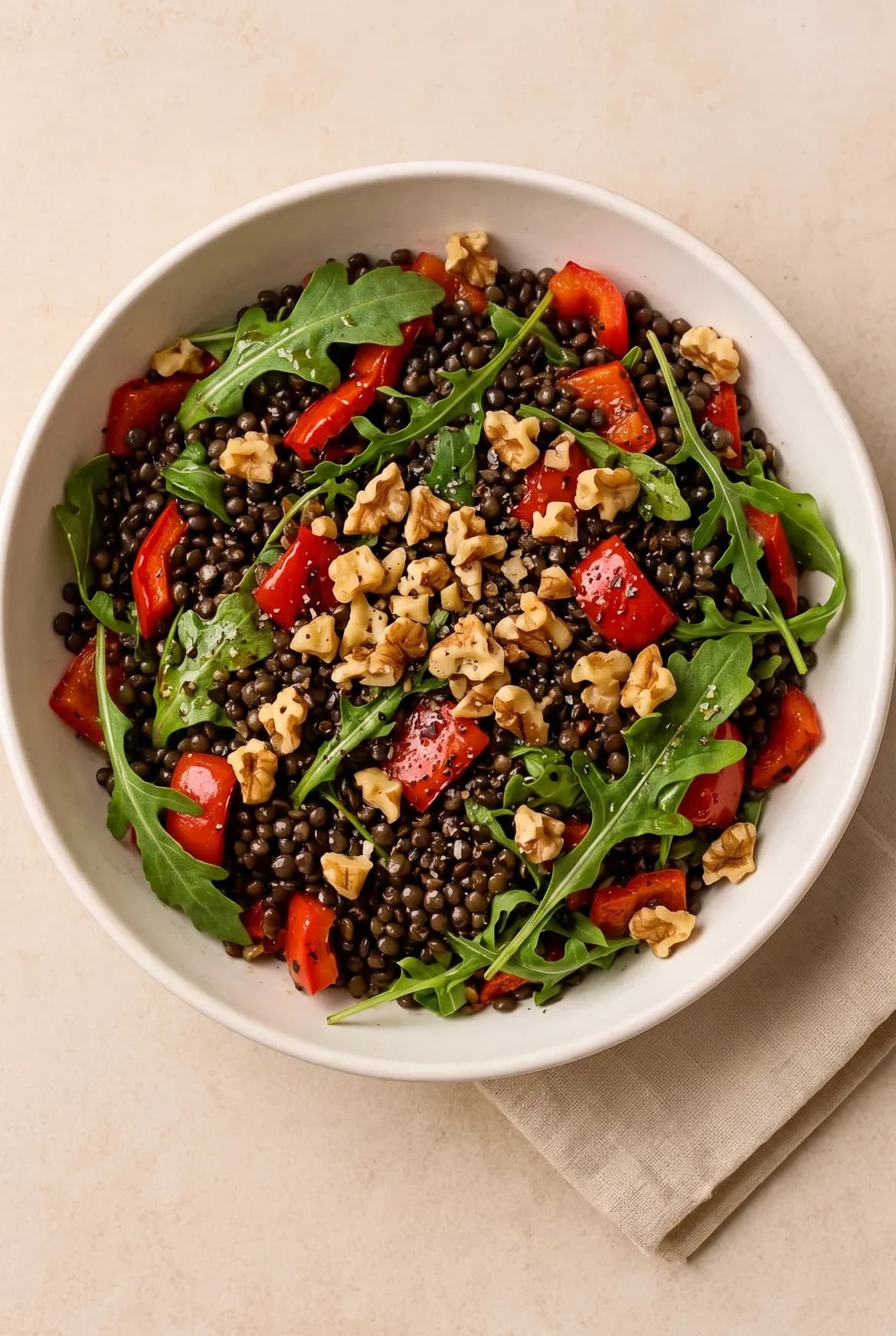
Warm lentil salad with walnuts
Ingredients
- 150 g beluga lentils
- 1 red pepper
- 50 g walnuts
- 2 handfuls rocket
- 2 tbsp balsamic vinegar
- 1 tbsp olive oil
- Salt and pepper
Instructions
- 1Cook the lentils according to the packet instructions, about 20 minutes, then drain.
- 2Dice the pepper and roughly chop the walnuts.
- 3Mix the warm lentils with the pepper, walnuts and rocket.
- 4Dress with balsamic vinegar and olive oil and season with salt and pepper.
Nutrition: 521 kcal · 19 g protein · 45 g carbs · 28 g fat
View recipe →Building a flexible meal pattern
Breakfast: banana oat pancakes, porridge with nut butter and seeds, or eggs on sourdough with avocado.
Lunch: the salmon rice bowl, or chickpeas with leafy greens and roasted vegetables.
Snack, if wanted: energy bites, nuts, an apple with almond butter or chocolate.
Dinner: sweet potato soup, chickpea curry, or fish with roasted root vegetables and rice.
Adjust portions to hunger and needs. This is a set of choices, not a calculated nutrient plan. Meals can repeat throughout the week.
Food in the wider picture
Sleep, movement and stress also deserve attention. Regular eating can be practical, but neither three nor four meals is mandatory for everyone. You do not need to wait until symptoms begin to eat these foods, and you have not “fallen behind” if you do.
The gut participates in hormone metabolism, but that does not prove fermented foods relieve PMS. Yoghurt, kefir or sauerkraut can fit if enjoyed and tolerated. Read more about gut habits, cravings and the luteal phase. Our bloating article covers a related topic.
Frequently asked questions
Can food changes relieve PMS?
Some nutritional interventions have been studied, with differing results and limitations. A recipe collection cannot guarantee relief. Severe symptoms need assessment and may benefit from treatments beyond food changes.
Which foods should I avoid?
There is no universal forbidden list. Consider caffeine, alcohol, very salty foods and whether your meals are sufficient, using your own tolerance and medical guidance. Do not remove whole food groups because of a phase label alone.
How soon should I expect a change?
There is no reliable two- or three-cycle deadline for a dietary effect. A symptom diary across cycles may help a clinician see patterns, but recording them is not proof that a food caused or treated them.
Do I need supplements?
Not automatically. An individual deficiency or indication may need treatment, but PMS does not diagnose one. Avoid high-dose magnesium or B6 routines copied from the internet and ask about interactions and combined products.
Is PMS normal, or should I seek care?
Symptoms that interfere with work, relationships or everyday life deserve help. Severe mood symptoms can require assessment for PMDD or other conditions. You do not need to keep experimenting with meals before seeking care.
Why do I crave sweet foods before my period?
Appetite, habit, sleep, stress and other factors can interact. A craving does not prove a deficiency. Eat enough, consider regular meals and allow foods you enjoy. Repeated loss-of-control eating or distress deserves support.
For a broader introduction, read cycle syncing and ten foods to vary. This article provides general information and does not replace individual medical advice.