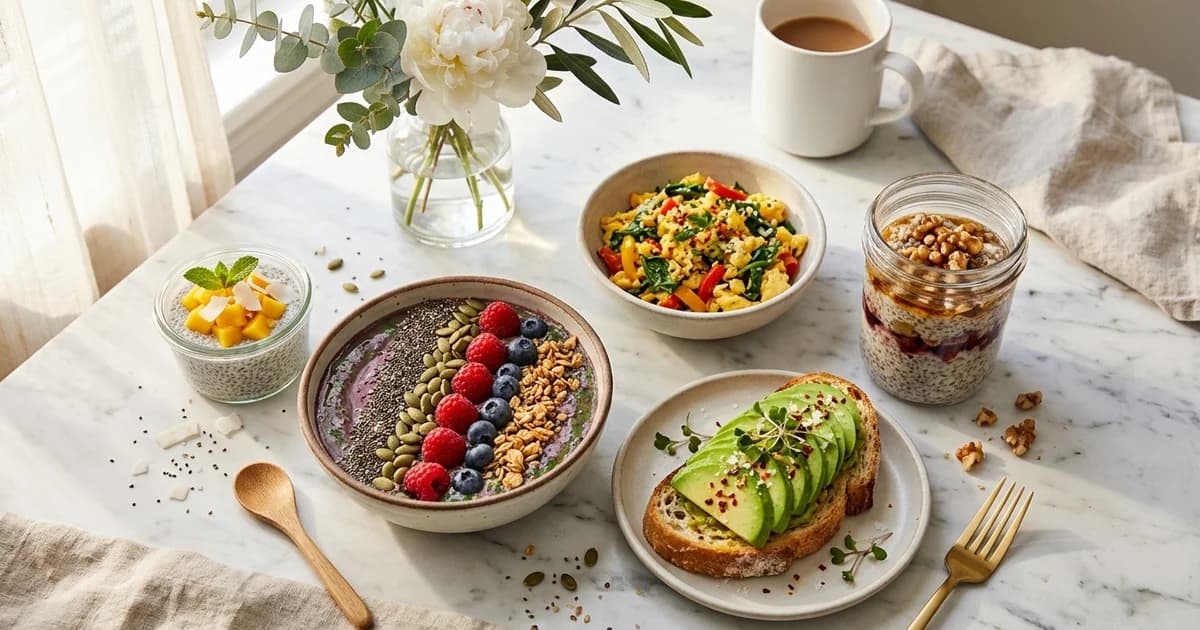
A useful breakfast is one you have the ingredients and time to make. This collection includes twenty options with oats, eggs, yogurt, bread, nuts or seeds, from a bowl assembled in minutes to pancakes for a slower morning. Whether you are looking for period breakfast ideas or something for the luteal phase, every recipe works on any cycle day.
Choose a breakfast for your morning
Five minutes to spare: Greek yogurt with walnuts or cottage cheese toast. Prefer savoury? Try scrambled eggs with avocado toast or beet hummus toast. No eggs? Choose oats, chia pudding or the yogurt bowl; check any added protein powder if you also avoid dairy.
Prepare ahead: Mix overnight oats or chia pudding the night before and refrigerate. Add crunchy toppings just before eating. Their hands-on prep time does not include the overnight rest.
For a breakfast with a clear protein source, choose eggs, yogurt, cottage cheese or a suitable soy alternative. The recipes have different protein amounts; they do not all provide 20–30 g per serving. Check the label when swapping milks or yogurts.
“Hormone balancing” is a common search term, but it is not a result we can promise from breakfast. These are everyday cooking ideas, and you can eat them at any point in your cycle.
Looking for lunch and dinner too? Browse our luteal phase recipes and follicular phase recipes.
A quick choice by time
| Your morning | Options | Time to allow |
|---|---|---|
| Quick, without cooking | Yoghurt with walnuts; cottage cheese toast | About 5 minutes |
| Warm and savoury | Scrambled eggs with avocado toast | About 8 minutes |
| Prepare the night before | Overnight oats | 5 minutes plus overnight rest |
| Without eggs | Cocoa chia pudding | 5 minutes plus at least 2 hours chilling |
| A slower morning | Banana and quark pancakes | About 15 minutes |
| A warm bowl | Banana or cocoa porridge | About 7–8 minutes |
Times refer to the corresponding recipes below. Nutrition values are estimates; ingredients and substitutions change them.
The first ten recipes
Check each card for its serving size and preparation time. Overnight oats and chia pudding need resting time in addition to hands-on preparation.
1. Berry Flax Overnight Oats
Mix the oats and liquid the night before, then add berries in the morning. Stir well so the ground flax is evenly distributed. This is a useful option when you want breakfast ready before you start the day.
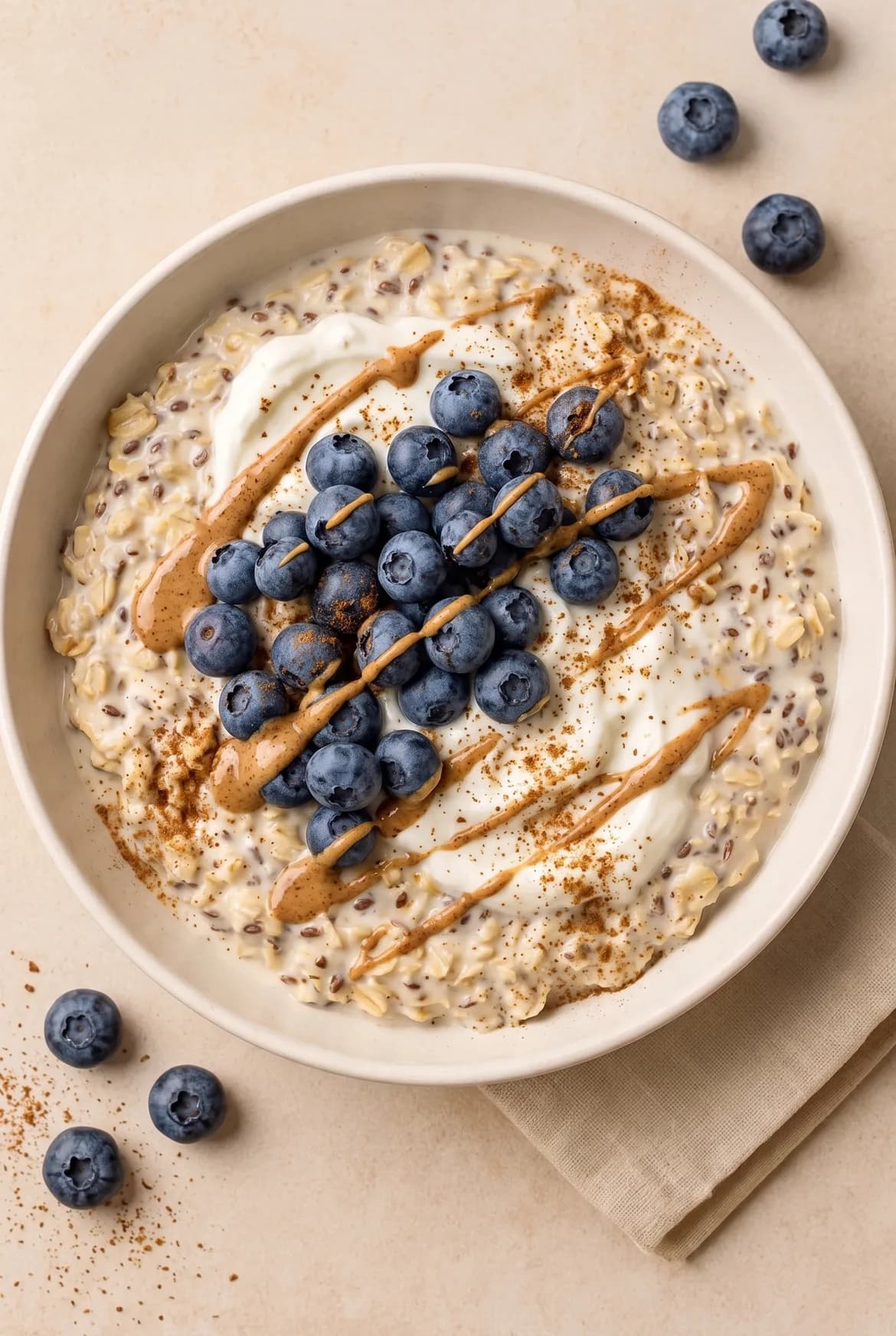
Berry Flax Overnight Oats
Ingredients
- 50 g rolled oats
- 150 ml unsweetened oat or cow milk
- 1 tbsp ground flaxseed
- 1 tbsp Greek yogurt
- 1/2 cup mixed berries (fresh or frozen)
- 1 tsp maple syrup (optional)
- Pinch of cinnamon
Instructions
- 1Stir oats, milk, flaxseed, yogurt and cinnamon in a jar.
- 2Cover and refrigerate overnight, at least 6 hours.
- 3Top with berries and a drizzle of maple syrup before eating.
Nutrition: 350 kcal · 11 g protein · 57 g carbs · 9 g fat
View recipe →2. Scrambled Eggs With Avocado Toast
Cook the eggs gently and take the pan off the heat while they are still soft. Toast the bread just before serving so it stays crisp under the avocado.
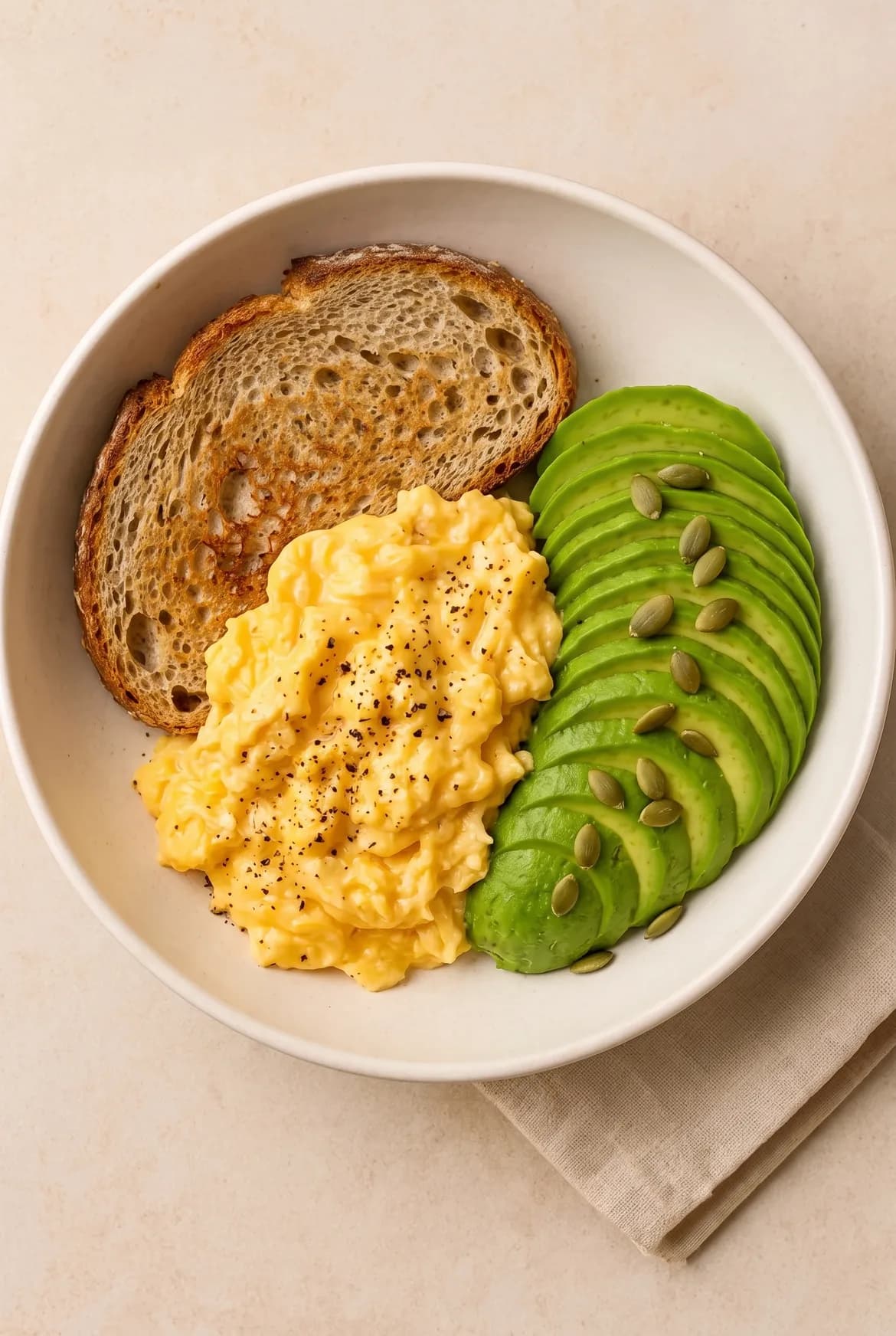
Scrambled Eggs With Avocado Toast
Ingredients
- 2 large eggs
- 1 tsp butter or olive oil
- 1 slice sourdough or whole-grain bread
- 1/2 ripe avocado
- Squeeze of lemon
- Salt, pepper, chili flakes
Instructions
- 1Whisk eggs with a pinch of salt. Melt butter in a nonstick pan over medium-low heat.
- 2Pour in eggs and fold gently with a spatula until just set, about 2 minutes.
- 3Toast the bread. Mash avocado with lemon, salt and chili on top.
- 4Spoon the eggs onto the toast and eat right away.
Nutrition: 415 kcal · 18 g protein · 29 g carbs · 26 g fat
View recipe →3. Greek Yogurt With Walnuts And Honey
A bowl you can assemble without cooking. Choose plain yogurt and add honey to taste. Yogurt products vary in protein content, so check the label if that matters to your selection.
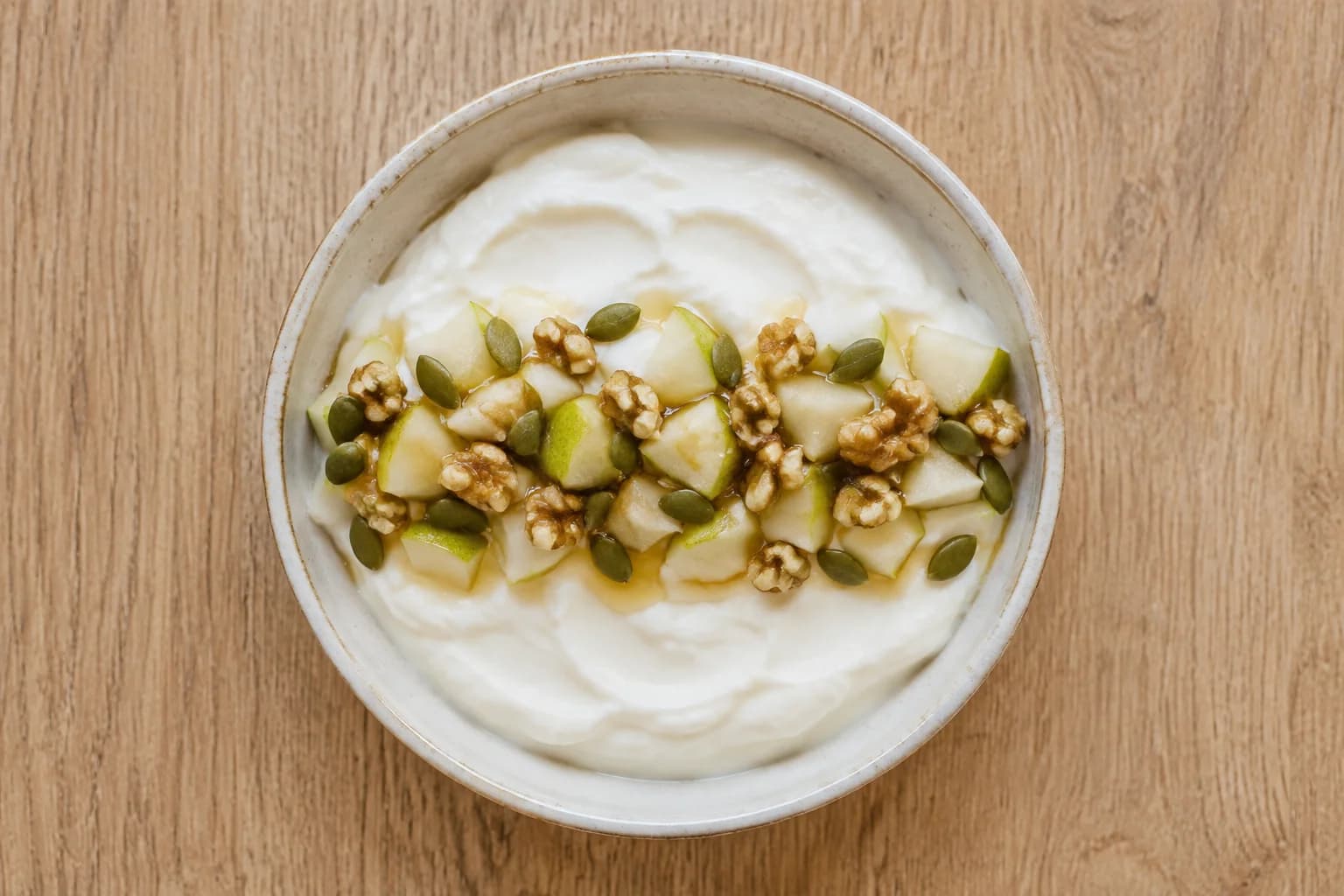
Greek Yogurt With Walnuts And Honey
Ingredients
- 200 g full-fat Greek yogurt
- 2 tbsp chopped walnuts
- 1 tbsp pumpkin seeds
- 1 tsp raw honey
- 1/2 pear, diced
Instructions
- 1Spoon the yogurt into a bowl.
- 2Top with walnuts, pumpkin seeds and pear.
- 3Drizzle honey over the top and eat.
Nutrition: 410 kcal · 23 g protein · 30 g carbs · 24 g fat
View recipe →4. Vanilla Chia Pudding
Whisk twice: once when you mix it and again after a few minutes, before refrigerating. This helps avoid dry clumps at the bottom. Allow the resting time in the recipe, and add a little more milk if you prefer it looser.
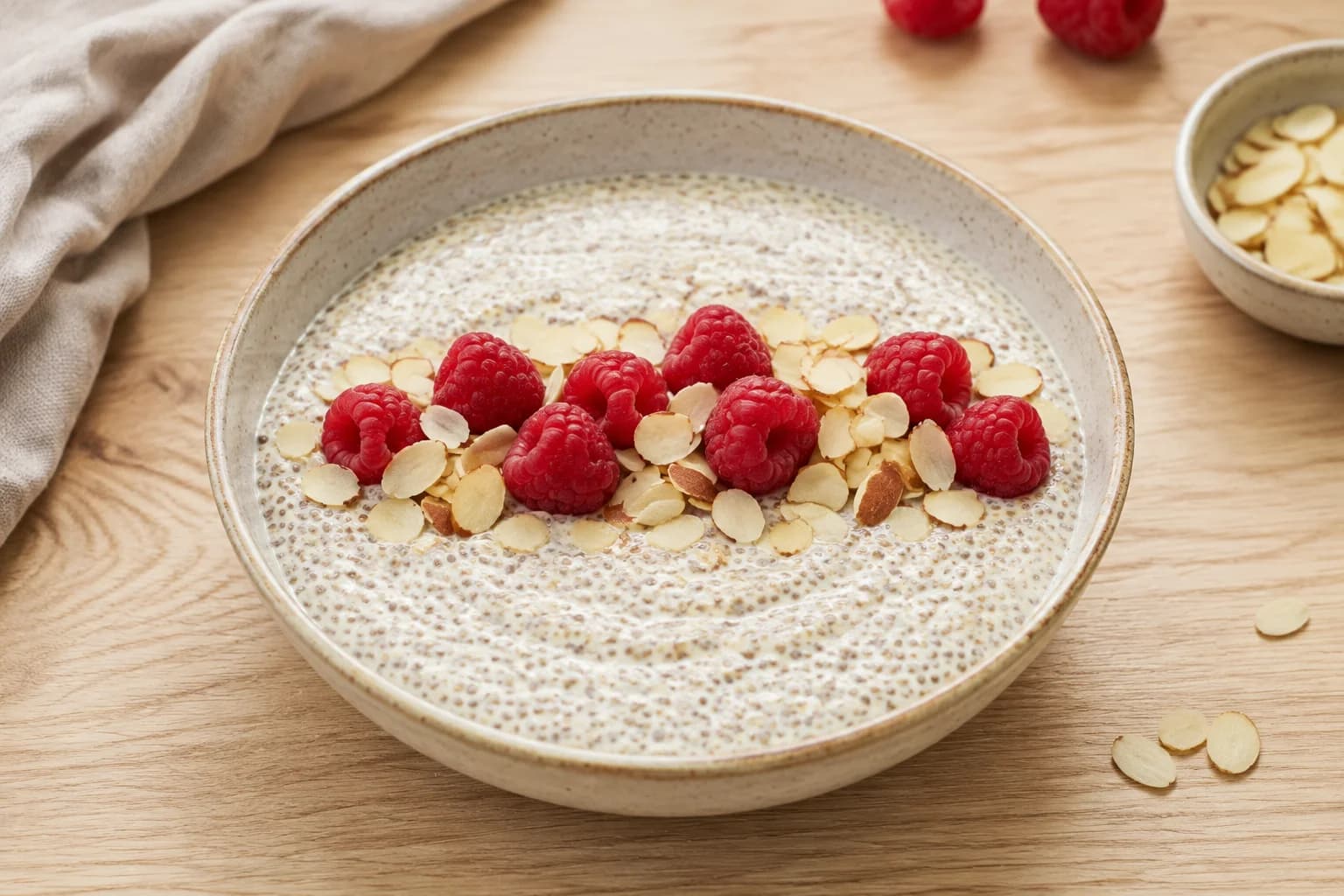
Vanilla Chia Pudding
Ingredients
- 3 tbsp chia seeds
- 200 ml coconut or oat milk
- 1/2 tsp vanilla extract
- 1 tsp maple syrup
- 1/2 cup raspberries
- 1 tbsp shaved almonds
Instructions
- 1Whisk chia, milk, vanilla and maple in a jar until there are no clumps.
- 2Chill for 15 minutes, whisk again, then refrigerate at least 4 hours or overnight.
- 3Top with raspberries and almonds before eating.
Nutrition: 345 kcal · 10 g protein · 40 g carbs · 18 g fat
View recipe →5. Protein Pancakes
Make small pancakes for easier turning. Keep the heat moderate so the outside does not brown before the centre cooks. Serve with berries and yogurt.
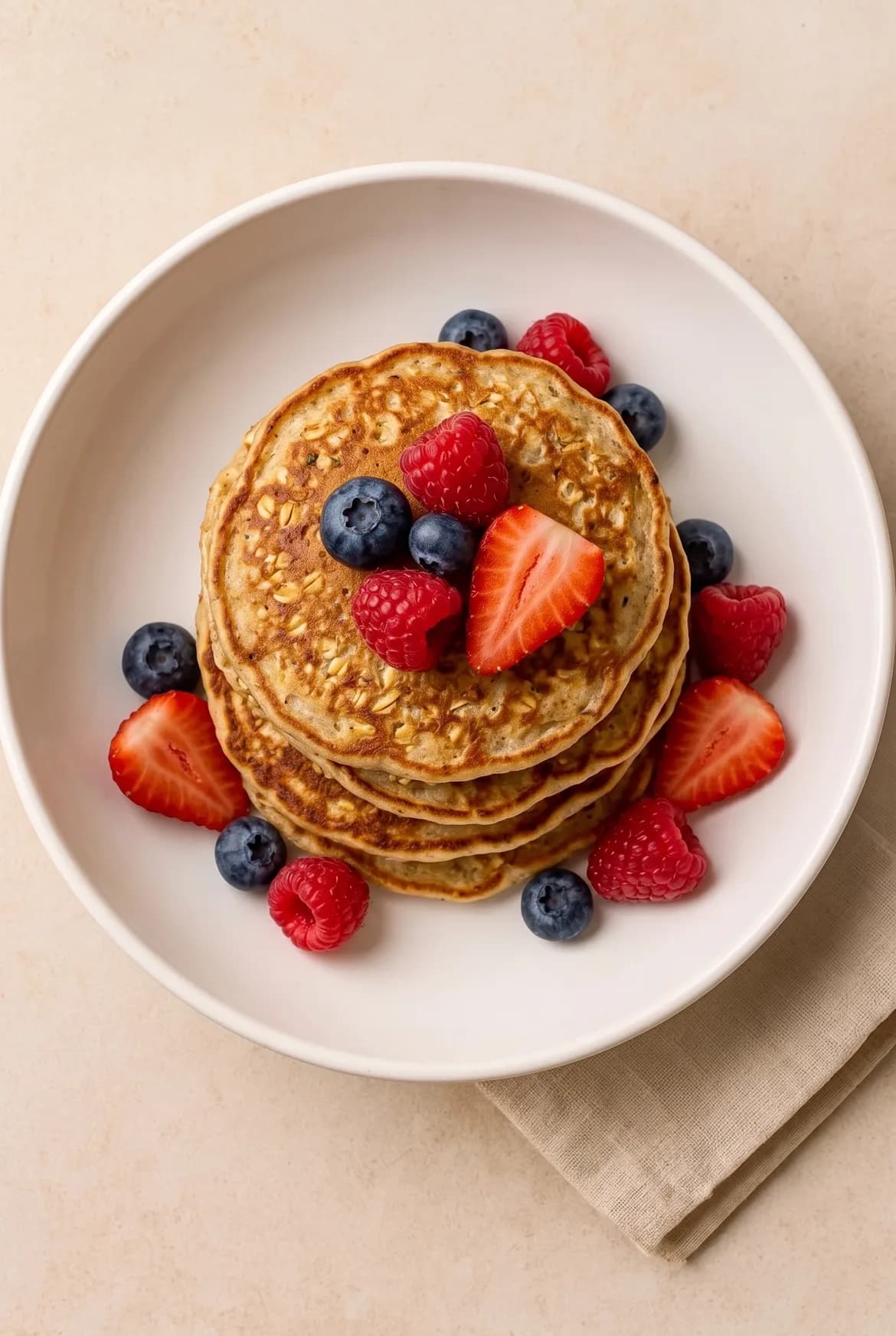
Protein Pancakes
Ingredients
- 1 ripe banana
- 2 eggs
- 3 tbsp rolled oats
- 1 tbsp Greek yogurt
- 1/2 tsp baking powder
- Butter or coconut oil for the pan
- Berries and a spoon of yogurt to serve
Instructions
- 1Blitz banana, eggs, oats, yogurt and baking powder in a blender until smooth.
- 2Heat a nonstick pan over medium heat with a little butter.
- 3Spoon in small rounds and cook 2 minutes per side until golden.
- 4Stack and top with berries and yogurt.
Nutrition: 430 kcal · 20 g protein · 52 g carbs · 17 g fat
View recipe →6. Green Smoothie Bowl
Use frozen banana for a thick, spoonable texture. Start with the stated liquid and add more only if your blender needs it. If you use protein powder, choose one with a flavour you like and check its ingredients for allergens.
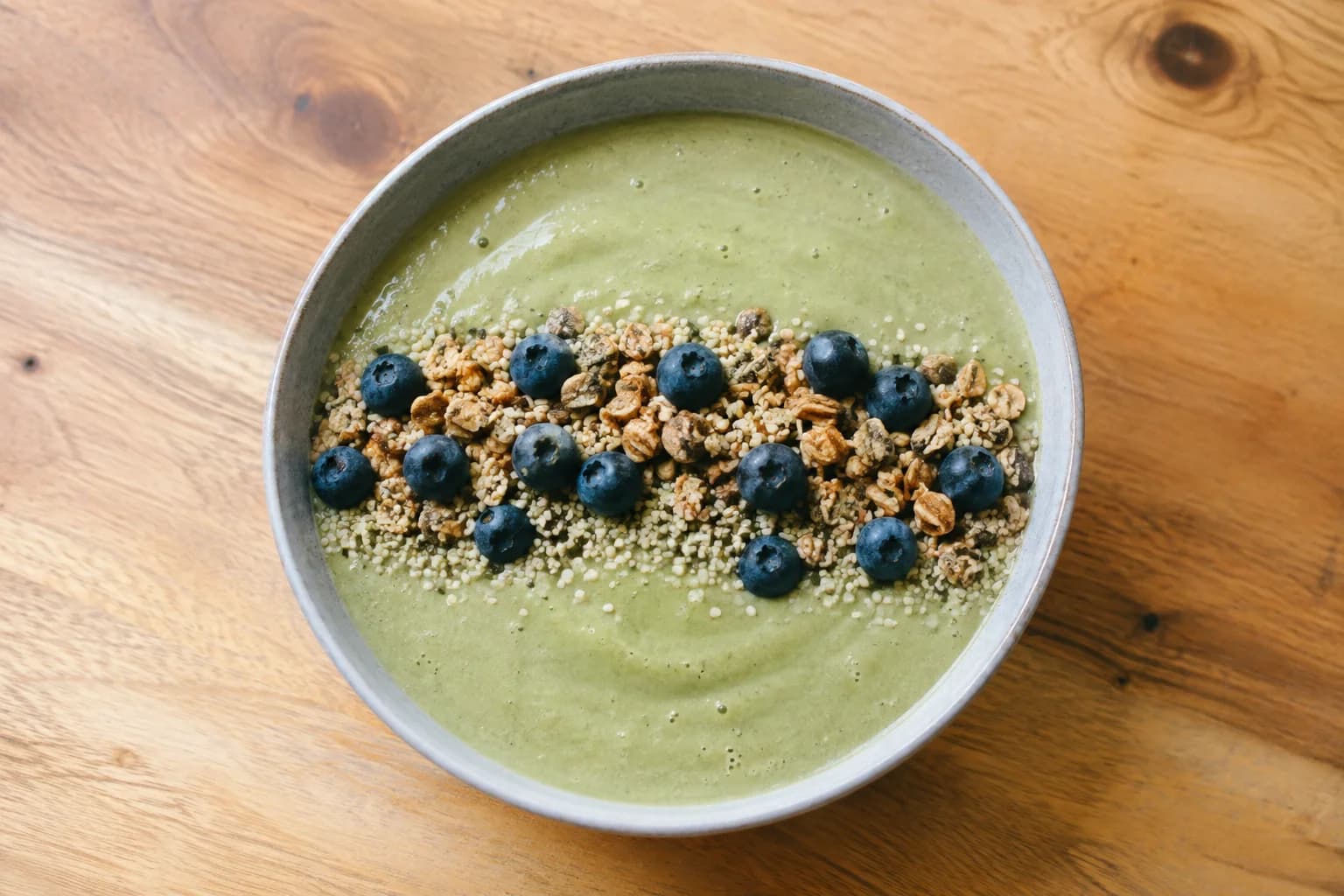
Green Smoothie Bowl
Ingredients
- 1 frozen banana
- 1 handful spinach
- 100 ml oat milk
- 1 scoop unflavored whey or pea protein
- 1 tbsp almond butter
- 1 tbsp hemp seeds
- Granola and blueberries to top
Instructions
- 1Blend banana, spinach, milk, protein and almond butter until thick.
- 2Pour into a bowl.
- 3Top with hemp seeds, granola and blueberries.
Nutrition: 600 kcal · 39 g protein · 57 g carbs · 19 g fat
View recipe →7. Oatmeal With Almond Butter And Banana
Stir the oats while cooking and loosen them with a splash of milk if needed. Add the almond butter at the end. Peanut or sunflower seed butter gives a different flavour if you prefer a swap.
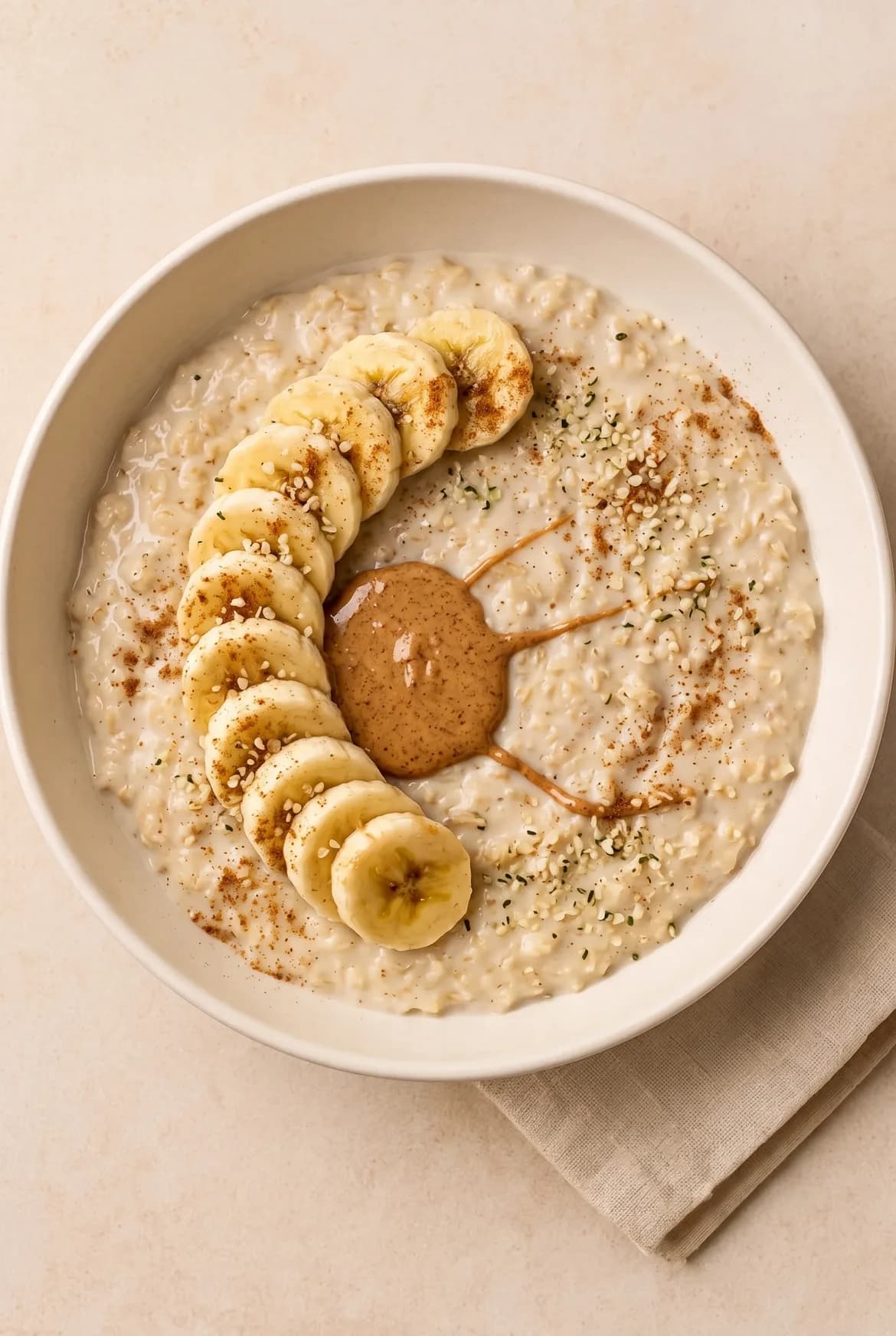
Oatmeal With Almond Butter And Banana
Ingredients
- 50 g rolled oats
- 250 ml oat or cow milk
- 1 tbsp almond butter
- 1/2 banana, sliced
- 1 tbsp ground flaxseed
- Pinch of sea salt, cinnamon
Instructions
- 1Simmer oats, milk and salt over medium heat for 5 to 7 minutes, stirring.
- 2Take off the heat and stir in flaxseed.
- 3Top with banana, almond butter and cinnamon.
Nutrition: 480 kcal · 14 g protein · 69 g carbs · 19 g fat
View recipe →8. Cottage Cheese Toast With Pumpkin Seeds
A savoury breakfast without eggs. Toast the bread, spread with cottage cheese and finish with seeds, pepper and herbs. Add the topping shortly before eating to avoid soggy toast.
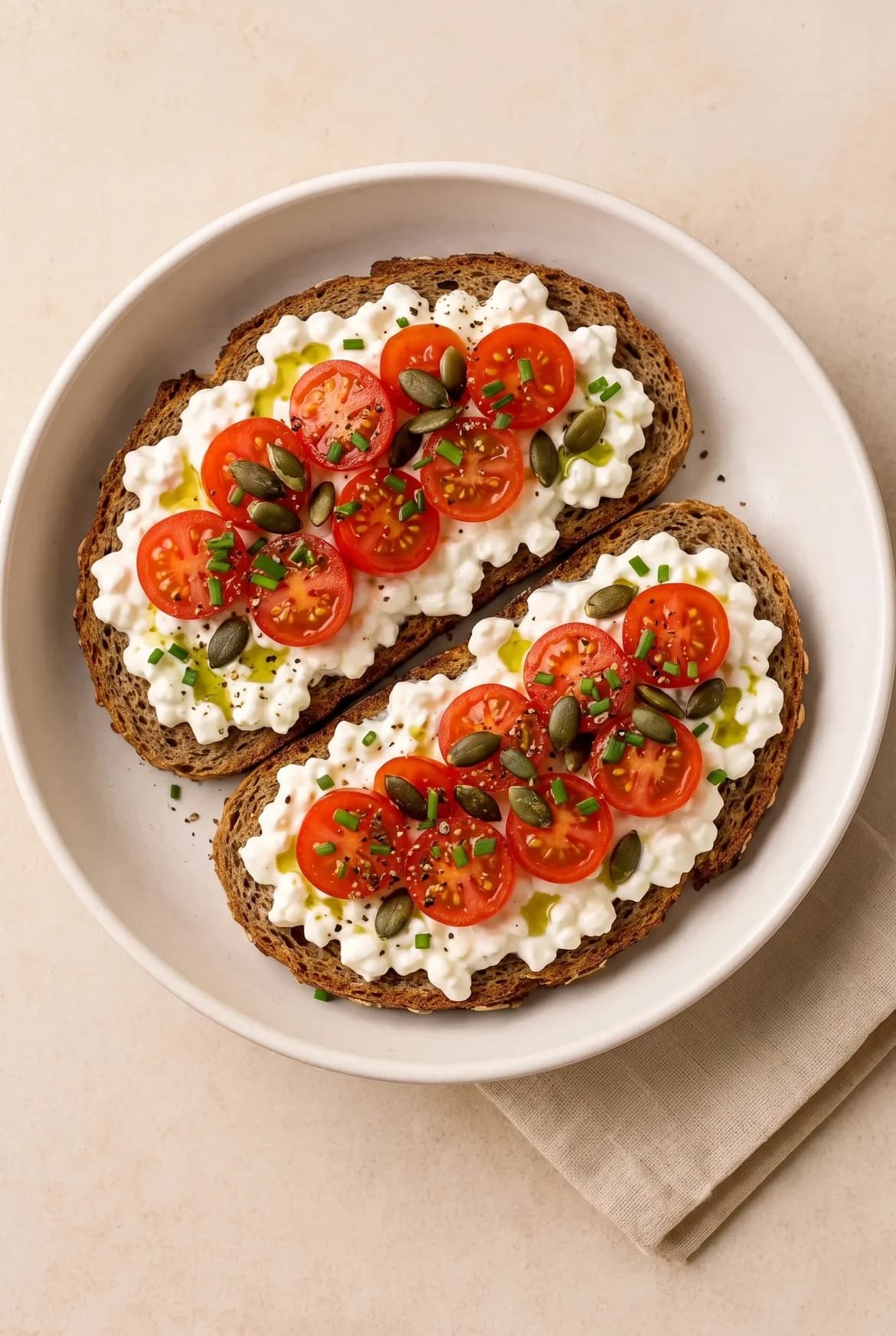
Cottage Cheese Toast With Pumpkin Seeds
Ingredients
- 2 slices whole-grain bread
- 150 g full-fat cottage cheese
- 2 tbsp pumpkin seeds
- 1 tsp olive oil
- Black pepper, fresh chives
- Optional: cucumber slices or radish
Instructions
- 1Toast the bread until crisp.
- 2Spread cottage cheese generously on each slice.
- 3Top with pumpkin seeds, chives, a drizzle of olive oil and black pepper.
Nutrition: 460 kcal · 29 g protein · 36 g carbs · 23 g fat
View recipe →9. Beet Hummus Toast
Use cooked beetroot for a quick spread. Keep the hummus and bread separate if preparing ahead. For an egg-free variation, leave out the egg; this changes the nutrition shown in the recipe.
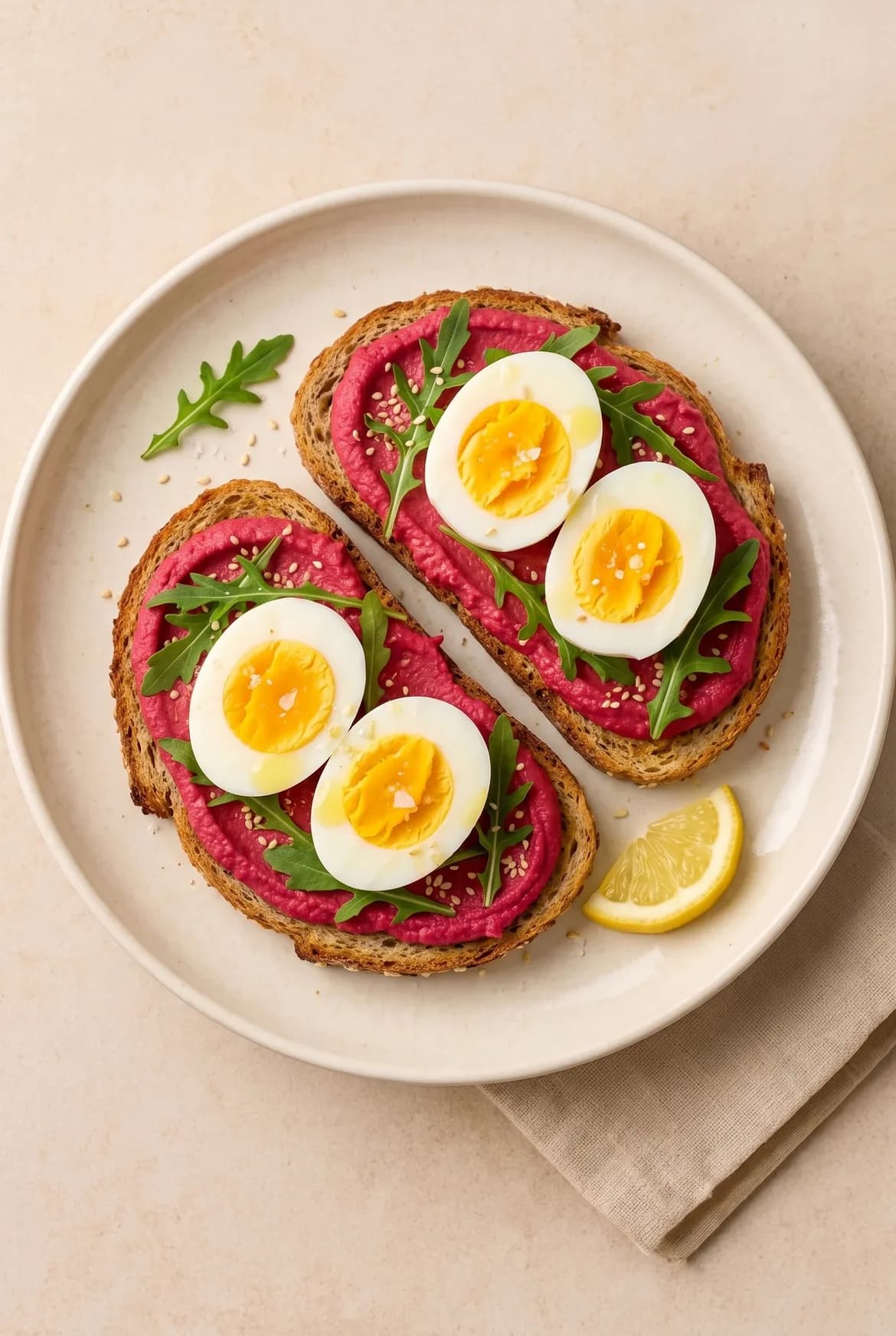
Beet Hummus Toast
Ingredients
- 2 slices whole-grain bread
- 3 tbsp beet hummus
- 1 soft-boiled egg, halved
- 1 tbsp toasted sesame seeds
- Arugula, lemon, olive oil
Instructions
- 1Toast the bread.
- 2Spread a thick layer of beet hummus on each slice.
- 3Top with arugula, the halved egg, sesame seeds, lemon and olive oil.
Nutrition: 450 kcal · 19 g protein · 40 g carbs · 24 g fat
View recipe →10. Power Porridge With Cacao And Nut Butter
Mix cocoa with a little of the warm liquid first to remove lumps, then stir it into the oats. Add the nut butter and adjust the consistency before serving.
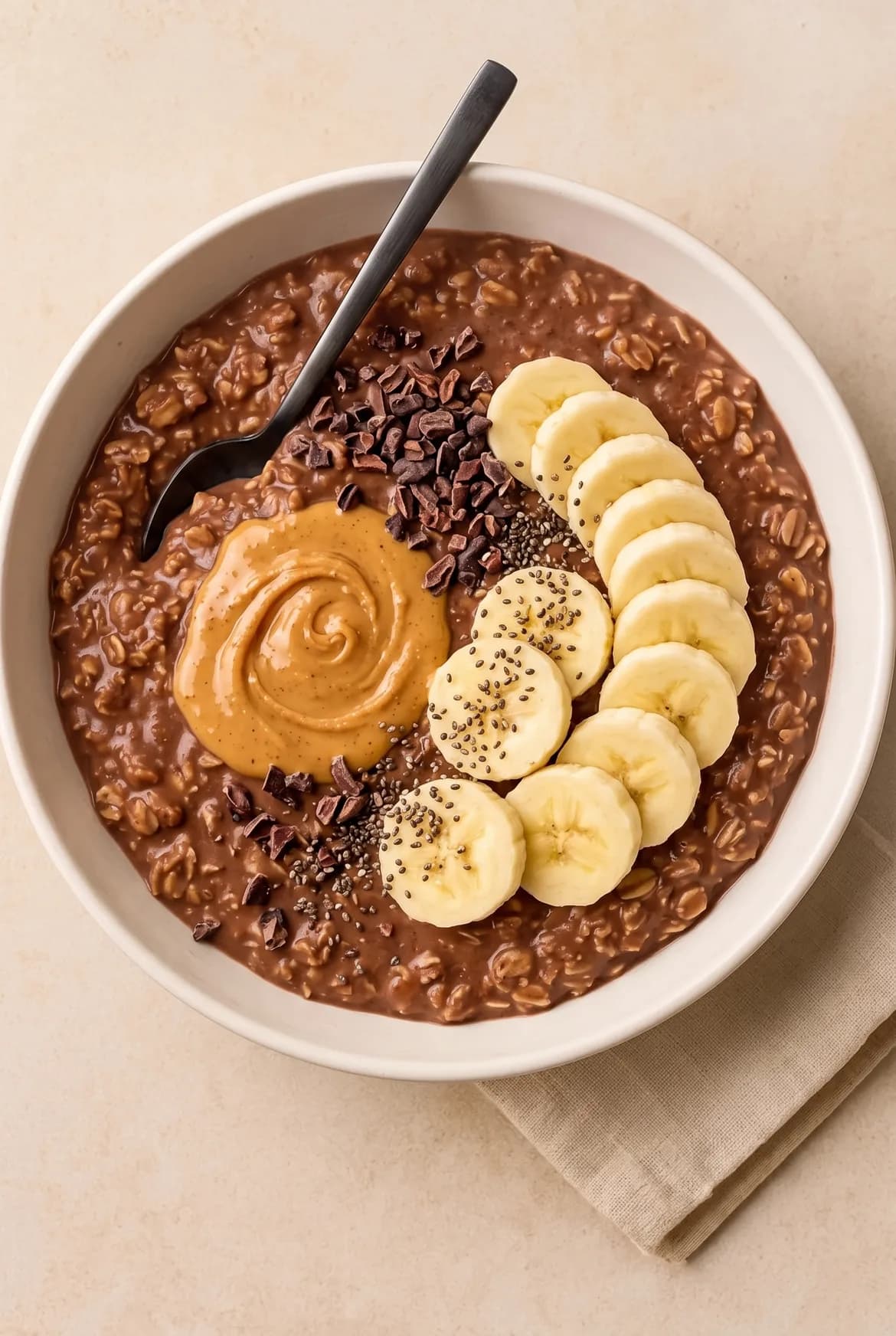
Power Porridge With Cacao And Nut Butter
Ingredients
- 50 g rolled oats
- 250 ml oat milk
- 1 tbsp raw cacao powder
- 1 tbsp hazelnut or peanut butter
- 1 tbsp chia seeds
- 1/2 banana, sliced
- Pinch of sea salt
Instructions
- 1Simmer oats, milk, cacao, chia and salt for about 7 minutes, stirring often.
- 2Pour into a bowl and swirl in the nut butter.
- 3Top with banana slices.
Nutrition: 510 kcal · 17 g protein · 74 g carbs · 19 g fat
View recipe →Ten more breakfast ideas from the German collection
The first ten recipes above keep their original versions. These ten additional recipes reproduce the German collection, including its different quantities and ingredients. Names highlight the differences: for example, these overnight oats use skyr and almond butter, while the earlier recipe uses a smaller amount of yoghurt. Choose one version and follow its own ingredient list.
11. Blueberry overnight oats with skyr and almond butter
Mix the oats the night before and refrigerate. Add the berries in the morning and any crunchy nuts just before serving. Five minutes describes the preparation, not the overnight wait.
Blueberry overnight oats with skyr and almond butter
Ingredients
- 50 g fine oats
- 2 tbsp ground flaxseed
- 200 ml milk or oat drink
- 100 g skyr or Greek yoghurt
- 1 tsp almond butter
- 80 g blueberries
- A pinch of cinnamon
Instructions
- 1The evening before, put the oats, flaxseed, milk and yoghurt in a jar and stir well.
- 2Fold in the almond butter and cinnamon, cover and refrigerate overnight.
- 3Top with blueberries in the morning and add a squeeze of lemon if desired.
Nutrition: 480 kcal · 24 g protein · 55 g carbs · 18 g fat
View recipe →12. Scrambled eggs with milk, avocado and pumpkin seeds
Toast the bread while cooking the eggs over medium heat. Tomato or cucumber can replace avocado if preferred; that changes the nutrition values.
Scrambled eggs with milk, avocado and pumpkin seeds
Ingredients
- 2 eggs
- 1 tbsp milk
- 1 tsp butter or olive oil
- 1/2 ripe avocado
- 1 slice wholegrain sourdough bread
- Salt and pepper
- A few pumpkin seeds for topping
Instructions
- 1Whisk the eggs with milk, salt and pepper. Cook slowly in a little butter over medium heat until set.
- 2Toast the wholegrain bread, slice the avocado and arrange it on the toast.
- 3Serve the scrambled eggs alongside and sprinkle with pumpkin seeds.
Nutrition: 470 kcal · 22 g protein · 28 g carbs · 33 g fat
View recipe →13. Greek yoghurt with apple, walnuts and chia
Combine yoghurt with apple, walnuts and honey to taste. Greek yoghurt and skyr are not interchangeable in protein content, so compare the labels when choosing.
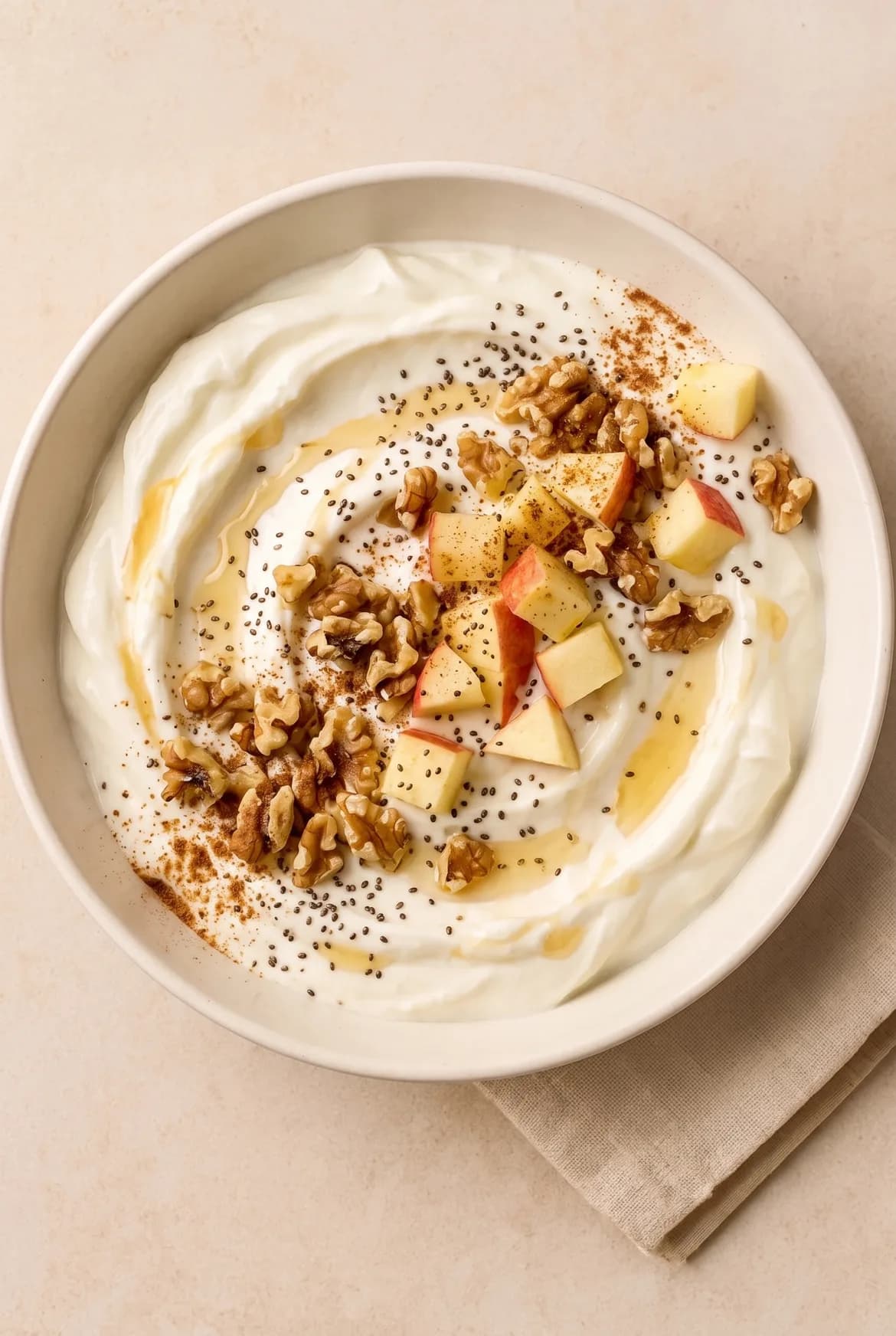
Greek yoghurt with apple, walnuts and chia
Ingredients
- 200 g Greek yoghurt, 10% fat
- 2 tbsp roughly chopped walnuts
- 1 tsp honey
- 1 small apple, diced
- 1 tbsp chia seeds
- A little cinnamon
Instructions
- 1Put the yoghurt in a bowl and stir until smooth.
- 2Add the diced apple, walnuts and chia seeds.
- 3Drizzle with honey and dust with cinnamon.
Nutrition: 520 kcal · 20 g protein · 36 g carbs · 36 g fat
View recipe →14. Cocoa chia pudding with banana and hazelnuts
Stir again after five minutes to prevent clumps, then refrigerate for at least two hours or overnight. Add banana and hazelnuts shortly before eating.
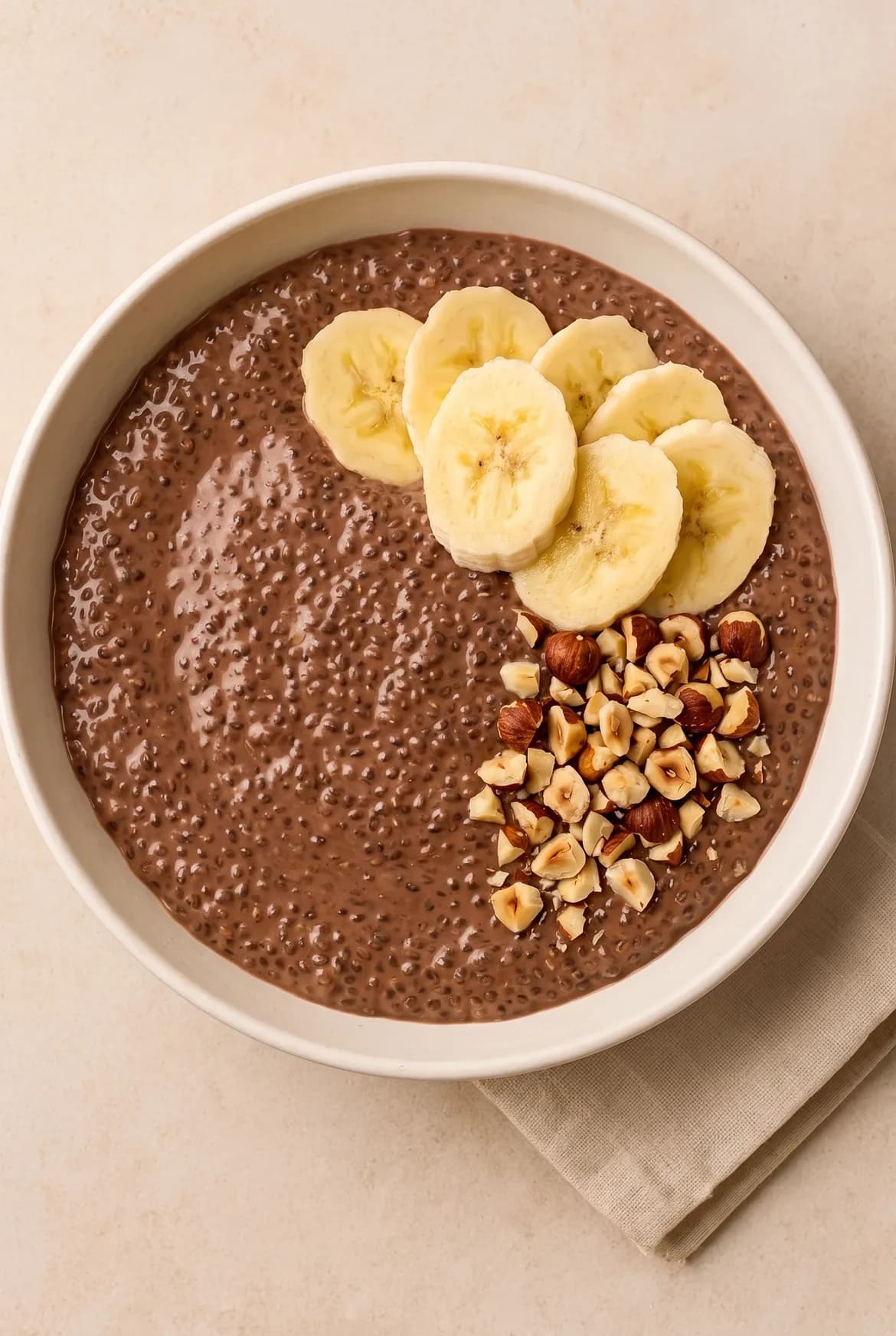
Cocoa chia pudding with banana and hazelnuts
Ingredients
- 3 tbsp chia seeds
- 200 ml oat or almond drink
- 1 tsp cocoa powder
- 1/2 tsp maple syrup
- 1/2 banana
- 1 tbsp chopped hazelnuts
Instructions
- 1Put the chia seeds, milk, cocoa and maple syrup in a jar and mix vigorously.
- 2Stir again after 5 minutes to prevent lumps, then leave to thicken for at least two hours or overnight.
- 3Top with banana slices and hazelnuts before serving.
Nutrition: 370 kcal · 10 g protein · 45 g carbs · 18 g fat
View recipe →15. Banana and quark pancakes with berries
Banana, egg, oats and quark make a batter best cooked as small pancakes. If you avoid eggs, choose a different recipe rather than simply removing them from this mixture.
Banana and quark pancakes with berries
Ingredients
- 1 ripe banana
- 2 eggs
- 40 g oats
- 1 tbsp low-fat quark
- 1 tsp baking powder
- A pinch of vanilla
- 100 g mixed berries
- 1 tsp coconut oil for frying
Instructions
- 1Blend the banana, eggs, oats, quark, baking powder and vanilla in a tall container until smooth.
- 2Heat the coconut oil in a frying pan. Add small portions of batter and cook until golden on both sides.
- 3Serve with berries and, optionally, a dollop of yoghurt.
Nutrition: 490 kcal · 26 g protein · 66 g carbs · 18 g fat
View recipe →16. Berry skyr bowl with flaxseed oil
Start with little liquid for a spoonable bowl and check whether your blender can handle frozen fruit. Follow the berry packet: thaw or cook first when instructed. A yoghurt bowl is an alternative if you do not want to blend.
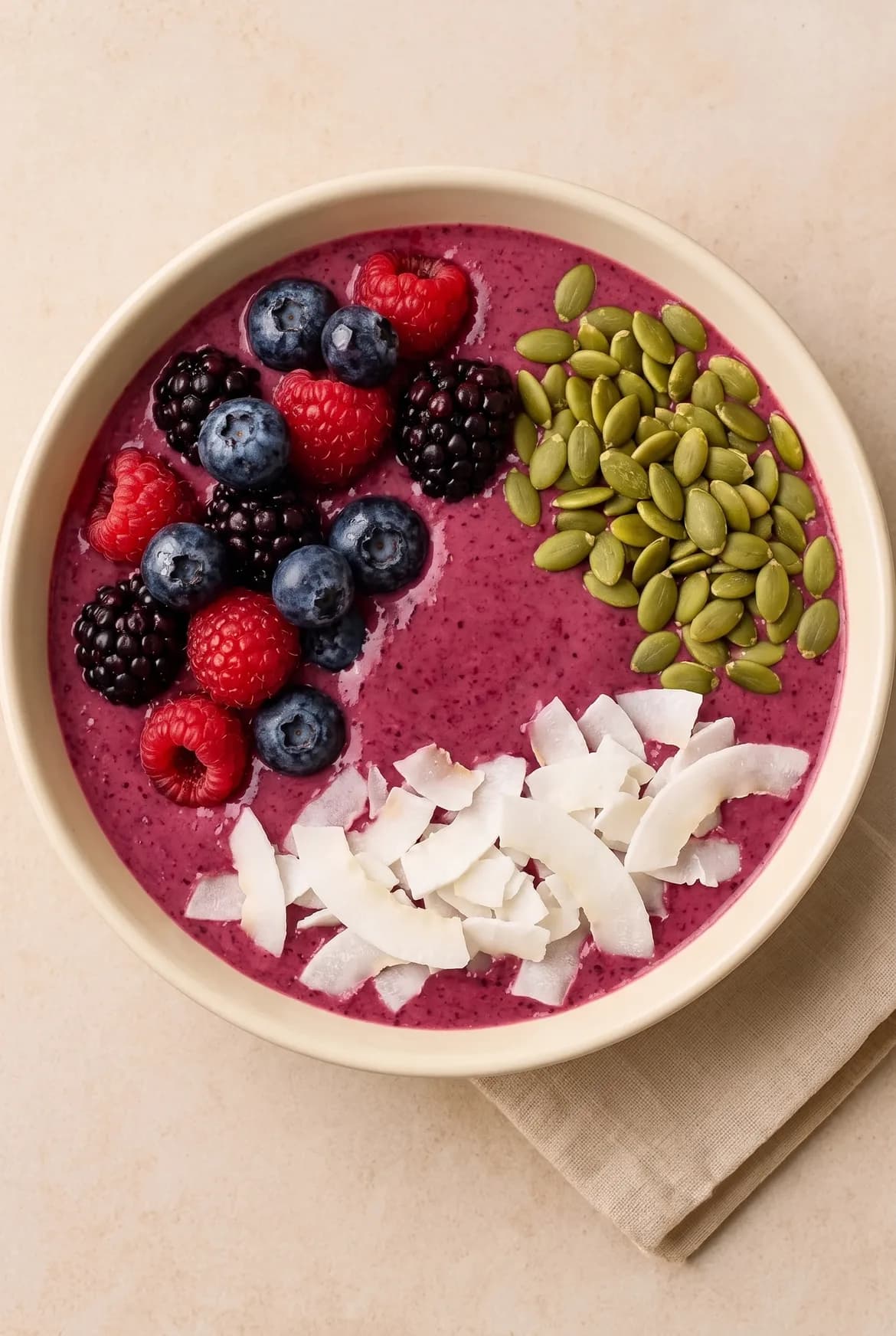
Berry skyr bowl with flaxseed oil
Ingredients
- 150 g frozen mixed berries
- 1/2 frozen banana
- 100 g skyr
- 100 ml almond drink
- 1 tbsp flaxseed oil
- 2 tbsp pumpkin seeds
- 1 tbsp coconut flakes
Instructions
- 1Blend the berries, banana, skyr, almond drink and flaxseed oil until creamy. Add a little more milk if needed.
- 2Pour into a bowl.
- 3Sprinkle with pumpkin seeds and coconut flakes.
Nutrition: 460 kcal · 18 g protein · 35 g carbs · 28 g fat
View recipe →17. Banana porridge with almond butter and hemp seeds
Stir the warm oats and add liquid if they become too thick. Add nut butter and banana at the end; the hemp seeds finish the bowl.
Banana porridge with almond butter and hemp seeds
Ingredients
- 50 g oats
- 250 ml milk or oat drink
- 1 tsp almond butter
- 1/2 banana
- 1 tbsp hemp seeds
- A pinch of salt
- A little cinnamon
Instructions
- 1Bring the oats, milk and a pinch of salt to the boil in a saucepan. Simmer for about 4 minutes until creamy.
- 2Spoon into a bowl and top with almond butter, banana slices, hemp seeds and cinnamon.
Nutrition: 450 kcal · 18 g protein · 56 g carbs · 14 g fat
View recipe →18. Rye bread with cottage cheese and flaxseed oil
A savoury option without a frying pan. When taking it with you, keep the bread separate from the moist toppings until you are ready to eat.
Rye bread with cottage cheese and flaxseed oil
Ingredients
- 2 slices wholegrain rye bread
- 150 g cottage cheese
- 1 tomato
- 1 tbsp pumpkin seeds
- 1 tsp flaxseed oil
- Fresh chives
- Pepper
Instructions
- 1Briefly toast the bread if desired.
- 2Spread generously with cottage cheese and add sliced tomato.
- 3Finish with flaxseed oil, pumpkin seeds, chives and pepper.
Nutrition: 430 kcal · 29 g protein · 40 g carbs · 18 g fat
View recipe →19. Beetroot hummus toast with egg and rocket
The five-minute preparation assumes an already-boiled egg. Allow extra time to cook one if needed. Leaving it out changes the stated nutrition.
Beetroot hummus toast with egg and rocket
Ingredients
- 2 slices wholegrain bread
- 3 tbsp beetroot hummus
- 1 boiled egg
- A handful of rocket
- 1 tsp sesame seeds
- Lemon juice and salt
Instructions
- 1Toast the bread and spread with beetroot hummus.
- 2Add the rocket and halved egg.
- 3Finish with lemon juice, salt and sesame seeds.
Nutrition: 360 kcal · 18 g protein · 42 g carbs · 15 g fat
View recipe →20. Cocoa porridge with chia and nut butter
Cook the oats with cocoa, then stir in chia. Let the porridge cool to a comfortable eating temperature and choose the nut butter you prefer.
Cocoa porridge with chia and nut butter
Ingredients
- 50 g oats
- 250 ml almond drink
- 1 tsp cocoa powder
- 1 tbsp peanut or almond butter
- 1/2 banana
- 1 tbsp chia seeds
- 1 tsp cacao nibs
Instructions
- 1Bring the oats, almond drink and cocoa to the boil and simmer gently for 4 minutes.
- 2Stir in the chia seeds and let them thicken for one minute.
- 3Spoon into a bowl and add the nut butter, banana slices and cacao nibs.
Nutrition: 470 kcal · 15 g protein · 57 g carbs · 19 g fat
View recipe →All ten additional recipes make one serving. Soaking time is extra: keep overnight oats and chia pudding refrigerated while they thicken. Follow the package instructions for frozen berries. The hummus toast uses an already-boiled egg; boil it separately if needed. Nutrition values are those supplied with each source recipe, not a promise about your individual needs.
Period breakfast recipes: where to start
If you want breakfast ideas during your period, start with the oats, yogurt or toast you already enjoy. These recipes are not tied to particular cycle days. For warm porridge, a savory shakshuka and meals for later in the day, see our menstrual phase recipes.
Allow the overnight resting time for oats and the chilling time for chia pudding. A five-minute preparation time does not mean both are ready to eat immediately. The beet hummus toast assumes a cooked egg is already available.
Make your own small breakfast rotation
Choose one quick breakfast and one option to prepare ahead. For example, alternate yogurt with walnuts and overnight oats, then make pancakes when you have more time. You do not need a different breakfast for every cycle day.
Frequently asked questions
Are all of these breakfasts high in protein?
They contain different amounts. Yogurt, eggs and cottage cheese provide a clear protein ingredient; a plant drink may contain much less protein than dairy milk or a soy drink. Check the individual recipe and product label rather than assuming the same amount across all twenty.
Which recipes work without eggs?
Oats, chia pudding, yogurt and cottage cheese toast do not need eggs. The beet hummus toast also works if you leave out the egg. Pancakes and scrambled eggs require a different recipe if you avoid eggs entirely.
Can I make a dairy-free breakfast?
Choose a suitable plant drink for the oats or chia pudding, and check any yogurt or protein powder. Substitutions change the texture and nutrition. For a vegan version, also check honey, eggs and other toppings.
Does a “hormone balancing breakfast” change my hormones?
The phrase is used in food searches, but these recipes do not come with a hormone-balancing or PMS-treatment claim. They are practical meal ideas. For personal questions about symptoms or dietary needs, speak to a qualified clinician or dietitian.
Do I need to avoid fruit, bread or coffee?
No general ban is needed for these breakfasts. Choose according to preference, tolerance and any individual guidance. Coffee is not a substitute for food when you are hungry.
What can I prepare the night before?
Overnight oats and chia pudding can rest in the fridge. Keep crunchy toppings separate. Store hummus and bread separately and assemble the toast shortly before eating.
Do I need to buy protein powder?
No. Most options here use ordinary groceries. If you do not want to use the powder listed in the smoothie bowl, choose a yogurt bowl, eggs or one of the other recipes instead.
More meal ideas: luteal phase recipes and follicular phase recipes.
For more recipes and cycle tracking, visit the Bauchgefühl homepage to find the app. The app is available in German and English.