«Hormone balance» appears on food lists, powders and supplements, but it is not a precise medical diagnosis. No single food can promise to reset a cycle. A varied, sufficient diet can still be worth building without that promise.
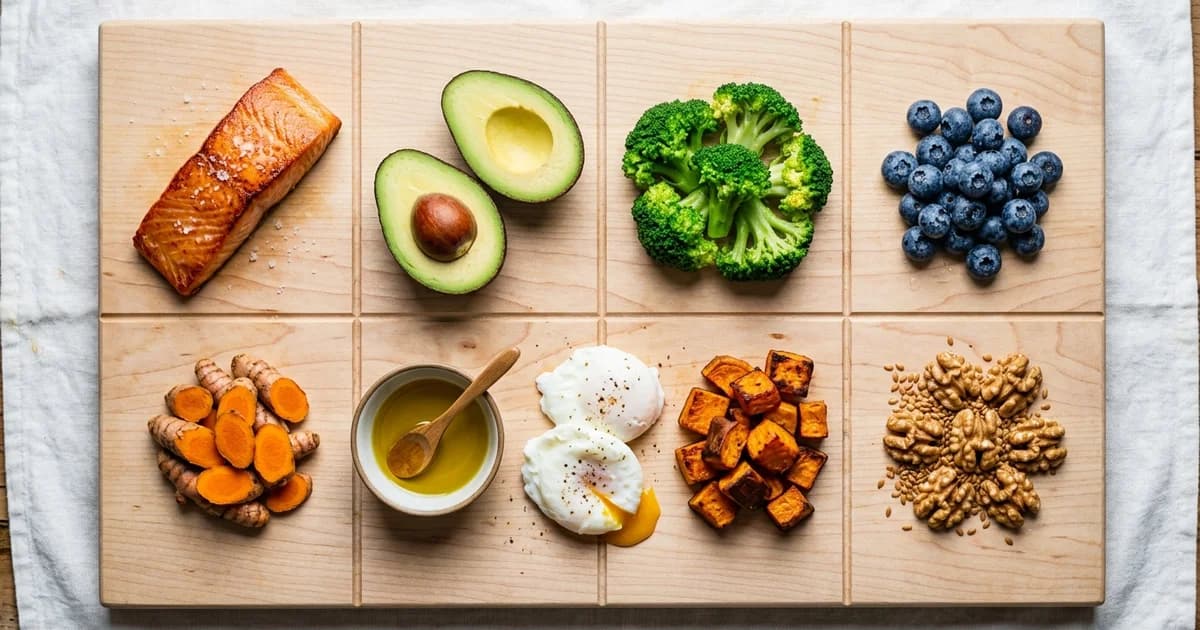
Here are ten foods or food groups and practical ways to use them. Keep the ones you enjoy and adapt for allergies, preferences and medical needs.
What does food have to do with hormones?
The body needs adequate nourishment and different nutrients for normal function. Hormone levels also change naturally during the cycle; variation is not automatically a problem to correct.
Research into fibre, gut microbes and hormone metabolism does not mean each bite directly improves oestrogen clearance. Persistent symptoms should not be reduced to a missing «superfood». Food can accompany care, but it is not a diagnostic or treatment plan.
The ten foods
1. Cruciferous vegetables: broccoli, Brussels sprouts, cauliflower and kale
These vegetables provide fibre and micronutrients. Their plant compounds are studied in relation to metabolism, but a serving of broccoli cannot be described as clearing excess oestrogen or providing a therapeutic dose of DIM.
In the kitchen: steam broccoli and dress with olive oil and lemon, roast Brussels sprouts with tahini sauce, or bake kale chips. Vary them with other vegetables rather than setting a compulsory daily amount. If you have an individual dietary restriction related to a thyroid condition, follow your clinical advice rather than assuming all crucifers are forbidden.
2. Flaxseed
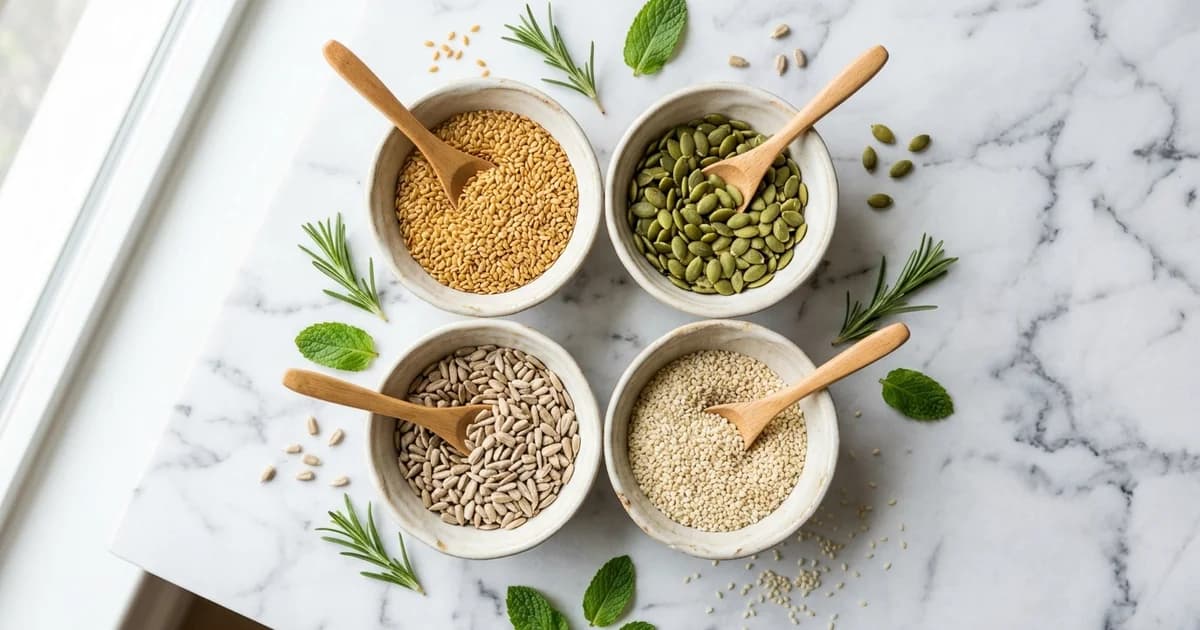
Flax contains fibre, lignans and the omega-3 ALA. A small study in 18 normally cycling women, PMID 8077314, examined cycle measures during flax consumption. It does not establish a treatment for all hormonal symptoms or prove that rotating four seeds works.
In the kitchen: add a small amount of ground flax to yoghurt, oats or a smoothie if the product is intended for uncooked use. Follow any cooking instructions on the package and increase fibre gradually. Whole seeds and ground seeds behave differently, but that does not justify a universal therapeutic dose. See seed cycling.
3. Oily fish: salmon, mackerel, sardines and herring
Fish supplies EPA and DHA. Flaxseed and walnuts mainly provide ALA, which is only partly converted to those forms. The distinction matters without making one fish meal a guarantee of pain relief.
In the kitchen: bake salmon with sweet potato, serve canned sardines on sourdough with lemon, or pair mackerel with a salad dressed with rapeseed oil. Algae oils are another possible source of EPA/DHA for people who do not eat fish; personal needs and the product matter. See our omega-3 guide.
4. Avocado
Avocado provides unsaturated fats, fibre, potassium and folate. It is not essential: other foods can help vary these nutrients too. The fact that some hormones are made from lipid precursors does not prove that eating an avocado improves hormone production.
In the kitchen: mash it on toast with lemon and pepper, add it to salad or use a little for smoothie texture. Olive oil, nuts and seeds provide alternatives for variety and budget.
5. Eggs
Eggs contain protein, choline, B12 and selenium. Their vitamin D contribution does not make them a universal solution for vitamin D intake, and a «pasture-raised» label is not required for this list to be useful.
In the kitchen: scramble eggs with spinach, add a boiled egg to salad or make an herb omelette. Two eggs can be a meal idea, not a daily prescription. Follow individual advice if you have a condition affecting dietary choices, and prepare eggs safely.
6. Berries: blueberries, raspberries, blackberries and strawberries
Berries provide fibre and plant compounds. Research into those compounds does not turn a handful into a treatment for PCOS or PMS.
In the kitchen: put them on porridge, pair them with nuts or use frozen fruit. Follow the manufacturer's instructions for frozen berries, including any requirement to cook them. Other seasonal fruit works too; fresh berries do not need to be an expensive daily obligation.
7. Fermented foods: sauerkraut, kimchi, kefir and yoghurt
Microbiome and hormone-metabolism research is developing. It does not show that one fermented food corrects a hormonal imbalance. Products also vary: not every fermented food contains live cultures when eaten, especially after heating.
In the kitchen: try a spoonful or two of sauerkraut with dinner, kefir in muesli or kimchi with rice. Consider tolerance and salt content. You can leave them out if you dislike them. Our gut health article discusses the broader food pattern.
8. Dark chocolate
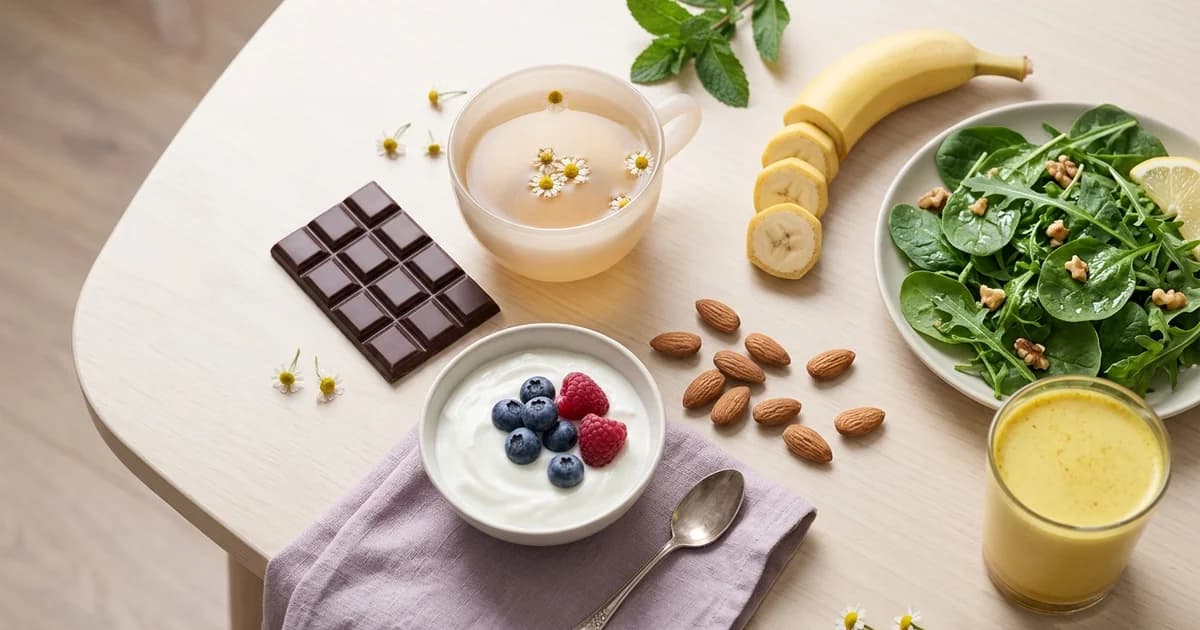
Dark chocolate contains magnesium and cocoa compounds. It is not a cramp treatment or a way to diagnose or correct deficiency. Cocoa percentage describes the product, not a medical dose.
In the kitchen: enjoy a piece or two in the afternoon if you want it. Versions at 75%, 80% or 85% taste different; choose by preference. Other chocolate is not a failure. See magnesium and the cycle for the separate nutrient question.
9. Pumpkin seeds
Pumpkin seeds contribute zinc, magnesium and protein. Actual amounts depend on the portion and product. Their zinc content does not promise improved ovulation, and ordinary portions should not be portrayed as causing copper imbalance at a precise seed-weight threshold.
In the kitchen: scatter over muesli or salad, have some as a snack, or replace pine nuts in pesto. Toast gently for flavour if you like and vary with other nuts and seeds.
10. Leafy greens: spinach, chard, lamb's lettuce and rocket
Greens contribute folate and fibre. Their iron is non-haem and absorption varies; they do not replace treatment for diagnosed iron deficiency. An accompanying vitamin C food can be part of a useful meal combination.
In the kitchen: add spinach to eggs, sauté chard, combine lamb's lettuce with pear and walnuts, or put rocket on pizza after baking. Serve with protein and a starch if that suits the meal.
What is not required: maca powders and adaptogens
These are not necessary to cook the meals above. Popularity does not establish benefit or safety, and improving a food routine does not automatically require a supplement as the next step.
Making the list practical
Choose a few ingredients you already like: flax in your usual oats, broccoli as a side, yoghurt with fruit or a bean dish with greens. Keep the useful idea of a rotation without making every weekday a new nutritional assignment. You do not need all ten every day.
For more options, explore follicular-phase food, luteal-phase food and breakfast recipes.
Frequently asked questions
Which food works fastest or has the biggest hormonal effect?
None can be ranked that way from this list. There is no guaranteed two-week or three-cycle response. Troublesome symptoms deserve assessment without waiting for a food to work.
Do I need all ten daily?
No. This is inspiration, not a checklist. Vary choices according to taste, availability, allergies and overall needs.
Can food alone address severe PMS?
It may accompany care, but symptoms that disrupt your life deserve evaluation. A food list should not delay treatment or imply that persistent symptoms are caused by imperfect eating.
Is soy good or bad for hormones?
Tofu, tempeh and ordinary soy foods are not the same as concentrated isoflavone supplements. The word «hormones» alone does not justify a universal ban. Seek individual advice for a specific medical condition or medication.
Do I need supplements, or can they replace food?
Needs vary. A vegan diet, for example, requires a reliable B12 source. Other decisions depend on intake, circumstances and identified deficiencies. Supplements do not replace adequate food, and this list does not establish which ones you need.
What about pregnancy?
Follow pregnancy-specific guidance on food safety and fish choices, and discuss individual questions with your care team. Ordinary food ideas are not permission to use concentrated herbal or nutrient products during pregnancy.
What should I avoid?
There is no hormone-specific forbidden-food list here. An adequate, flexible pattern matters more than demonising seed oils or every processed food. If eating is highly restricted or symptoms persist, qualified support is appropriate.
This article offers general information and cooking ideas, not individual medical advice.