Magnesium contributes to normal muscle and nerve function and many metabolic reactions. That makes it relevant to everyday nutrition, but it does not make a supplement a guaranteed solution for PMS, period pain or poor sleep.
This guide separates food sources, intake references and supplementation. It also includes a sample day and a flexible week of meal ideas. Persistent symptoms deserve their own assessment rather than an assumption that magnesium is the missing ingredient.
What magnesium does in the body
Magnesium participates in hundreds of enzyme systems, including those involved in energy metabolism, muscle function and nerve signalling. It is also present in bone. These normal functions explain why adequate intake matters; they do not establish that more magnesium improves every symptom.
A low intake, a diagnosed deficiency and a response to a supplement are different things. A food diary may help describe your eating pattern, but it cannot diagnose deficiency. Interpretation of symptoms and laboratory results belongs in a clinical assessment.
Period pain, PMS and sleep: different questions
Some small studies have investigated magnesium for premenstrual symptoms. The findings do not establish a reliable benefit for every person, a single best dose or a substitute for established treatment. PMS and menstrual cramps are also different outcomes and should not be treated as interchangeable evidence.
The Cochrane review of dietary supplements for painful periods found no high-quality evidence supporting dietary supplements for dysmenorrhoea and highlighted limitations in the available studies. A plausible muscle-related mechanism is not proof that a particular magnesium product will relieve cramps.
Sleep research often involves populations that differ from people with premenstrual sleep difficulties. Results in older adults, for example, cannot simply be transferred to cycle-related insomnia. If sleep problems persist, consider an assessment of the broader causes rather than increasing a supplement on your own.
Does magnesium status change during the cycle?
Studies have examined fluctuations in circulating magnesium and other measures across the cycle. They do not provide a practical rule that everyone loses excessive magnesium after ovulation or needs a larger dose on a particular day.
Cycle timing also varies. The luteal phase begins after ovulation, not universally on day 15. Regular meals with a range of magnesium-containing foods can be useful throughout the month, without treating the phase as a deficiency diagnosis.
How much do you need, and what can low status look like?
The DGE reference values give about 300 mg per day for adult women. Other authorities use somewhat different figures and age categories. These are total dietary intake references, not instructions to take that amount as a supplement or to add an extra dose for «optimal» menstrual health.
Possible features of low magnesium can include weakness, fatigue or muscle symptoms, but those complaints have many causes. A normal or abnormal blood result needs context; neither a craving for chocolate nor a few cramps proves deficiency. Persistent symptoms, palpitations or marked weakness should be discussed with a clinician.
Malabsorption, kidney function and some medicines can affect assessment and management. Do not assume everyone eating convenience food is deficient or that everyone eating fresh food is protected from a medical problem.
Food sources: seven groups to use in meals
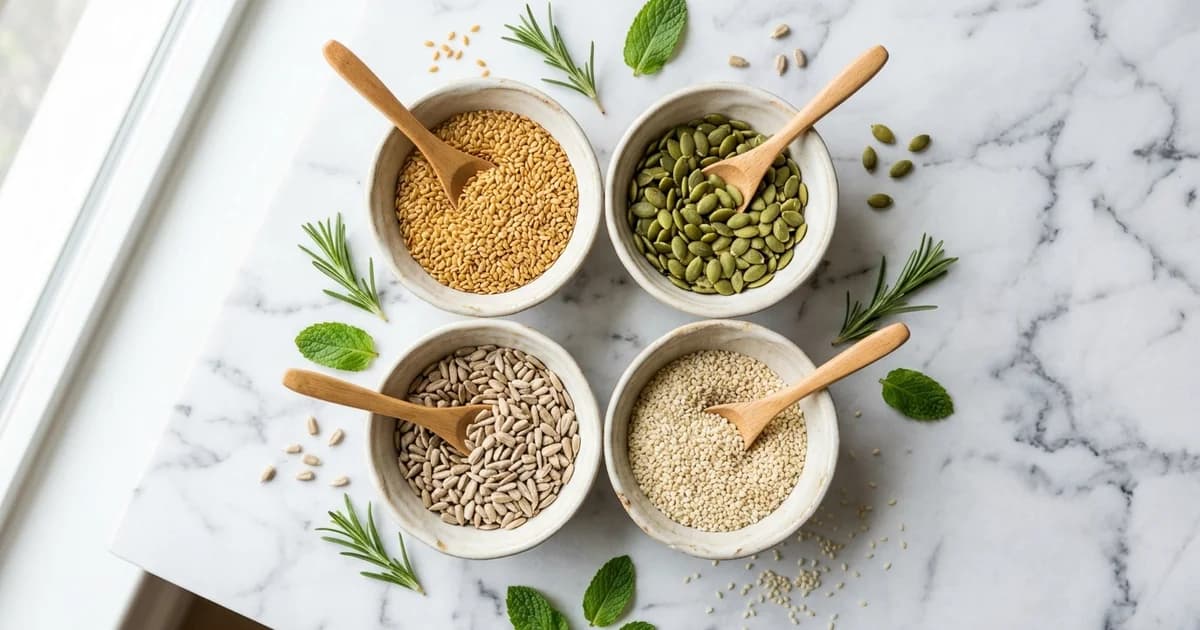
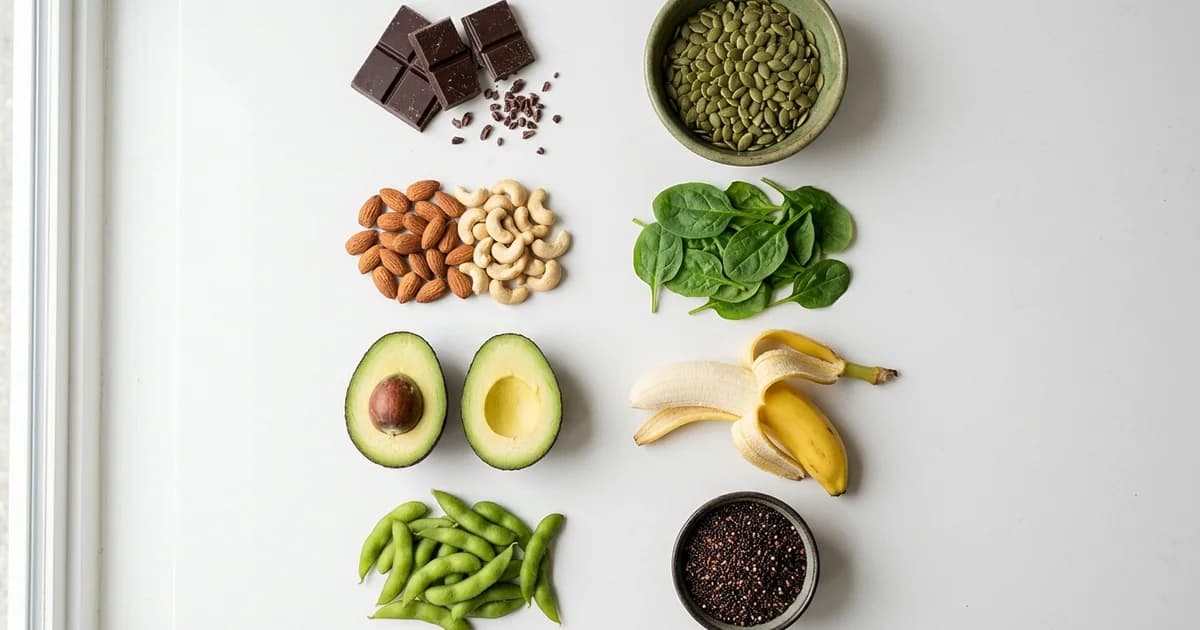
- Seeds: pumpkin seeds, sesame and other seeds add texture to salads, oats and yoghurt. Amounts vary by seed and portion.
- Nuts and nut butter: almonds, cashews and walnuts can be snacks, toppings or part of a sauce.
- Wholegrains: oats, wholemeal bread and brown rice contribute alongside other foods; a grain does not need a phase-specific role.
- Legumes: black beans, lentils, chickpeas and edamame bring fibre and plant protein as well as minerals.
- Green vegetables: spinach and other greens can go into eggs, soup or a warm meal. Raw and cooked weights are not directly comparable.
- Cocoa and dark chocolate: these contain magnesium, but chocolate cravings are not a diagnostic test. Choose chocolate for taste, not as a prescribed mineral dose.
- Other foods and mineral water: avocado, bananas and some fish contribute smaller amounts. A mineral water label shows its magnesium content; waters vary considerably.
No single food needs to do all the work. Individual values depend on the product, preparation and portion. Our ten luteal-phase recipes show several of these ingredients in complete meals.
A sample day
Breakfast: porridge with pumpkin seeds and banana. Add milk or a suitable alternative according to your needs.
Lunch: a lentil salad with spinach and wholemeal bread, or a warm bean dish if you prefer cooked food.
Snack, if wanted: almonds or a little dark chocolate, alongside fruit if that suits your hunger.
Dinner: salmon or tofu with brown rice and vegetables. This is an example of variety, not a calculated prescription or a guarantee that everyone's daily requirement is covered.
Timing in the luteal phase
You can keep these foods in your routine before, during and after your period. There is no established universal rule to start a supplement at ovulation, stop at bleeding or take it just before bed.
If a clinician recommends supplementation, follow the agreed dose and timing. Tracking symptoms may help a conversation about whether the overall plan is useful, but it should not become a reason to repeatedly raise the dose.
Supplements: form, amount and limits
Citrate, glycinate and oxide differ in formulation and tolerance. Some forms are absorbed differently, but that does not establish a universally best product for menstrual cramps. The amount of elemental magnesium matters; it is not always the same as the total weight of the compound on the front of the package.
The BfR assessment recommends a maximum of 250 mg per day from food supplements for its assessed population. This is not the same as the total dietary reference or an individual treatment dose. National limits differ, and medically supervised treatment is a separate situation.
Extra magnesium can cause diarrhoea or other gastrointestinal effects. Kidney disease increases the importance of professional advice, and magnesium can interfere with the absorption of some medicines. Check the full set of products you take instead of assuming separate «sleep», «cycle» and mineral products do not overlap.
Severe PMS, a restrictive diet or intensive exercise is not by itself an instruction to buy a supplement. These situations may call for assessment of food intake or symptoms first. A failed two-week food experiment is not proof that a higher dose is needed.
What research still needs to establish
Studies differ in participants, baseline magnesium status, dose, preparation and outcomes. Important open questions include whether people without deficiency benefit, how magnesium compares with established care, whether combination products add value, and whether any benefits persist over time.
Evidence about treating deficiency should not be presented as evidence that supplementation improves mood or sleep in everyone. Similarly, a nutrient's normal function should not be turned into a promise about a specific recipe or app.
A flexible week of meal ideas
The existing weekly rotation can still be useful as cooking inspiration:
- Monday: porridge with pumpkin seeds and banana; black bean stew later.
- Tuesday: spinach and feta omelette; dark chocolate if you fancy it.
- Wednesday: almond butter on toast; salmon with brown rice and broccoli.
- Thursday: spinach, banana and cashew-butter smoothie; sweet potato and black bean tacos.
- Friday: overnight oats with pumpkin seeds and dates; edamame and avocado salad.
Choose the ideas you like; this is not a requirement to eat differently each weekday. Our separate 28-day meal plan offers more meal ideas, with the same need to adapt portions and preferences.
Frequently asked questions
Can I take magnesium every day?
Regular dietary intake is normal. Daily supplementation is a different decision and should depend on your situation, product and any clinical advice. Do not treat a cycle label as a prescription.
How quickly does it work for PMS?
There is no guaranteed response time. Some trials assess symptoms over several cycles, but that does not mean everyone should self-treat for that period. Seek care for troublesome symptoms instead of waiting for a promised effect.
Is magnesium in water relevant?
It can contribute. Check milligrams per litre on the label and the amount you drink. «Mineral water» does not imply the same magnesium content in every bottle.
Can I get too much from ordinary food?
In people with healthy kidney function, excessive intake from ordinary foods is generally less of a concern than high supplemental intake. Kidney disease or an individual restriction changes the advice; «food» is not a reason to ignore your clinical plan.
Is it better before or after exercise?
There is no universal timing rule for everyone. Overall intake and recovery matter more than attaching a mineral to a workout window. Persistent cramps or fatigue should not automatically be labelled magnesium deficiency.
Does it help with period bloating?
Some studies have considered fluid-related premenstrual symptoms, but reliable relief is not guaranteed. Persistent or new bloating can have other causes. Our bloating food article is a separate discussion, not a reason to combine supplements.
Which form is best for cramps?
No form has been established here as universally best. Tolerance, dose, kidney function and medication need consideration. A pharmacist or clinician can help assess a specific product.
For broader meal ideas, see ten foods to vary in your diet. This article provides general information and does not replace individual medical advice.