The first time I figured out that my jeans weren't shrinking and my body was just retaining water for a week straight, it was a weirdly comforting realization. Nothing was wrong with me. My hormones were doing their job, and the bloating was a predictable, temporary, fixable thing. If you're reading this because your luteal week feels like being slowly inflated, you're in the right place.
Quick TL;DR:
- Potassium-rich and water-rich foods (banana, cucumber, watermelon, avocado) flush out excess sodium and calm fluid retention.
- Ginger, fennel, and peppermint are the three most-studied anti-bloat herbs, and they're cheap and easy to use.
- Cutting refined salt, alcohol, and gum (yes, gum) for the week before your period does more than adding any "superfood".
Why You Bloat Before Your Period
In the luteal phase, progesterone rises and slows gut motility. At the same time, shifting estrogen and aldosterone signals push your kidneys to hold onto more sodium and water. The combination is slower digestion plus extra fluid, and the result is the classic "I put on three pounds in a day" sensation. Cleveland Clinic on PMS bloating has a good plain-language explainer if you want more on the mechanism.
This isn't real fat gain. It's temporary, it resolves when your period starts, and food can make the week a lot more comfortable.
Foods That Ease PMS Bloating
Potassium-Rich Foods
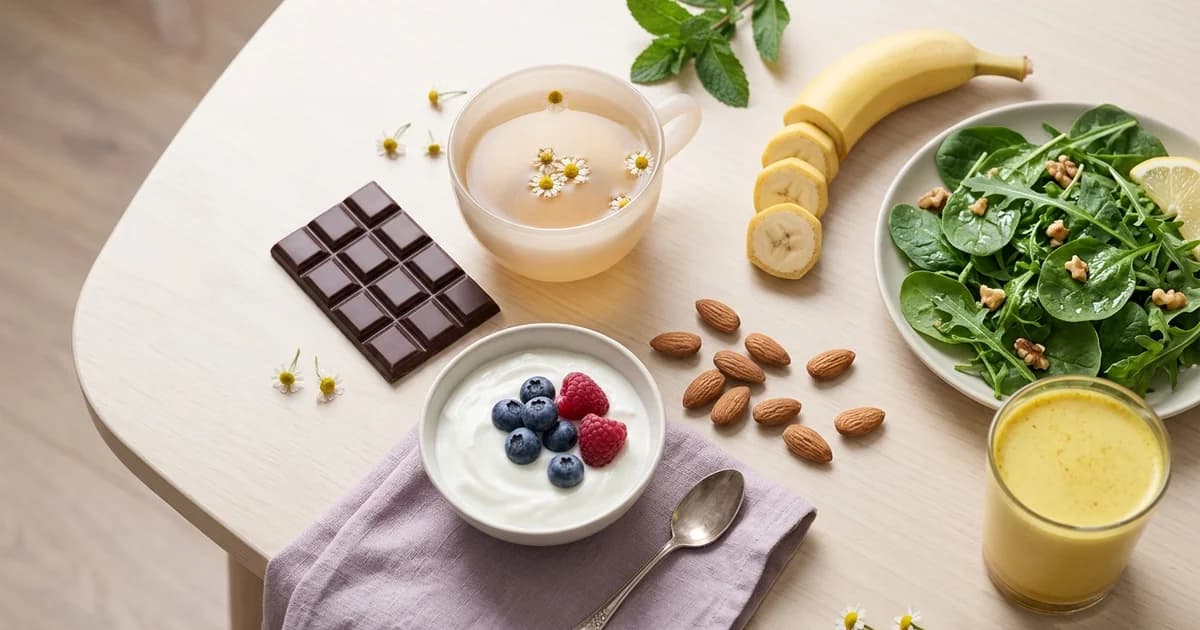
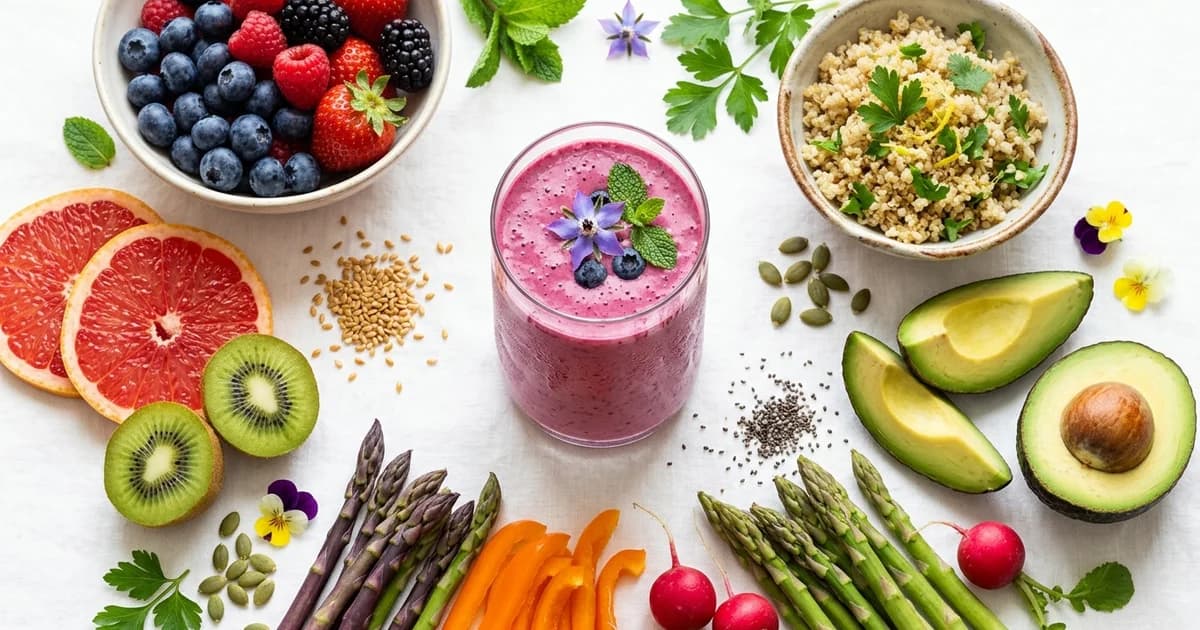
Potassium is the direct counterweight to sodium. When you eat more of it, your kidneys relax their water-holding grip. Bananas, avocados, sweet potatoes, spinach, and white beans are the easiest wins. One medium banana delivers about 420 mg of potassium, which is roughly the amount of sodium in a single pinch of takeaway soy sauce, for reference.
Water-Rich Foods
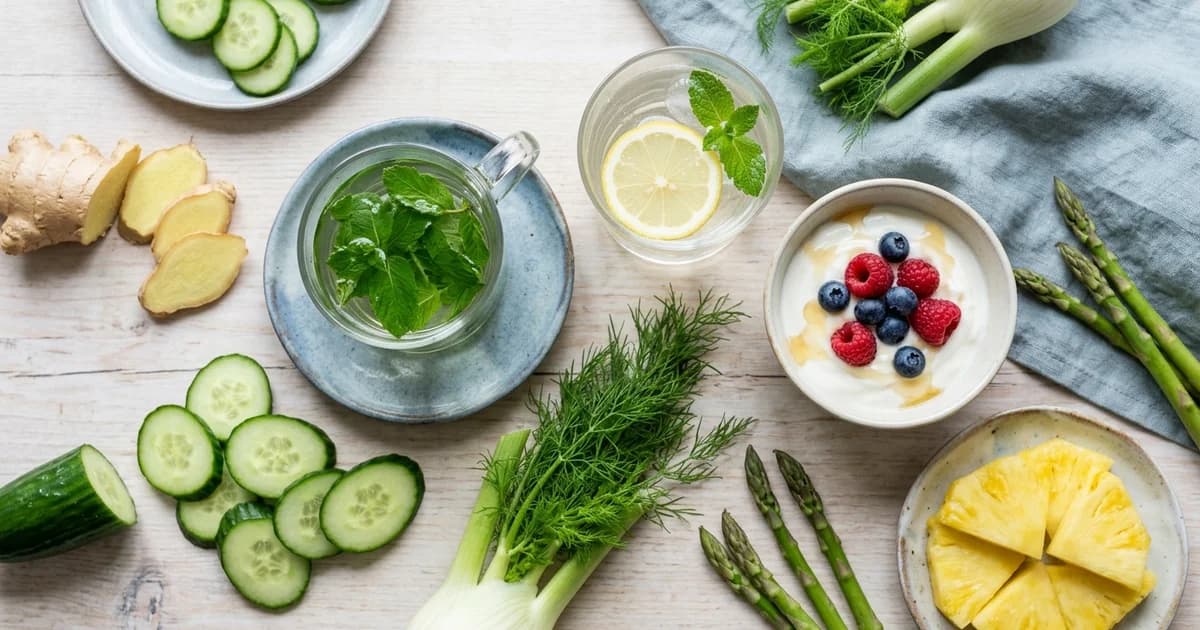
It sounds counterintuitive to drink more when you're holding water, but dehydration triggers even more water retention. Cucumber is 95% water, watermelon and zucchini both hover around 92%, and iceberg lettuce (unfairly maligned) is around 96%. Eating water is easier on your gut than chugging it, especially when you're bloated.
Magnesium
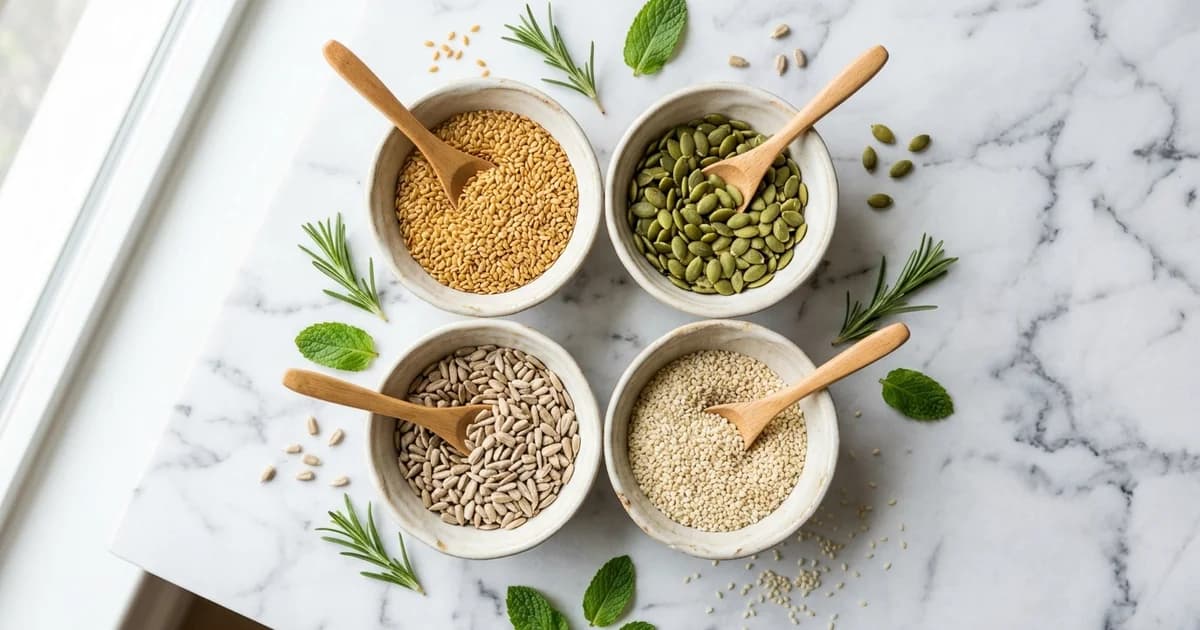
Magnesium relaxes smooth muscle, including the muscle lining your gut, which helps things move through. Pumpkin seeds, dark chocolate, almonds, and leafy greens are your friends. A 2017 review on PubMed found magnesium supplementation reduced PMS symptoms in most studies examined, though the evidence is still considered moderate. We cover dosing in our dedicated magnesium and cycle guide.
Ginger
Ginger speeds up gastric emptying (the rate at which food leaves your stomach) and has mild anti-inflammatory effects. The NHS digestive health guidance mentions ginger among safe first-line remedies for indigestion and related bloating. Fresh grated ginger in hot water is the cheapest possible PMS hack.
Fennel
Fennel seeds contain anethole, a compound that reduces intestinal gas and eases cramping. Chewing a teaspoon of fennel seeds after meals is a centuries-old trick in Indian households, and it actually works. Fennel tea is the easier modern version.
Low-FODMAP Considerations
If your bloating is severe and doesn't respond to the standard approaches, you might be reacting to FODMAPs (fermentable short-chain carbs) in common foods like onion, garlic, and beans. A 2 to 4 week low-FODMAP experiment during the luteal phase only can tell you a lot. Don't do it forever, just long enough to identify triggers.
Foods That Make Bloating Worse
The week before your period is not the week for:
- High-sodium processed foods. Chips, takeout, cured meats, instant noodles. Sodium directly drives water retention, and the luteal phase amplifies the effect.
- Refined carbs and sugar. They spike insulin, which tells your kidneys to hold more sodium. Double hit.
- Alcohol. Dehydrates you and inflames the gut lining.
- Carbonated drinks. The gas has to go somewhere.
- Sugar alcohols and gum. Sorbitol, xylitol, and mannitol pull water into your colon and produce gas. Skip them in luteal week.
- Excessive raw cruciferous veg. Normally I love broccoli, but raw in large amounts during PMS week is gas central. Cook it.
The 5 Recipes
1. Ginger-Fennel Calming Tea
My desert-island PMS drink. I make a big pot at breakfast, pour half into a thermos, and sip through the day. Fresh ginger and lightly crushed fennel seeds, simmered, strained. Add lemon if you like. That's it.
Ginger-Fennel Calming Tea
Ingredients
- 1 tablespoon fresh ginger, thinly sliced
- 1 teaspoon whole fennel seeds
- 1 teaspoon whole coriander seeds (optional)
- 500 ml filtered water
- 1 teaspoon raw honey (optional)
- 1 slice lemon
Instructions
- 1Lightly crush fennel and coriander seeds with the back of a spoon to release the oils.
- 2Bring water to a simmer and add ginger, fennel and coriander.
- 3Cover and simmer gently for 8 to 10 minutes.
- 4Strain into two mugs, add lemon and honey if using.
- 5Sip slowly after lunch or dinner, especially on high-bloat days.
Nutrition: 12 kcal · 0 g protein · 3 g carbs · 0 g fat
View recipe →2. Cucumber-Mint Salad with Lemon
Ten minutes, almost no cooking, extremely high water content. Diced cucumber, fresh mint, olive oil, lemon juice, pinch of salt. Crumbled feta optional (skip if you find dairy makes your PMS worse). I eat this as a starter before dinner all of luteal week.
Cucumber-Mint Salad with Lemon
Ingredients
- 1 large cucumber, peeled and diced
- 1 handful fresh mint leaves, chopped
- 1 tablespoon extra virgin olive oil
- 1 tablespoon fresh lemon juice
- Pinch of sea salt
- 2 tablespoons crumbled feta (optional)
Instructions
- 1Peel the cucumber if the skin feels tough, otherwise leave it on for extra fiber.
- 2Dice into bite-sized pieces and place in a bowl.
- 3Add mint, olive oil, lemon juice and a small pinch of salt.
- 4Toss gently and top with feta if using.
- 5Serve immediately as a side dish or light starter.
Nutrition: 110 kcal · 2 g protein · 6 g carbs · 9 g fat
View recipe →3. Sweet Potato and Spinach Bowl
Sweet potato gives you complex carbs and potassium. Spinach adds magnesium and folate. Lentils keep you full without the raw-legume bloat. Topped with pumpkin seeds (more magnesium, plus zinc) and lemon. This is my go-to PMS lunch, because I can batch-roast sweet potatoes on Sunday and throw the rest together in 5 minutes.
Sweet Potato and Spinach Bowl
Ingredients
- 1 medium sweet potato, cubed
- 1 tablespoon olive oil
- 1 teaspoon smoked paprika
- 150 g baby spinach
- 1 clove garlic, sliced
- 1 can (240 g) cooked lentils, drained
- 1 tablespoon pumpkin seeds
- Juice of half a lemon
Instructions
- 1Preheat oven to 200 degrees Celsius.
- 2Toss sweet potato cubes with half the olive oil and the paprika, then roast for 25 to 30 minutes until tender.
- 3Warm the remaining olive oil in a pan, add garlic for 30 seconds, then wilt the spinach.
- 4Add the lentils and heat through for 2 minutes.
- 5Divide into bowls, top with roasted sweet potato, pumpkin seeds and a squeeze of lemon.
Nutrition: 305 kcal · 13 g protein · 38 g carbs · 10 g fat
View recipe →4. Banana-Oat Anti-Bloat Smoothie
Bananas for potassium, oats for gentle soluble fiber, flaxseed for lignans, ginger because of course, almond butter for satiety. Blends in a minute. Josef makes this most mornings during the week before his wife's period, because apparently that's just how our household runs now.
Banana-Oat Anti-Bloat Smoothie
Ingredients
- 1 ripe banana
- 3 tablespoons rolled oats
- 1 tablespoon ground flaxseed
- 200 ml unsweetened almond milk
- 1 teaspoon fresh grated ginger
- 1 small handful baby spinach
- 1 teaspoon almond butter
Instructions
- 1Add oats and almond milk to the blender first and let them sit for 2 minutes to soften.
- 2Add banana, flaxseed, ginger, spinach and almond butter.
- 3Blend until fully smooth, about 45 seconds.
- 4Pour into a glass and drink slowly, ideally as breakfast or an afternoon snack.
Nutrition: 315 kcal · 9 g protein · 48 g carbs · 10 g fat
View recipe →5. Simple Lentil Kitchari
This is an Ayurvedic one-pot of red lentils, basmati rice, and warming spices. It's ridiculously gentle on the gut, probably because red lentils cook down to a porridge and don't ferment aggressively. Cumin, fennel, turmeric, ginger. A bowl of kitchari during heavy bloat is the closest thing I have to a reset button.
Simple Lentil Kitchari
Ingredients
- 100 g red lentils, rinsed
- 100 g basmati rice, rinsed
- 1 tablespoon ghee or olive oil
- 1 teaspoon cumin seeds
- 1 teaspoon fennel seeds
- 1 teaspoon ground turmeric
- 1 inch fresh ginger, grated
- 800 ml water
- 1 teaspoon sea salt
- Fresh cilantro to serve
Instructions
- 1Warm the ghee in a medium pot and toast cumin and fennel seeds for 30 seconds until fragrant.
- 2Add turmeric and ginger and stir for 10 seconds.
- 3Add rinsed lentils, rice, water and salt, then bring to a boil.
- 4Reduce heat, cover partially and simmer for 25 to 30 minutes until soft and porridge-like.
- 5Stir well, adjust salt, and serve topped with fresh cilantro.
Nutrition: 280 kcal · 11 g protein · 46 g carbs · 6 g fat
View recipe →How to Use These Recipes
You don't need all five. Pick two or three for your luteal week and rotate. My usual pattern: ginger-fennel tea daily, smoothie for breakfast 3 to 4 days, kitchari for dinner twice, salad and sweet-potato bowl as fillers. By day three, the difference is real.
If you're new to eating for your cycle in general, cycle syncing for beginners walks through the full framework. For the full luteal-phase food list beyond bloating specifically, see what to eat in your luteal phase. And for the broader PMS picture, including mood and cravings, our PMS diet guide covers more ground.
Frequently Asked Questions
How much water should I drink when I'm bloated?
Aim for about 30 to 35 ml per kilogram of body weight across the day, split into small amounts rather than one big chug. Paradoxically, drinking more water helps flush retained sodium and reduces bloating. Add a pinch of sea salt to one glass daily, because you still need electrolytes, just not the ultra-processed kind.
Is PMS bloating the same as IBS?
Not exactly. PMS bloating follows the luteal-phase hormonal pattern and resolves when your period starts. IBS bloating happens at any point in the cycle and has different triggers. If you bloat severely all month and not just for a week, that's worth mentioning to your GP, because it might be IBS or another gut issue that benefits from specific treatment.
Can probiotics help with PMS bloating?
Possibly. Some women report real improvement from daily probiotic-rich foods (live yogurt, kefir, sauerkraut) over 2 to 3 cycles. The evidence for specific probiotic strains is still developing, so I'd start with food-based sources before buying capsules. Consistency matters more than brand.
Should I avoid fruit because of the sugar?
No. Whole fruit is fine, and many high-water fruits (watermelon, berries, pear) actively help with bloating. The problem is fruit juice, dried fruit, and smoothies made with three bananas plus honey. Whole fruit, in normal portions, is on the "eat" list.
When should I see a doctor about bloating?
If bloating is severe enough to need loose clothing every day, lasts beyond your period, comes with pain, unexplained weight loss, or changes in bowel habit, book an appointment. Persistent bloating is one of those symptoms that deserves proper medical advice, not just a tea recipe.
Disclaimer
This article is general nutrition and lifestyle information, not medical advice. I'm a co-founder, not a doctor. If your symptoms are severe, persistent, or newly changed, please talk to a qualified healthcare professional. Nothing here replaces personalized medical advice, and the recipes are food ideas, not treatments for any condition.