Omega-3 is a family of fats, not one interchangeable ingredient. Understanding EPA, DHA and ALA makes it easier to compare fish, seeds, nuts and algae products without turning any of them into a promise about the menstrual cycle.
This guide covers food sources, period-pain research, omega-6, cycle timing and practical storage and cooking tips.
EPA, DHA and ALA: three forms
EPA, eicosapentaenoic acid: present in oily fish and some algae oils, it is used to make signalling substances involved in regulating inflammatory processes. That does not guarantee that a meal relieves cramps.
DHA, docosahexaenoic acid: also found in fish and algae, it forms part of cell membranes and is particularly prominent in the brain and retina.
ALA, alpha-linolenic acid: found in flaxseed, walnuts and other plant foods, it must come from the diet. Conversion to EPA and DHA is limited, so eating ALA does not deliver an identical amount of preformed EPA/DHA. See the NIH omega-3 fact sheet.
What does research say about period pain?
Some trials and reviews report potential improvements with omega-3 supplementation, but studies differ in dose, participants, duration and quality. The Cochrane review of dietary supplements for dysmenorrhoea described limited evidence for some supplements and no high-quality evidence across its assessed comparisons.
That does not establish a particular fish meal or supplement as better than pain medication. It also does not show that cramps caused by different conditions respond in the same way. A biochemical explanation involving prostaglandins is not a personal treatment recommendation.
Seek assessment for severe or worsening pain. Do not replace prescribed treatment or wait for several cycles because an article promises that a supplement will eventually work.
Three source groups
Oily fish
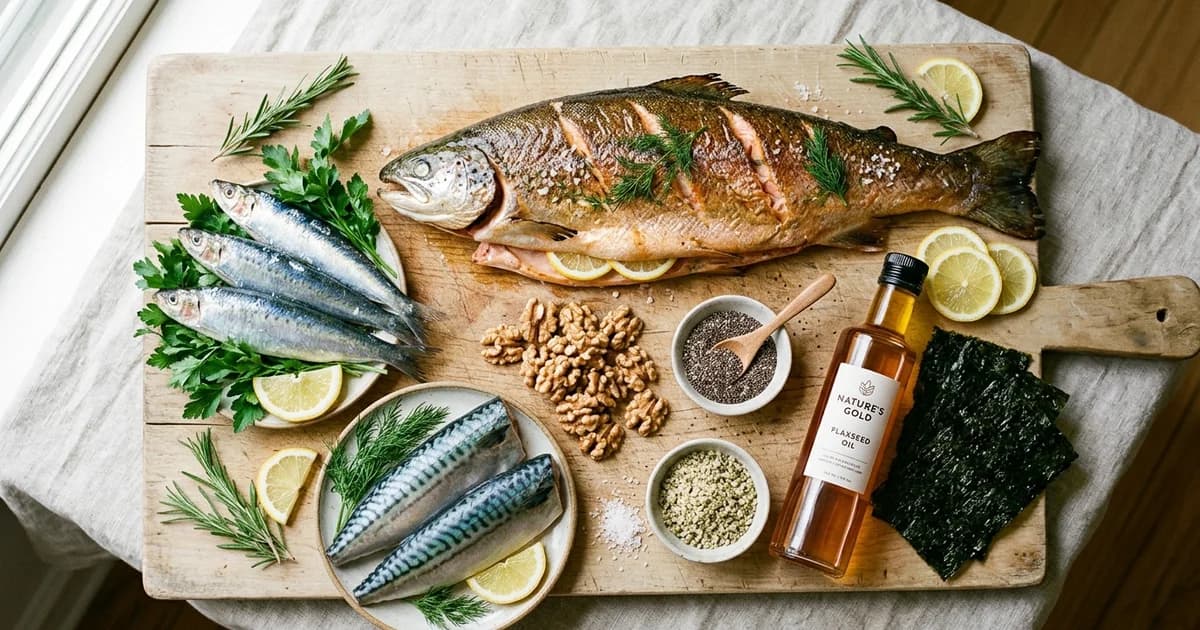
Salmon, herring, mackerel, sardines and anchovies provide EPA and DHA in varying amounts. Species, farming conditions, preparation and portion size matter; wild salmon does not always contain more than farmed salmon.
Canned sardines are convenient, herring can be a different option, and mackerel works in a meal such as the one in our separate 28-day plan. Check relevant fish guidance for your country and situation, especially pregnancy. A serving list is not a prescription to eat the same fish every day.
Plant sources of ALA
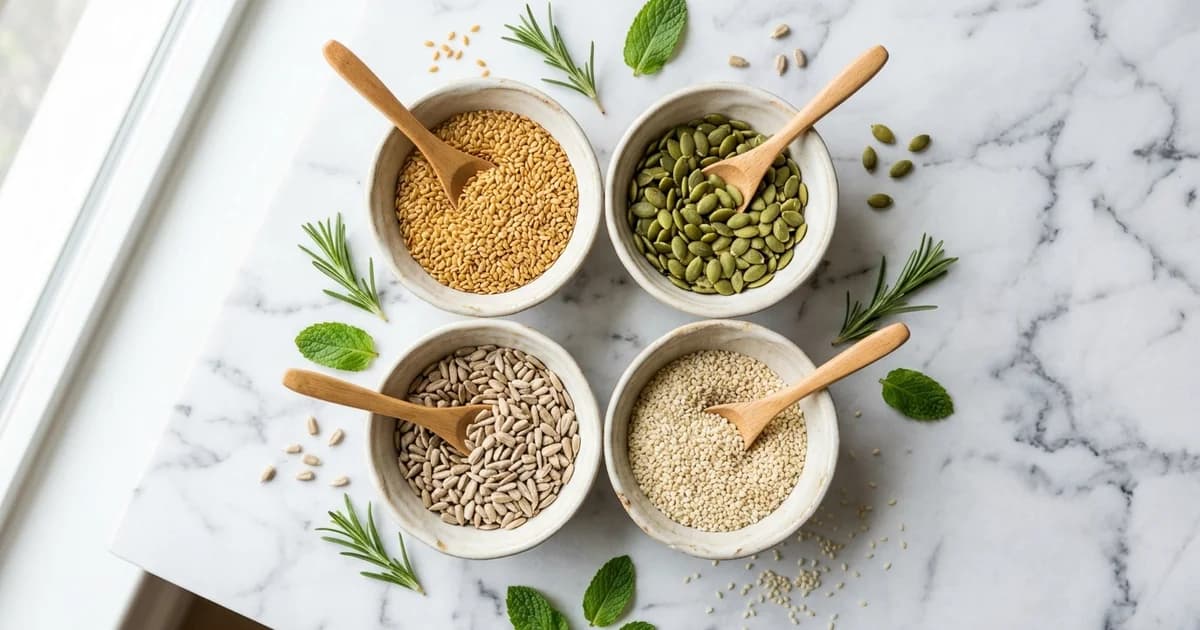
Ground flaxseed, chia, walnuts and hemp seeds offer different ways to include ALA. Their fibre, protein and other nutrients also vary. Use them in porridge, yoghurt, salads or sauces if suitable for the product's intended use.
Do not compare a spoonful of ALA-containing seeds with a capsule's EPA/DHA number as though the figures represented the same nutrient delivery. Serving weights and labels matter more than assuming every tablespoon is identical.
Algae oils
Certain microalgae oils contain DHA and sometimes EPA. Products differ, so check the actual amounts of each, not only the total «algae oil» weight. They offer a possible direct source for people who do not eat fish.
A plant-based diet should not automatically be described as deficient because ALA conversion is limited. Whether supplementation is appropriate depends on dietary intake and individual circumstances. There is no universal algae-product prescription in this guide.
Omega-6 and the ratio question
Omega-6 fats also have normal functions. The claim that sunflower, soy and corn oils are inherently inflammatory oversimplifies the evidence. The Harvard Nutrition Source overview of fats includes these among unsaturated fat sources.
An exact omega-6-to-omega-3 ratio is not a validated personal target for preventing cramps. Adding foods you enjoy that contain omega-3 can be useful without trying to calculate a hormone-correcting ratio or eliminating all seed oils.
Olive and rapeseed oils are practical choices too. Select oils for taste, cooking use and the overall food pattern rather than treating one ratio as the explanation for all cycle symptoms.
Intake references and supplements
Different authorities give different reference values, and ALA references should not be confused with EPA/DHA amounts. A population intake reference is also different from doses used in trials or a prescribed medicine.
For a supplement, consider the amount of EPA and DHA per serving, quality information, storage and any medication interactions. Higher doses are not automatically more useful. Some high-dose products are used in specific medical settings; that does not make them suitable for self-treatment of period pain.
Discuss a product with a clinician if you have a bleeding disorder, take anticoagulants, are pregnant or have another relevant condition. Do not use a single dose threshold from an article as a guarantee that everything below it is safe for you.
Across the cycle
Before ovulation: fish, nuts and seeds can be part of normal meals, without a special fertility claim.
In the luteal phase: keep food choices consistent if that suits you. There is no established universal requirement to increase omega-3 or magnesium after ovulation.
During menstruation: choose meals according to appetite and comfort. These fats are not an immediate painkiller, and cycle timing is not a reason to add a supplement automatically.
Cooking and storage tips
Keep the useful practical focus, without universal rules about heat:
- Cook fish safely by baking, poaching, grilling or pan-cooking according to the recipe. Do not undercook it to «protect» a nutrient.
- Follow seed packaging. Some flaxseed products require cooking; a blanket instruction to add every seed only after cooking is inappropriate.
- Store nuts, seeds and oils as directed, protected from unsuitable heat and light. Refrigeration may be recommended for particular products after opening.
- Use each oil for its labelled purpose. Some cold-pressed oils suit dressings; heat suitability is product-specific.
Frequently asked questions
How much omega-3 do I need each day?
The answer depends on the form, reference system and personal context. This guide does not prescribe a cycle-specific amount. Dietary assessment can distinguish ALA intake from EPA/DHA and any reason for a supplement.
Can I take too much?
Yes, supplemental doses can have adverse effects or interact with care. Follow product and professional guidance; more is not automatically better for hormones or pain.
Are flaxseeds enough as an omega-3 source?
They supply ALA, which is valuable but not identical to preformed EPA/DHA. Whether your overall intake is appropriate depends on the rest of your diet and circumstances, not one ingredient alone.
Which algae oil should I buy?
No brand is recommended here. Compare EPA/DHA content, quality information, storage and suitability with a professional if needed. A large «oil» number on the label does not necessarily mean a large EPA/DHA dose.
Will omega-3 directly change my cycle?
No predictable change in timing or regularity can be promised. Missing or markedly changed periods need assessment rather than an experiment with oil capsules.
Can a supplement replace fish?
It may provide EPA/DHA, but it does not reproduce the protein and other nutrients in fish. A diet without fish can use other foods for those needs; the replacement depends on the whole pattern.
How soon will cramps improve?
There is no guaranteed response or timeline. Trials over several cycles do not mean you should delay effective care while waiting. Discuss persistent pain with a qualified professional.
Do I need to calculate the omega-6-to-omega-3 ratio?
No exact meal-by-meal ratio is required here. Focus on a varied pattern rather than assuming that one calculated ratio determines the inflammatory response or the experience of period pain.
For meal ideas, see ten foods to vary and ten recipes around ovulation. For the separate mineral topic, see magnesium and the cycle. This article does not replace individual medical advice.