There is no single PCOS diet plan that suits everyone. Food can be part of care, but advice to remove all carbohydrates, follow one supplement ratio or «cure» PCOS through a menu overstates what the evidence can establish.
This guide covers insulin resistance, glycaemic index, protein and fat, inositol, omega-3s and a practical day of meals. PCOS needs diagnosis and follow-up; cooking ideas do not replace that care.
PCOS is not one thing
Polycystic ovary syndrome can involve irregular ovulation, signs of excess androgens and a characteristic ovarian appearance. The combination differs, and diagnosis requires more than a self-checklist or a scan in isolation. A clinician also considers other causes of symptoms and the person's age and circumstances.
Insulin resistance can occur at different body weights. Cells respond less effectively to insulin, and higher insulin levels can interact with androgen production. That makes metabolic health relevant, but appearance does not tell you whether you have insulin resistance.
Food goals can include enough nourishment, variety and a routine that works in daily life. They sit alongside movement, sleep, psychological wellbeing, medication where appropriate and any pregnancy plans.
Glycaemic index and carbohydrate quality
Glycaemic index describes a response to a specified amount of carbohydrate in a food. It does not capture the entire meal or predict every individual's response. Portion, cooking and combinations matter too.
Lentils, beans, chickpeas, wholegrains, vegetables, berries, nuts and seeds provide useful ways to vary meals. White rice or bread can still fit, for example with vegetables and a protein source. If sweetened drinks or snacks occupy a large part of the routine, a manageable change can be more useful than an absolute ban.
The 2023 international guideline does not establish one dietary composition as superior for all PCOS outcomes. A low-GI or Mediterranean-style pattern is an option, not the one mandatory diet.
Protein, fat and the whole meal
Chicken, fish, eggs, tofu, legumes and higher-protein yoghurt are different protein sources. Equal weights do not supply equal amounts, and a universal grams-per-meal target is not necessary for this guide.
Olive oil, avocado, nuts, seeds and fish can provide different fats. They also make meals enjoyable: oil on vegetables, walnuts in yoghurt or tahini in a dressing. Combining carbohydrate, vegetables, protein and fat can make a satisfying meal without making a piece of fruit on its own «wrong».
Fibre-containing foods such as oats, legumes and flaxseed also contribute to variety. If you enjoy walking after a meal, it can be part of your movement routine; it is not a requirement to earn food or a promise of a particular blood glucose result.
Inositol: promising claims need limits
Myo-inositol and D-chiro-inositol are widely discussed, but the 2024 systematic review, PMID 38163998, found limited and inconclusive evidence overall. Some metabolic measures may improve; the many claims about ovulation, weight and symptoms are not all established.
Citrus fruit, beans, wholegrains and nuts contain inositol. Eating them is not equivalent to taking the concentrated preparations used in studies. Nor does a commonly advertised ratio or dose establish a universal prescription.
Discuss a specific product with a clinician, especially alongside medication or fertility care. Do not replace prescribed metformin or another treatment with a supplement on the basis of an article.
Omega-3 and anti-inflammatory eating
ALA comes from foods such as flaxseed and walnuts. EPA and DHA are found mainly in oily fish and certain algae oils; conversion from ALA is limited. Our omega-3 article explains the differences.
Salmon, sardines or mackerel can be meal options if you eat fish. Nuts, chia and flaxseed offer plant sources. An algae supplement is not automatically required for every person with PCOS; individual needs and dietary pattern matter.
Ginger, turmeric, berries, greens and olive oil also give meals flavour and variety. Calling their combination «anti-inflammatory» does not prove that it changes androgen levels, ovulation or fertility. Research on isolated nutrients should not be presented as proof of an entire dietary treatment.
What to limit without building a forbidden-food list
Highly processed snacks as the main pattern: some provide little fibre and substantial salt, sugar or saturated fat. But processing alone is not a useful ban: frozen vegetables, canned beans and plain yoghurt are practical ingredients.
Added sugar, especially frequent sweetened drinks: consider habits that repeat rather than labelling a dessert a failure. Restriction that increases anxiety or loss-of-control eating needs a different approach.
Trans fats and excessive saturated fat: regularly choosing plant oils, nuts and seeds can help vary fat sources. Seed oils as a category should not be described as inherently inflammatory.
Alcohol: whether and how much to drink belongs in the wider health context, particularly with pregnancy plans or medication. It is not necessary to test symptom changes by drinking.
Dairy, gluten and nightshades do not need to be universally excluded because of PCOS. A diagnosed allergy, coeliac disease or individual intolerance is a separate reason for adapting food.
A complete example day
Breakfast: Greek yoghurt with walnuts, flaxseed and blueberries. Add oats or bread according to hunger, or choose a suitable fortified plant alternative with enough protein.
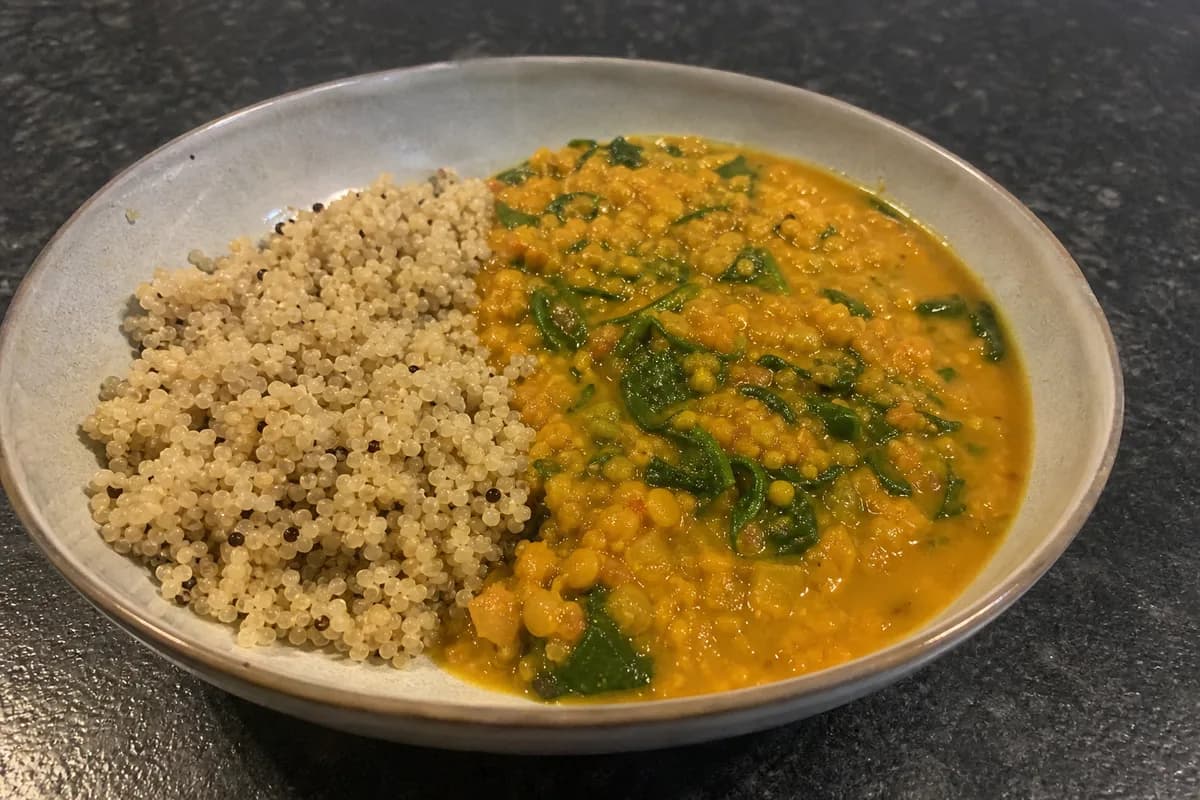
Lunch: lentil and spinach stew with wholemeal bread. Already-cooked lentils can shorten preparation.
Snack, if wanted: apple with almond butter, adjusted for allergies and preferences.
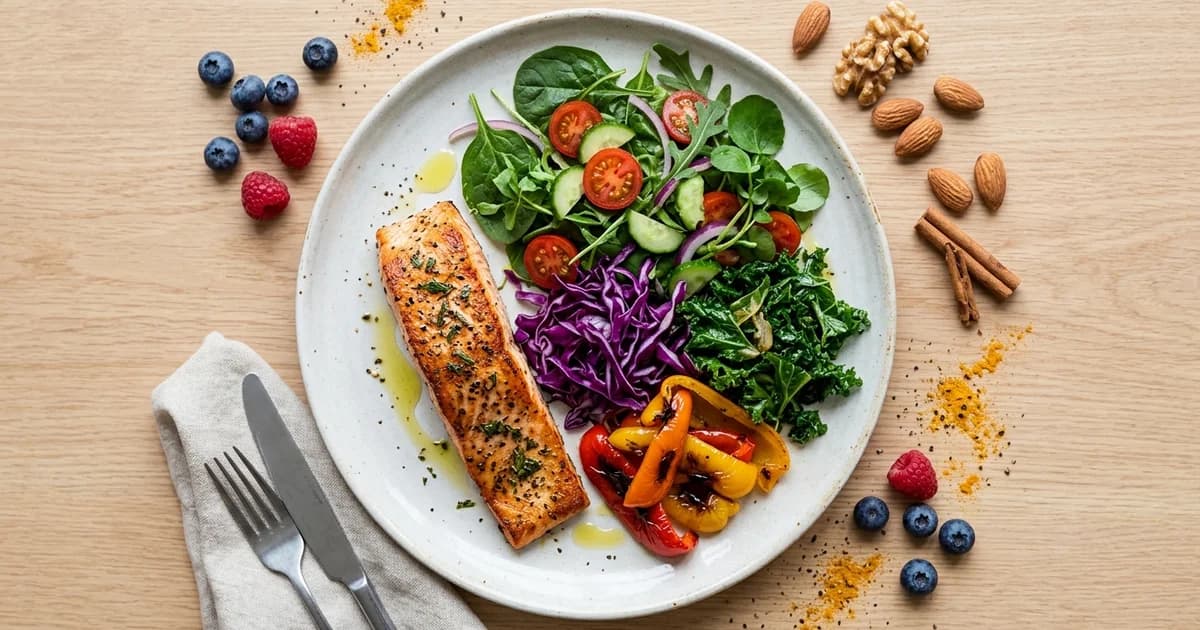
Dinner: baked salmon, broccoli and quinoa. Tofu or chickpeas can provide a plant protein alternative, without supplying the same EPA/DHA as salmon.
This is not a calorie plan. Pasta with pesto and vegetables is another ordinary meal option. Adjust portions and ingredients to your needs rather than trying to reproduce a perfect plate.
A flexible starting week
Keep the useful choices from the broader weekly approach: eggs or yoghurt at breakfast; a grain bowl or salad with beans at lunch; hummus and vegetables or an egg as a snack; fish, chicken or tofu with vegetables and a starch at dinner. Water, tea or other drinks can fit your preferences and medical needs.
Choose a couple of repeatable meals, then adapt. You may record observations to discuss with your care team, but a two-week experiment cannot determine whether PCOS is adequately managed. The app information page describes actual recipe and tracking features without promising a PCOS outcome.
What the research still cannot tell us
Long-term effects: many studies are relatively short. A change over weeks does not establish what happens over years.
Different presentations: symptoms, insulin resistance, medication and personal goals differ. A group average cannot predict your response.
Comparisons between diets: low-GI, Mediterranean, DASH and ketogenic approaches are discussed, but a definitive ranking is not established.
Weight and other factors: some studies include weight change, which complicates interpretation. Benefits from habits do not require making weight loss everyone's goal. Sleep and stress deserve support too, without blaming someone for failing to follow a perfect routine.
Frequently asked questions
Do I have to stop eating carbohydrates?
No. Legumes, grains, fruit and vegetables can be included. Amounts and combinations can be personalised; PCOS does not automatically require excluding a whole food group.
Can weight loss help?
Weight management may be part of care for some people if they wish to address it. Healthy habits can be valuable without weight loss, and weight should not be used to withhold symptom treatment or judge effort.
Is a ketogenic diet best?
Small studies do not justify a universal recommendation. It is restrictive and can be difficult to sustain. Discuss alternatives and individual needs before making a major change.
Can diet cure or manage PCOS on its own?
No diet can promise a cure. Nutrition can be part of management, while symptoms and metabolic risks still need appropriate follow-up. Some people need medication or other treatment regardless of how they eat.
Which supplements should I choose?
There is no list for everyone. Inositol, omega-3, vitamin D and magnesium are not automatically needed because of PCOS. Decisions depend on intake, identified deficiencies, medicines and pregnancy plans.
Should I take inositol, and how soon should I expect results?
Whether it is suitable is a shared decision with your clinician, given uncertain evidence. There is no guaranteed timeline for diet or inositol to change symptoms or cycles. Do not delay care while waiting for a promised number of cycles.
Continue with ten foods to vary, magnesium and the cycle or cycle syncing basics. This information does not replace individual medical care.