Fatigue, brittle nails or changes in how you feel can have many causes. Coffee and a menu cannot establish which one applies. This guide covers the food side of iron nutrition, including a full week of meals. It cannot diagnose a deficiency or choose a treatment.
Why are people who menstruate affected?
Menstrual blood loss can contribute to iron loss, especially with heavy bleeding. Pregnancy and other circumstances change requirements too. A universal volume of blood loss or one daily target cannot describe everybody’s situation.
The DGE iron reference values distinguish age and life-stage groups. Dietary intake recommendations are not supplement doses. Use the relevant guidance for your circumstances instead of converting a general number into a treatment.
Possible symptoms of iron deficiency anaemia include persistent fatigue, unusual pallor, brittle or spoon-shaped nails, increased hair shedding, breathlessness with ordinary activity, cold hands or feet and sometimes cravings for ice or non-food substances. These are not specific to iron deficiency. You do not need three or four symptoms before discussing concerns with a clinician. The NHS overview of iron deficiency anaemia explains assessment and treatment.
Haem and non-haem iron
Haem iron is found in animal foods such as meat, poultry and fish. Non-haem iron occurs in legumes, grains, nuts, seeds and vegetables, and also in animal foods. Haem iron is generally more readily absorbed; non-haem absorption is more influenced by the meal.
The amount printed for a food is not the amount absorbed. Status, preparation and the wider meal matter. A plant-based diet can include many iron sources, but no pairing guarantees an adequate iron status.
What can influence absorption?
- Vitamin C: pepper, citrus, lemon juice, sauerkraut or fruit with a meal can accompany plant iron. There is no fixed doubling or tripling for every person and meal.
- Meat or fish: if you eat them, they can accompany plant sources and affect non-haem absorption. They are not compulsory in a vegetarian meal.
- Soaking and fermentation: these can change phytate content, but do not make all products equivalent or replace appropriate cooking.
- Coffee and tea: polyphenols can reduce non-haem iron absorption when consumed with food. An effect from one study is not a universal percentage.
- Calcium: it can affect absorption in some circumstances. This is not a reason for a general dairy ban. Follow individual timing instructions for iron and calcium supplements.
- Phytates: wholegrains and legumes contain them, but also provide useful nutrients. Removing the whole food group is not the answer.
The NIH iron fact sheet discusses these interactions. If prescribed iron, ask how to time it around food, drinks and other medicines; medicine instructions are more specific than cooking advice.
Practical iron sources
Compare equivalent preparation states and portions: dry grain and cooked grain have different weights, and a usual seed portion is not 100 g. Product, variety and draining affect numbers, so this list does not assign one unsupported value to every version.
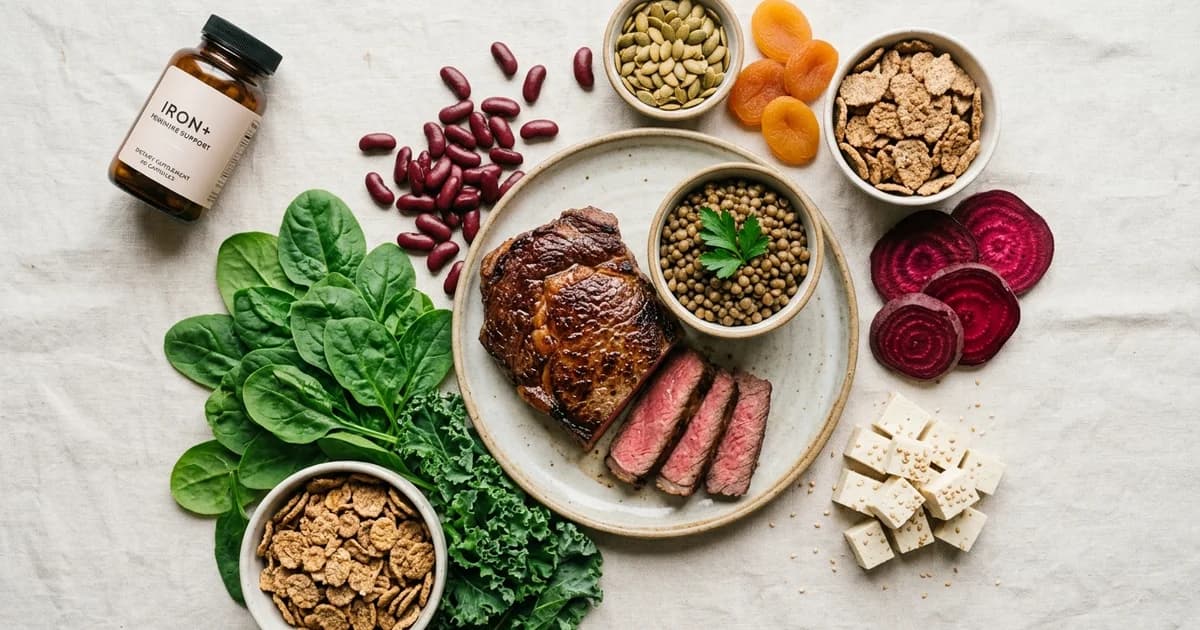
Animal sources: beef, chicken thigh, tuna and canned sardines. Liver contains iron too, but is not a routine recommendation, particularly in pregnancy. Choose according to preferences, overall diet and individual guidance.
Plant sources:
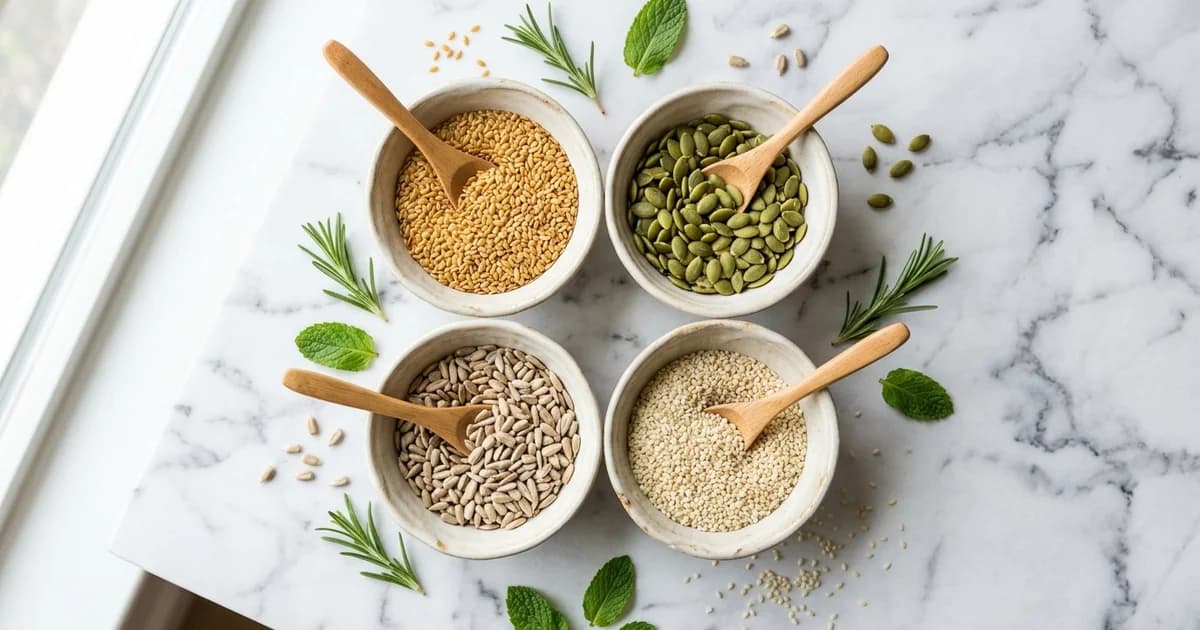
- Pumpkin seeds for salads or porridge.
- Sesame and tahini for sauces and dressings.
- Amaranth and quinoa as different grain options.
- Lentils, chickpeas and white beans for soups, curries or salads.
- Tofu, checking the product’s composition.
- Oats, weighed dry when the recipe specifies.
- Spinach, comparing the same raw or cooked state and portion.
- Dried apricots as one ingredient among others.
Our vegetarian recipe collection includes sourced reference portions for individual ingredients. Those figures are not a calculation for a complete meal.
A week of meal ideas
Without complete portions and a nutrient calculation, this menu cannot establish that you reach a particular daily amount. It is a practical set of combinations, not treatment for deficiency. Adapt portions to your appetite and circumstances.
Monday
- Breakfast: Oatmeal with 2 tablespoons of pumpkin seeds, a handful of raspberries, 1 teaspoon of tahini. The vitamin C from the berries helps absorption.
- Lunch: Lentil soup with a squeeze of lemon on top, sourdough bread.
- Dinner: Roasted vegetables (bell pepper, sweet potato) with quinoa and a tahini dressing.
Tuesday
- Breakfast: Whole-grain toast with almond butter and strawberries.
- Lunch: Big salad with chickpeas, pan-fried tofu, bell pepper, and pumpkin seeds.
- Dinner: Pasta with tomato sauce and lean ground beef.
Wednesday
- Breakfast: Overnight oats with chia seeds, berries, and a splash of orange juice.
- Lunch: Hummus wrap with spinach, bell pepper, and thoroughly cooked sprouts.
- Dinner: Pan-seared salmon with rice and steamed broccoli.
Thursday
- Breakfast: Amaranth porridge with apple and cinnamon.
- Lunch: White bean soup with parsley and lemon.
- Dinner: Chicken with roasted vegetables and sesame.
Friday
- Breakfast: Toast with avocado, pumpkin seeds, and tomato.
- Lunch: Quinoa bowl with chickpeas, beets, and orange.
- Dinner: Canned sardines with sourdough bread, salad, and lemon. Fast and underrated.
Saturday and Sunday
Use the ingredients you have and keep the plan flexible. Include legumes and, if they fit your diet, animal foods. Red meat or liverwurst is not a weekend requirement.
The common idea is to combine iron-containing foods with vitamin-C-containing foods. Coffee and tea can fit at other times according to any advice you have received; an exact one-hour rule is not prescribed here.
When to seek medical advice
Fatigue that limits daily life, breathlessness, palpitations, dizziness, headaches, very heavy or prolonged bleeding, or persistent restless legs merit discussion. These symptoms do not diagnose iron deficiency, and finding the cause matters as well as replacing iron.
Assessment may include haemoglobin, ferritin, transferrin saturation or other tests according to context. A single ferritin cutoff is not a universal treatment rule. A clinician can interpret results, investigate causes and decide whether oral iron, other treatment or further assessment is needed. Do not assume a mild deficiency can always be corrected by food alone.
For the broader food context, read about menstruation and the follicular phase.
Frequently asked questions
Can a fully plant-based diet meet iron needs?
It can, depending on the actual diet and individual circumstances. Vary sources and combine them with vitamin C. The need for testing and follow-up is individual; an automatic annual ferritin test is not a universal rule.
How long until iron values improve through diet?
Timing depends on the cause, severity and treatment. A menu cannot promise a measurable ferritin rise in two or three months. Follow-up tests help assess response and guide care.
Should I take iron supplements on my own?
Avoid taking iron just in case. Excess can be harmful, and some people are prone to iron overload. Dose and timing need to fit an individual indication. Ask for advice rather than using a recipe list to choose a supplement.
Is spinach the best iron source?
It is one option, not a complete solution. Compare equivalent portions and preparation states, and include legumes, seeds and other foods for variety. A story about a historical decimal error is not needed to judge today’s food values.
This article does not replace medical advice. Seek an appropriate assessment for persistent fatigue, heavy periods or suspected deficiency. Meal examples are not therapeutic doses.