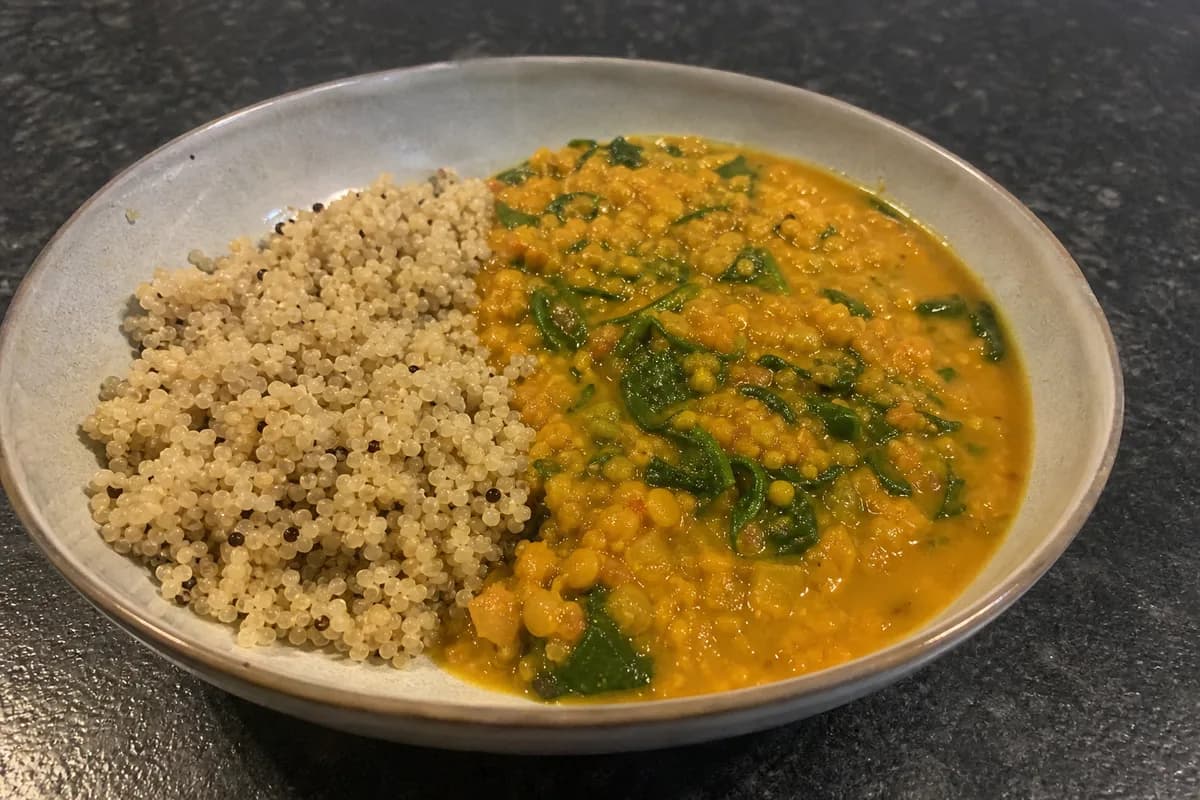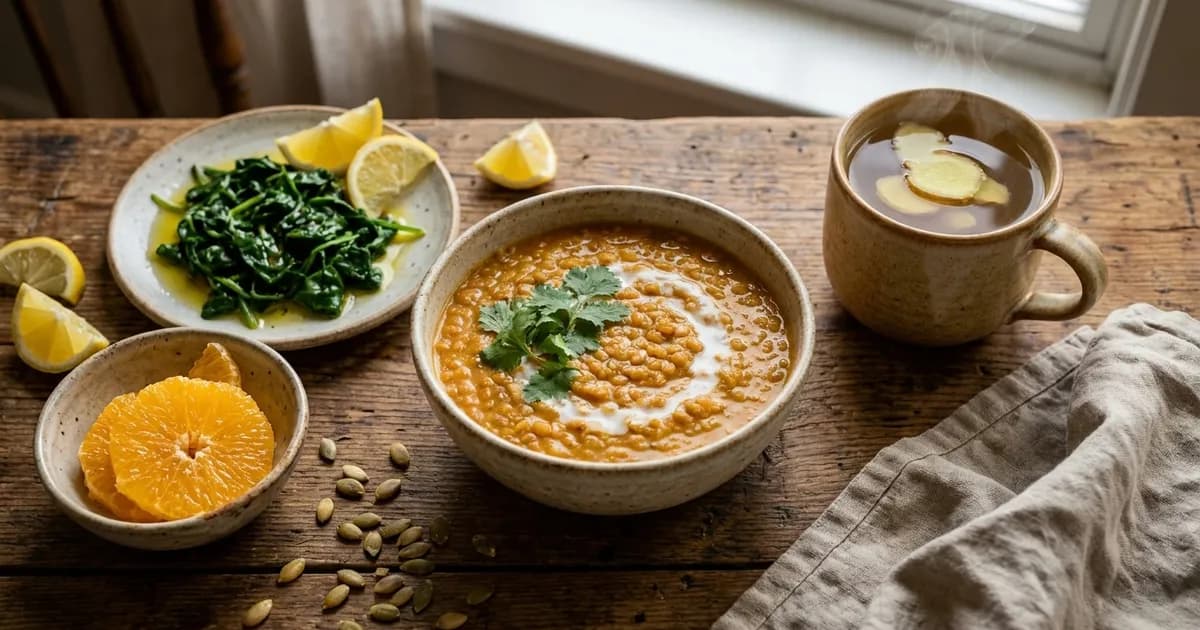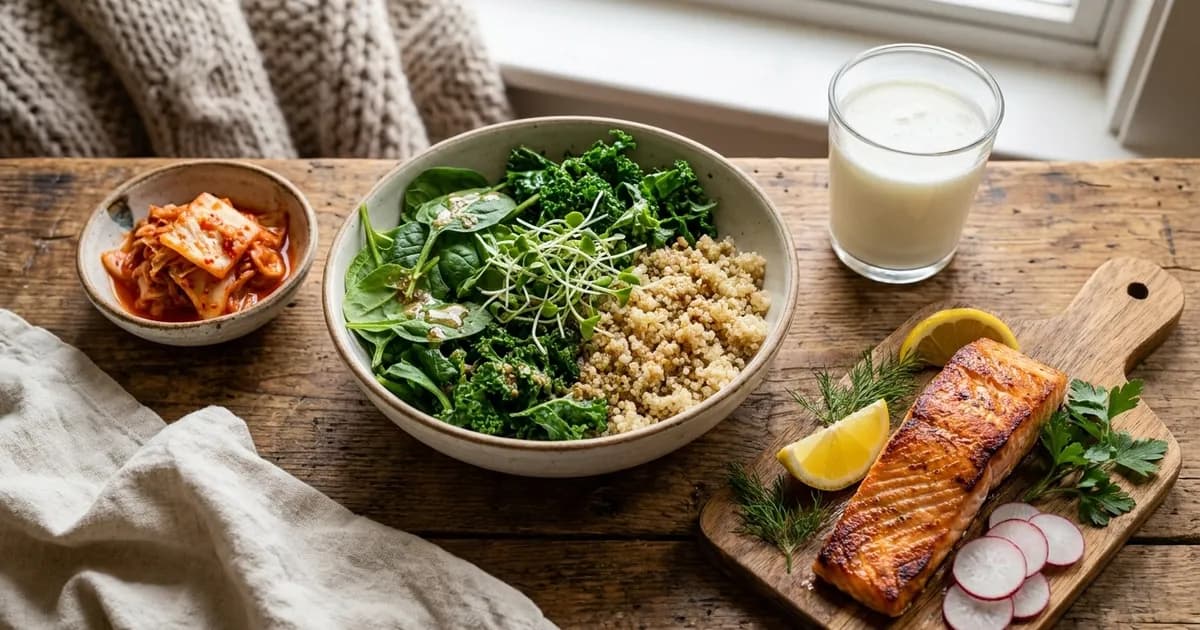
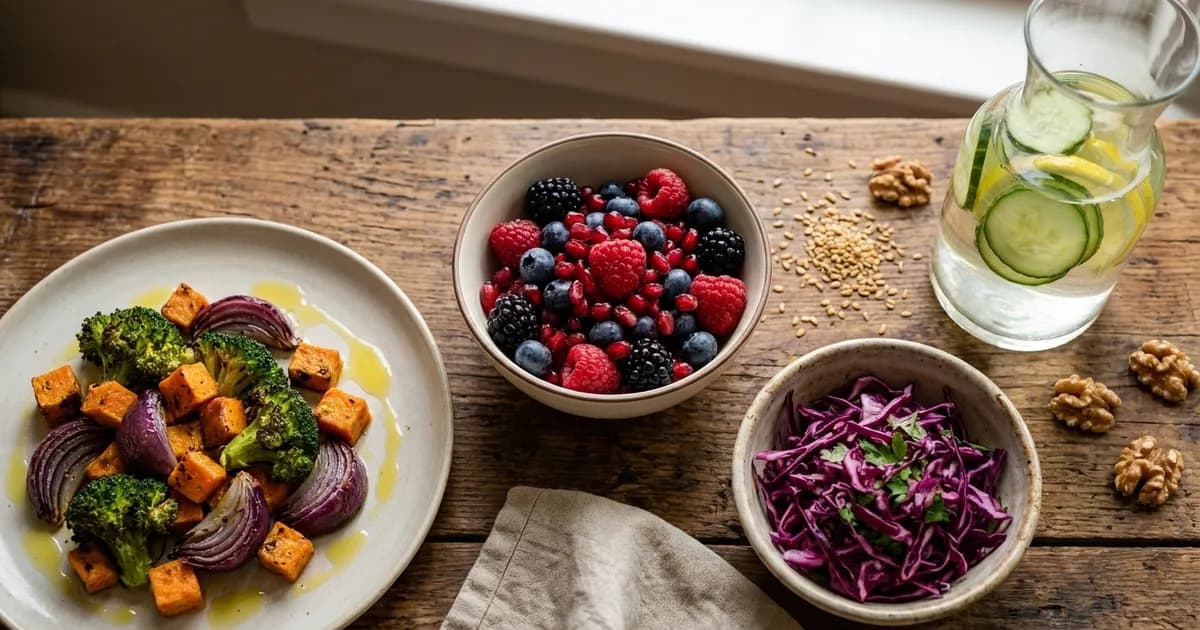
A berry breakfast, colourful vegetables, a warm pasta dish and a cake to share: these ten recipes offer different ways to cook around ovulation or at any other time. You do not need to identify an exact cycle day before choosing what sounds good.
The collection includes quick meals and recipes that need more time. The beetroot bowl and spaghetti take around 40 minutes of listed preparation and cooking. The cake needs baking, complete cooling and additional chilling. Plan for those waits rather than treating every dish as a ten-minute meal.
Why these ingredients?
Antioxidants and colourful foods: berries, pomegranate and vegetables contain a variety of plant compounds. Studies of supplements or follicular fluid do not establish that these meals improve egg quality, fertility or ovulation. They are ordinary food choices, not an antioxidant treatment.
Fibre: wholegrains, legumes, vegetables and flaxseed can contribute to intake. Fibre belongs in the diet throughout the cycle; it does not need to be timed to «clear» an oestrogen peak. Build amounts according to tolerance and overall needs.
Cruciferous vegetables: broccoli, rocket and kale add flavour, texture and nutrients. Research into their compounds and hormone metabolism does not justify calling a meal a hormonal detox.
Fluids: cucumber, courgette and other foods contain water, but meals do not replace drinking according to your needs. Hot weather and activity can change those needs. A post-ovulation temperature shift may help with retrospective chart interpretation, not predict a precise date for this menu.
Zinc and folate: nuts, legumes and greens contribute different nutrients. More is not automatically better, and a recipe is not a substitute for individual advice when trying to conceive.
The ten recipes
1. Lime and raspberry kefir chia bowl
Chia thickens the oat milk while raspberries, kefir and lime form the other layer. Make the chia pudding the evening before if convenient and refrigerate it. Follow the frozen berry packet’s cooking guidance. Add other breakfast foods if this portion does not meet your hunger.
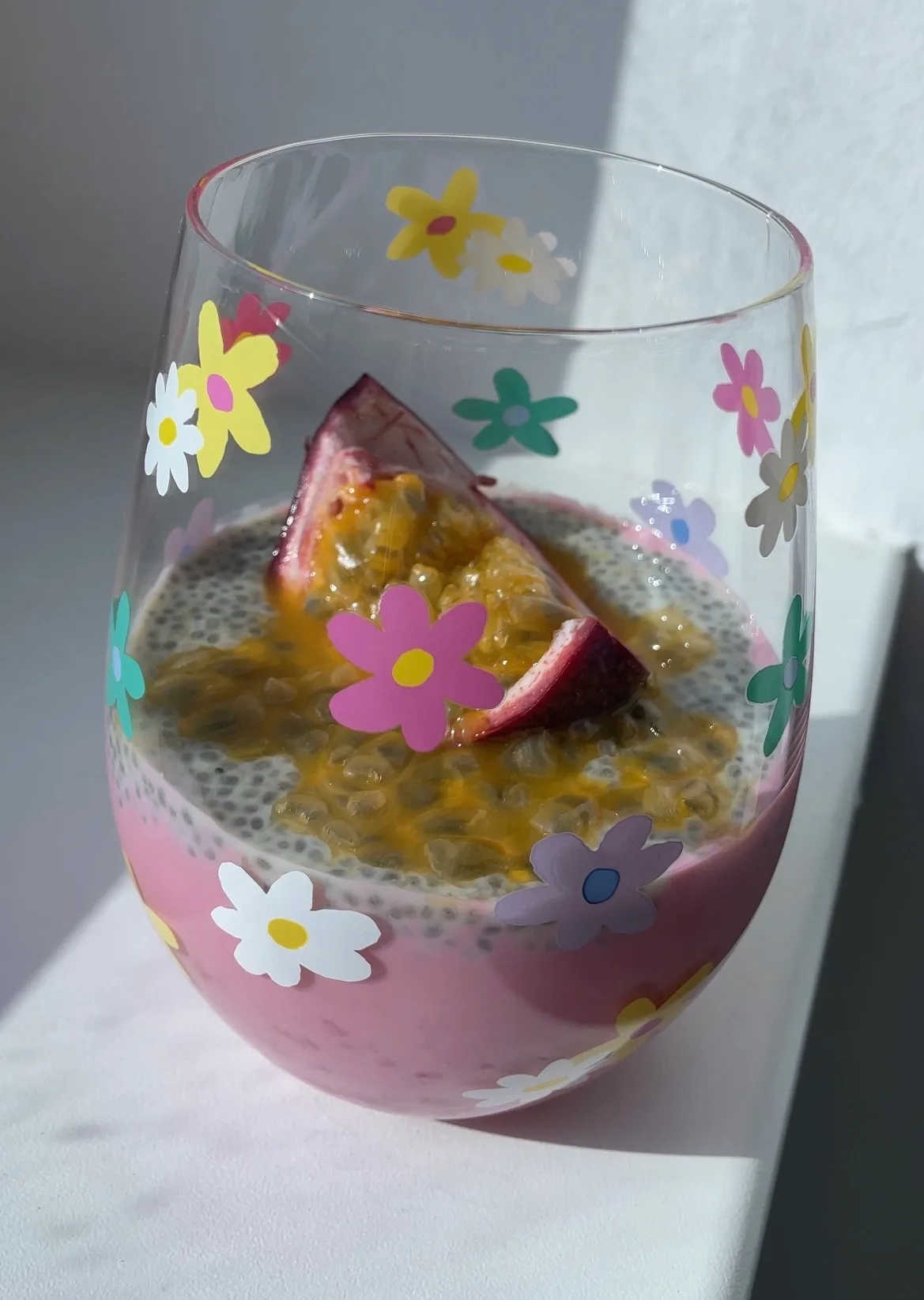
Lime and raspberry kefir chia bowl
Ingredients
- 75 g frozen raspberries
- 100 g thick kefir
- 1.5 tbsp chia seeds
- 75 ml oat milk
- 1 passion fruit
- 1/2 lime
- 1 tsp honey
Instructions
- 1Mix the chia seeds thoroughly with oat milk and honey in a jar and leave for at least 15 minutes until pudding-like.
- 2Warm the frozen raspberries in a small saucepan until soft, following any additional cooking instructions on the packet, then mix with kefir and the juice of half the lime.
- 3Spoon the raspberry-kefir mixture into a glass or bowl, layer the chia pudding on top and finish with passion fruit pulp.
Nutrition: 265 kcal · 10 g protein · 23 g carbs · 10 g fat
View recipe →2. Yoghurt bowl with cinnamon apples
Warm apple wedges contrast with cool yoghurt and toasted nuts and seeds. The name describes the food rather than claiming to change the body’s pH. It makes two portions. Refrigerate prepared apple promptly if saving it, and use ground flaxseed suitable for uncooked consumption. Read more about seed cycling.
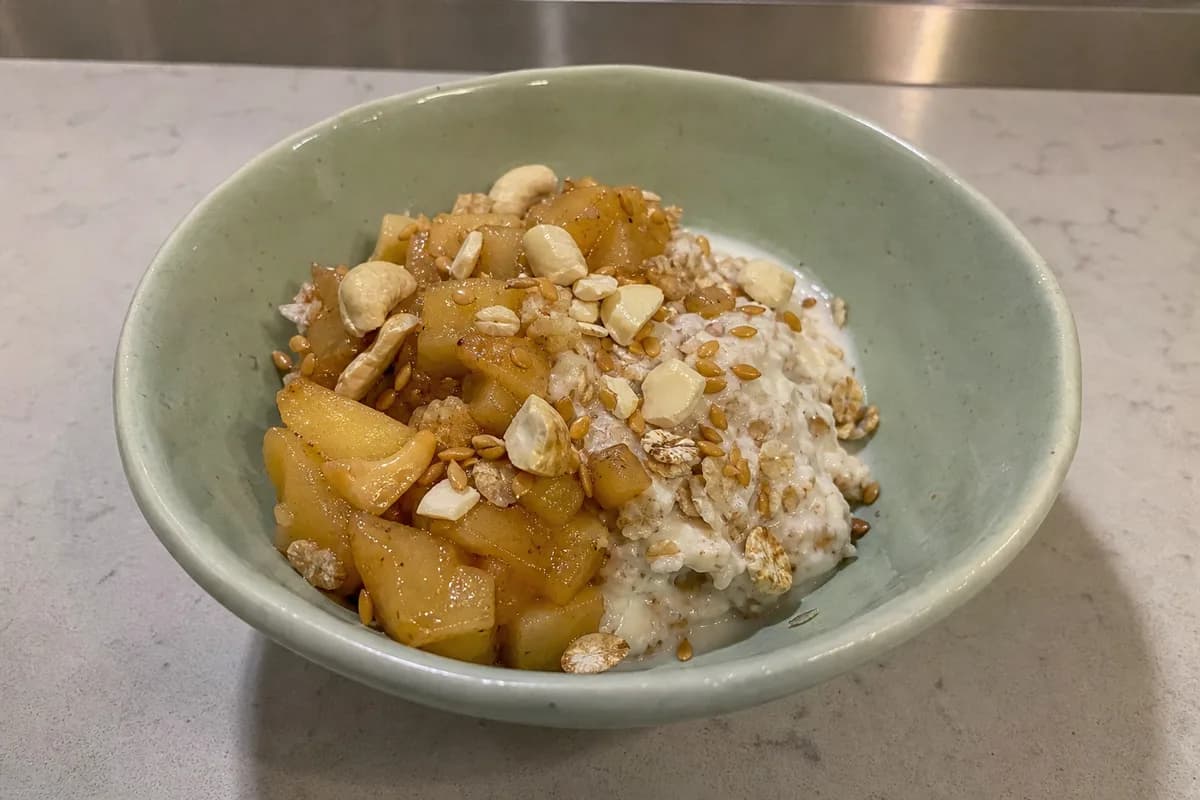
Yoghurt bowl with cinnamon apples
Ingredients
- 1 large tart apple, such as Boskoop
- 1 tsp coconut oil
- 1 tsp cinnamon
- 1 tbsp date syrup or maple syrup
- 1 pinch salt
- 300 g unsweetened almond or soy yoghurt
- 2 tbsp ground flaxseed
- 3 tbsp fine rolled oats
- 2 tbsp cashews
- 1 tbsp pumpkin seeds
Instructions
- 1Toast cashews and pumpkin seeds in a dry pan for 2 to 3 minutes until fragrant. Remove and roughly chop.
- 2Quarter the unpeeled apple, remove the core and cut into thick wedges.
- 3Melt the coconut oil in the same pan and fry the apple over medium heat for 3 to 4 minutes per side until golden. Add cinnamon, syrup and salt and caramelise for a minute.
- 4Meanwhile, mix yoghurt, flaxseed and oats and leave to thicken for 5 minutes.
- 5Divide the yoghurt between two bowls, top with warm apple and scatter with toasted nuts and seeds.
Nutrition: 380 kcal · 11 g protein · 40 g carbs · 18 g fat
View recipe →3. Colourful potato and vegetable skillet
Pepper, courgette and tomatoes join crisp potato cubes. The recipe uses plant ingredients; check seasonings if you need to avoid gluten. Add an egg or feta if you want a different, more substantial version, remembering that the nutrition figures will change.
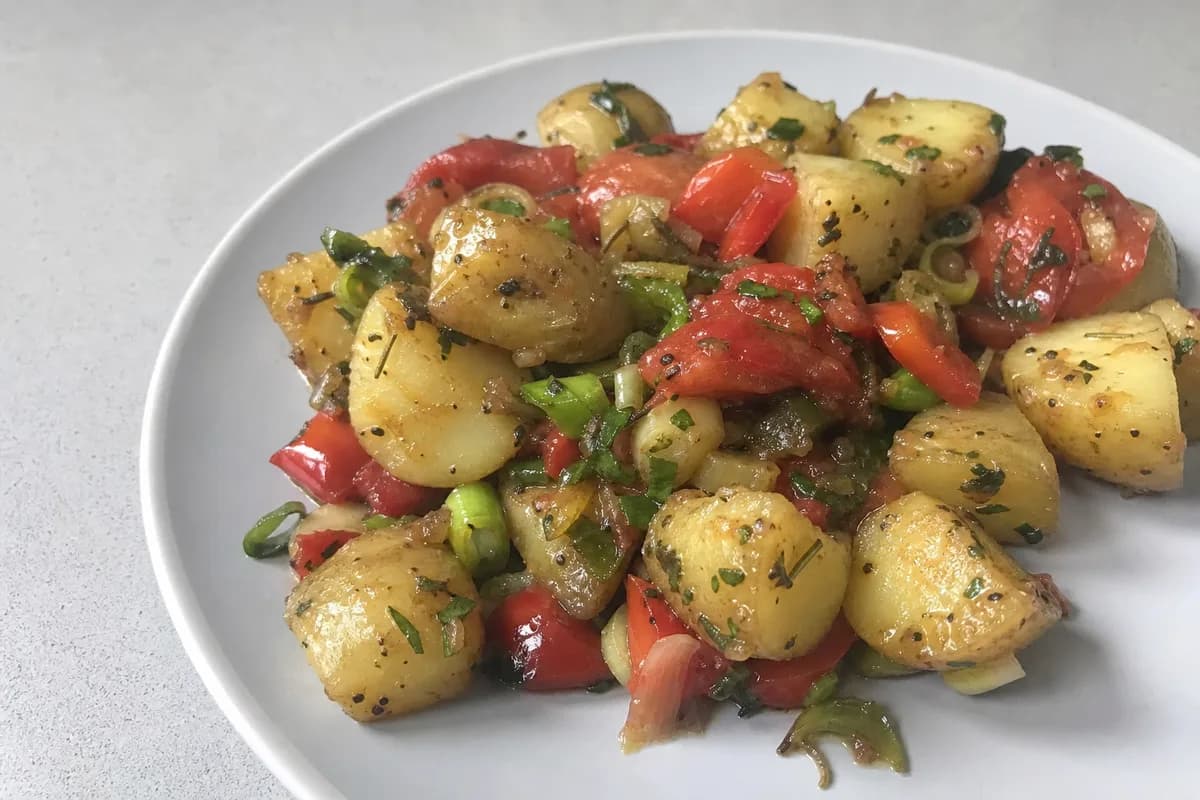
Colourful potato and vegetable skillet
Ingredients
- 400 g waxy potatoes
- 2 tbsp olive oil
- 1 sprig rosemary
- 1 red pepper
- 1 small courgette
- 150 g cherry tomatoes
- 2 spring onions
- 1 garlic clove
- 1 tsp smoked paprika
- ½ lemon, juice only
- ½ bunch flat-leaf parsley
- 1 pinch salt
- 1 pinch pepper
Instructions
- 1Wash the potatoes and cut, unpeeled, into roughly 1.5 cm cubes. Heat olive oil in a large pan, add potatoes and rosemary, cover and fry over medium heat for 12 to 15 minutes. Turn only occasionally so they brown.
- 2Meanwhile, dice pepper and courgette into 1 cm pieces. Slice spring onions, separating white and green parts. Chop garlic and halve tomatoes.
- 3Remove the lid, add pepper, courgette and spring onion whites and fry uncovered for 5 minutes until the potatoes are crisp outside.
- 4Stir in garlic, paprika and tomatoes and cook for 2 minutes until the tomatoes just soften.
- 5Remove the rosemary. Season with lemon juice, salt and pepper and scatter with chopped parsley and spring onion greens.
Nutrition: 290 kcal · 7 g protein · 42 g carbs · 10 g fat
View recipe →4. Quinoa salad with feta and pomegranate
The quick timing assumes the quinoa is already cooked. If starting with dry quinoa, allow cooking and cooling time. Keep the salad chilled for transport, with dressing separate if you prefer the vegetables crisp. Choose suitable feta if you eat vegetarian.
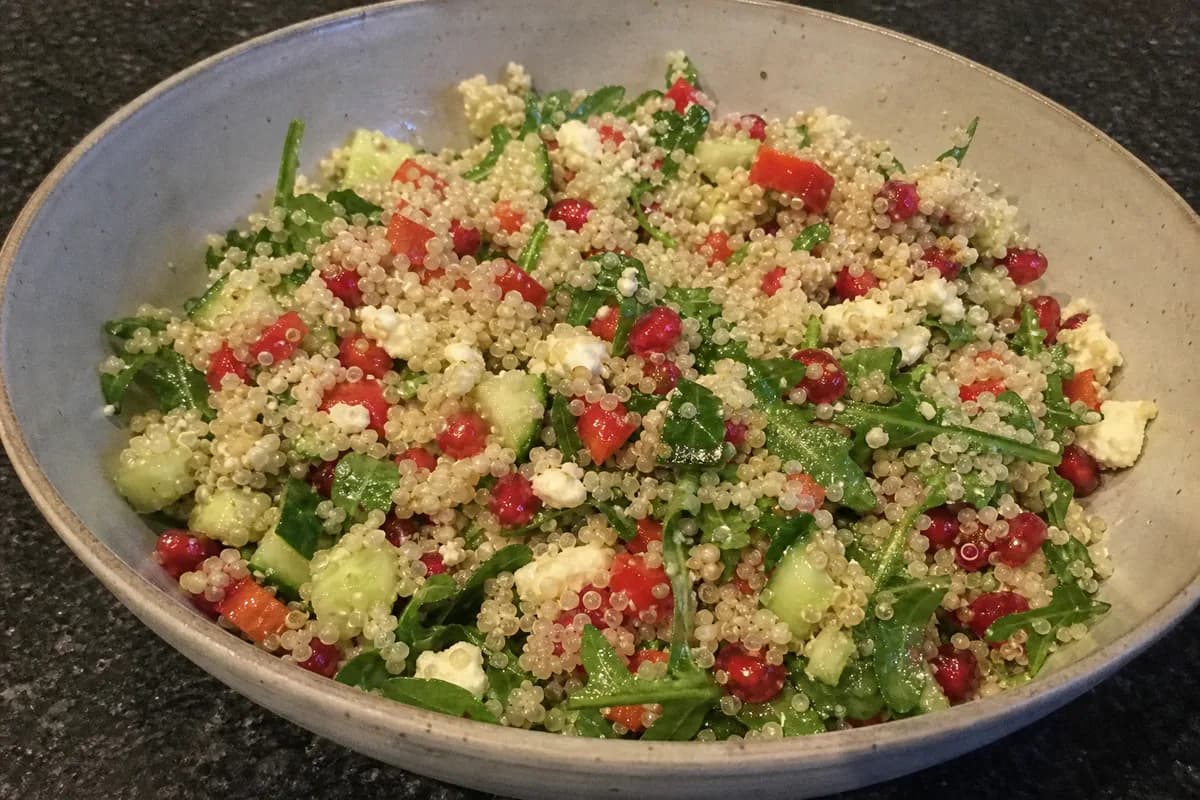
Quinoa salad with feta and pomegranate
Ingredients
- 100 g cooked quinoa
- 50 g feta
- 1 cucumber
- 1 red pepper
- 1 bunch rocket
- 2 tbsp pomegranate seeds
- 1 tbsp olive oil
- 1 tsp lemon juice
- 1 pinch salt
- 1 pinch pepper
Instructions
- 1Put the cooked quinoa in a bowl.
- 2Dice cucumber and pepper and roughly tear the rocket.
- 3Crumble the feta and add it with the vegetables to the quinoa.
- 4Dress with olive oil and lemon juice and season with salt and pepper.
- 5Finish with the pomegranate seeds.
Nutrition: 350 kcal · 15 g protein · 35 g carbs · 15 g fat
View recipe →5. Salmon bowl with avocado and quinoa
Cook the quinoa alongside the salmon, allowing enough time for both to be done. Fish thickness can make the listed timing too short. Avocado and rocket complete the bowl; salmon contributes EPA and DHA, without making the dish a treatment for inflammation around ovulation.
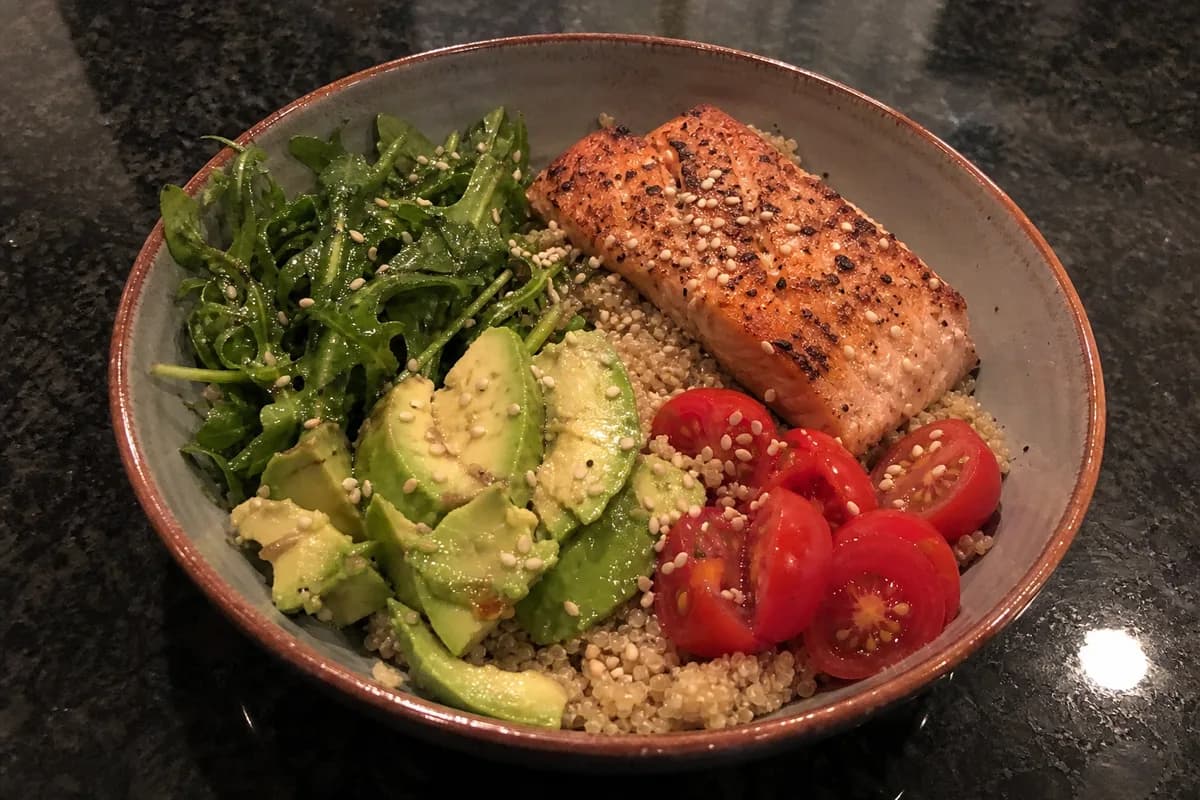
Salmon bowl with avocado and quinoa
Ingredients
- 100 g salmon fillet
- 60 g quinoa
- 1 avocado
- 8 cherry tomatoes
- 1 bunch rocket
- 1 tsp olive oil
- 1 tbsp lemon juice
- 1 pinch salt
- 1 pinch pepper
- 1 pinch sesame seeds
Instructions
- 1Cook the quinoa in lightly salted water for 8 to 10 minutes until done, following the packet if longer is needed.
- 2Heat some olive oil in a non-stick pan and fry the salmon for 2 to 3 minutes per side, until cooked through. Season with lemon juice, salt and pepper.
- 3Slice the avocado, halve the tomatoes and wash the rocket thoroughly.
- 4Use the cooked quinoa as a base and arrange salmon, avocado, tomatoes and rocket on top.
- 5Drizzle with the remaining oil and lemon juice and scatter with sesame seeds.
Nutrition: 530 kcal · 34 g protein · 36 g carbs · 27 g fat
View recipe →6. Roasted beetroot Buddha bowl
This recipe starts with raw beetroot, which is roasted with carrots. Quinoa, chickpeas, spinach and courgette give different textures; tahini and lemon form the dressing. It makes two portions. Cool prepared components promptly and store dressing separately if saving a bowl for later.
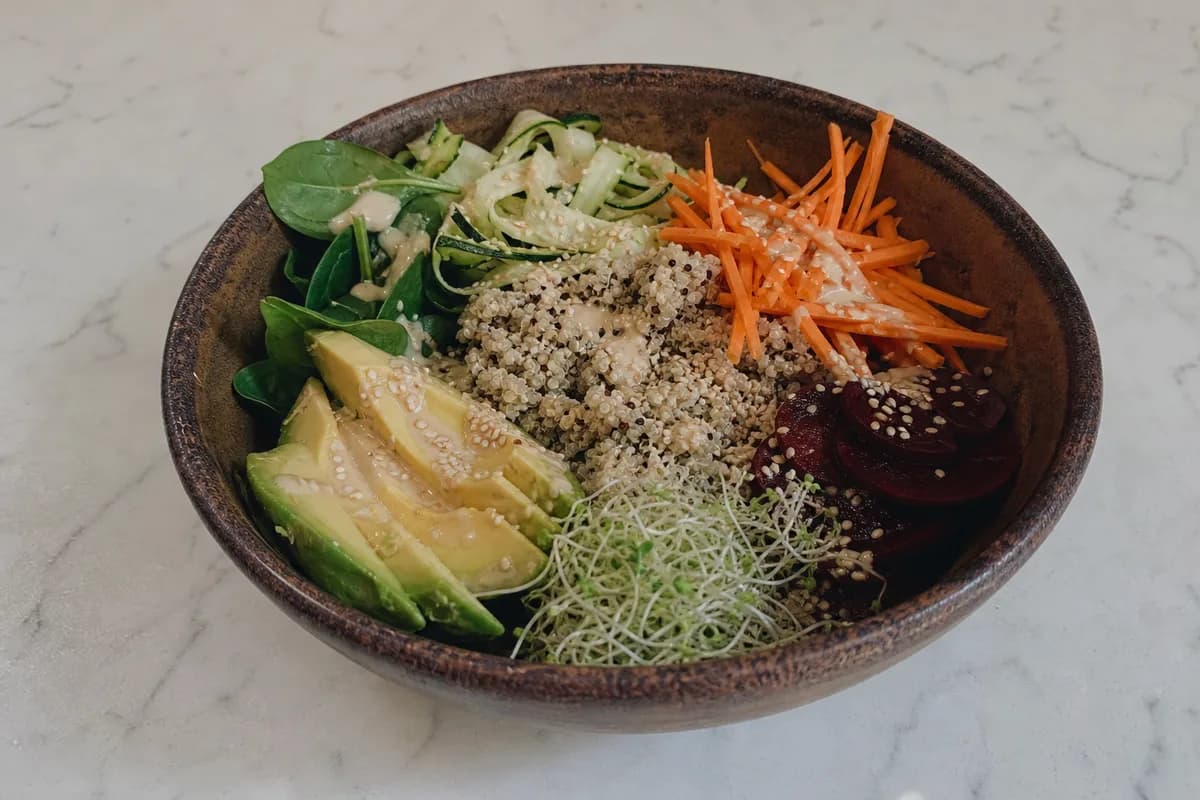
Roasted beetroot Buddha bowl
Ingredients
- 120 g quinoa
- 1 medium raw beetroot
- 2 carrots
- 1 tbsp olive oil
- 1 tsp ground cumin
- 1 small courgette
- 2 handfuls baby spinach
- 100 g canned chickpeas, rinsed
- 1 ripe avocado
- 1 handful sprouts or cress
- 1 tbsp sesame seeds
- 2 tbsp tahini
- 2 tbsp lemon juice
- 1 tsp honey or maple syrup
- ½ garlic clove
- 1 pinch salt
Instructions
- 1Preheat the oven to 200°C conventional heat. Peel beetroot and carrots and cut into thin wedges. Toss with olive oil, cumin and a little salt and roast on a tray for about 25 minutes.
- 2Rinse the quinoa under hot water. Bring to the boil with 240 ml water and a pinch of salt, cover and simmer gently for 12 to 15 minutes until absorbed. Rest for 5 minutes and fluff with a fork.
- 3Mix tahini, lemon juice, honey and crushed garlic. Stir in 3 to 4 tbsp water gradually until the dressing flows smoothly from a spoon and season with salt.
- 4Use a peeler to shave the courgette into ribbons and slice the avocado.
- 5Divide quinoa between two bowls. Arrange spinach, roasted vegetables, courgette, chickpeas and avocado in sections. Drizzle with dressing and scatter with sprouts and sesame.
Nutrition: 520 kcal · 17 g protein · 58 g carbs · 24 g fat
View recipe →7. Tahini lentil and vegetable skillet
Cooked lentils shorten preparation, while tahini makes a creamy sauce. Cook green beans thoroughly, extending the suggested time as needed. This is the same original recipe included in our vegetarian iron collection; its presence in two articles does not turn it into a different recipe. For background, see gut health tips.
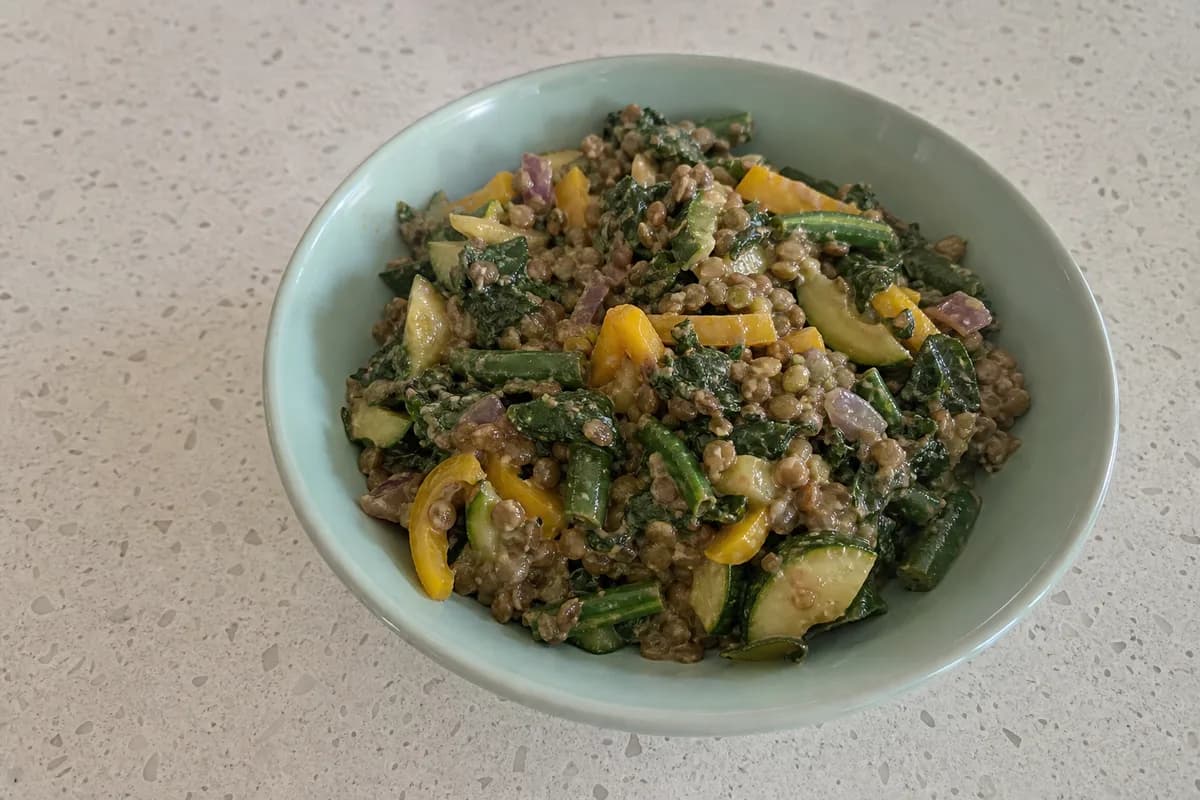
Tahini lentil and vegetable skillet
Ingredients
- 50 g tahini
- 1 lemon
- 2 tbsp olive oil
- 1 red onion
- 1 garlic clove
- 1 yellow pepper
- 200 g green beans
- 1 courgette
- 100 g kale
- 250 g cooked lentils
- 50 ml water
- 1 pinch salt
- 1 pinch pepper
Instructions
- 1For the dressing, mix the tahini with the lemon zest, lemon juice and cold water. Season with salt and pepper and set aside.
- 2Heat the olive oil in a wok or large frying pan over medium-high heat. Fry the chopped red onion with a pinch of salt for about 2 minutes.
- 3Add the crushed garlic, sliced pepper, green beans and sliced courgette. Stir-fry for about 5 minutes.
- 4Stir in the shredded kale and cooked lentils.
- 5Pour over the tahini dressing and keep stirring for a few minutes until the kale has wilted and everything is coated in the creamy dressing.
Nutrition: 450 kcal · 20 g protein · 45 g carbs · 20 g fat
View recipe →8. Honey-balsamic chicken with broccoli and potatoes
Roast the vegetables while cooking the chicken and glaze. The broccoli browns in the oven, while honey and vinegar give the sauce sweetness and acidity. Check that the chicken is cooked through before serving. This is a meal for two, not a special «superfood» formula.
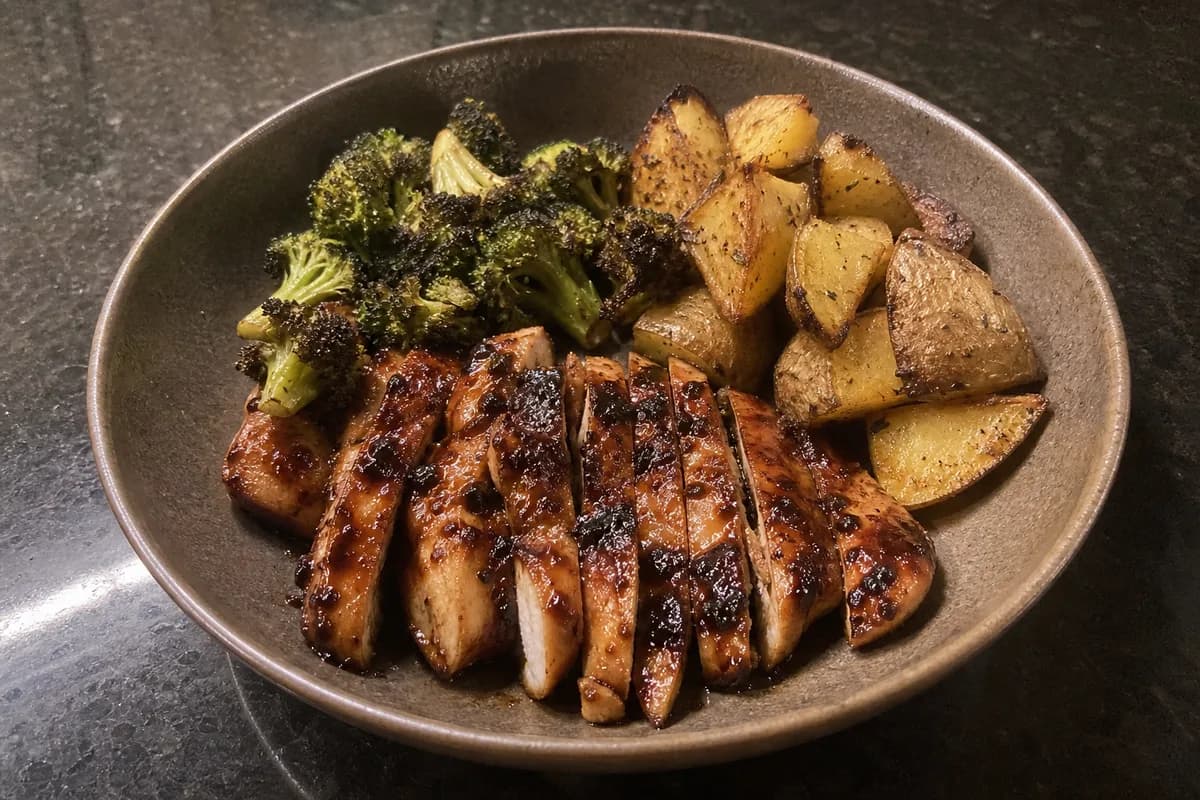
Honey-balsamic chicken with broccoli and potatoes
Ingredients
- 5 potatoes
- 1 broccoli
- 2 garlic cloves
- 2 chicken breasts
- 1 tbsp balsamic vinegar
- 1 tbsp honey
- 1 cup chicken stock
- 1 tbsp butter
- 1 tbsp vegetable oil
- 1 tbsp olive oil
- 1 tbsp frying oil
- 1 pinch salt
- 1 pinch pepper
Instructions
- 1Preheat the oven to 220°C. Wash and cut potatoes into wedges, toss on a tray with vegetable oil, salt and pepper and roast for 5 minutes.
- 2Meanwhile, cut broccoli into florets and finely chop garlic. Mix olive oil with half the garlic and heat briefly until sizzling.
- 3Take out the tray, add broccoli to the free side and toss with garlic oil, salt and pepper. Roast for another 15 to 20 minutes until browned and crisp.
- 4Pat the chicken dry, season and fry in the frying oil for 5 to 6 minutes per side until cooked through. Remove and set aside.
- 5Fry the remaining garlic in the same pan for 30 seconds. Add vinegar, honey and stock and reduce for 2 to 3 minutes until thick and glossy. Stir in butter and season.
- 6Return the chicken, turn in the glaze and serve with broccoli and potatoes. Spoon over the remaining glaze.
Nutrition: 550 kcal · 40 g protein · 55 g carbs · 20 g fat
View recipe →9. Spaghetti alla Nerano
Fried courgettes, pasta water, butter and cheese form the sauce. Frying in batches and resting the courgettes take time; keep those steps for the texture. Toss off the heat when adding cheese. This is a pasta dish to enjoy, not a replacement for drinking water because courgettes contain it.
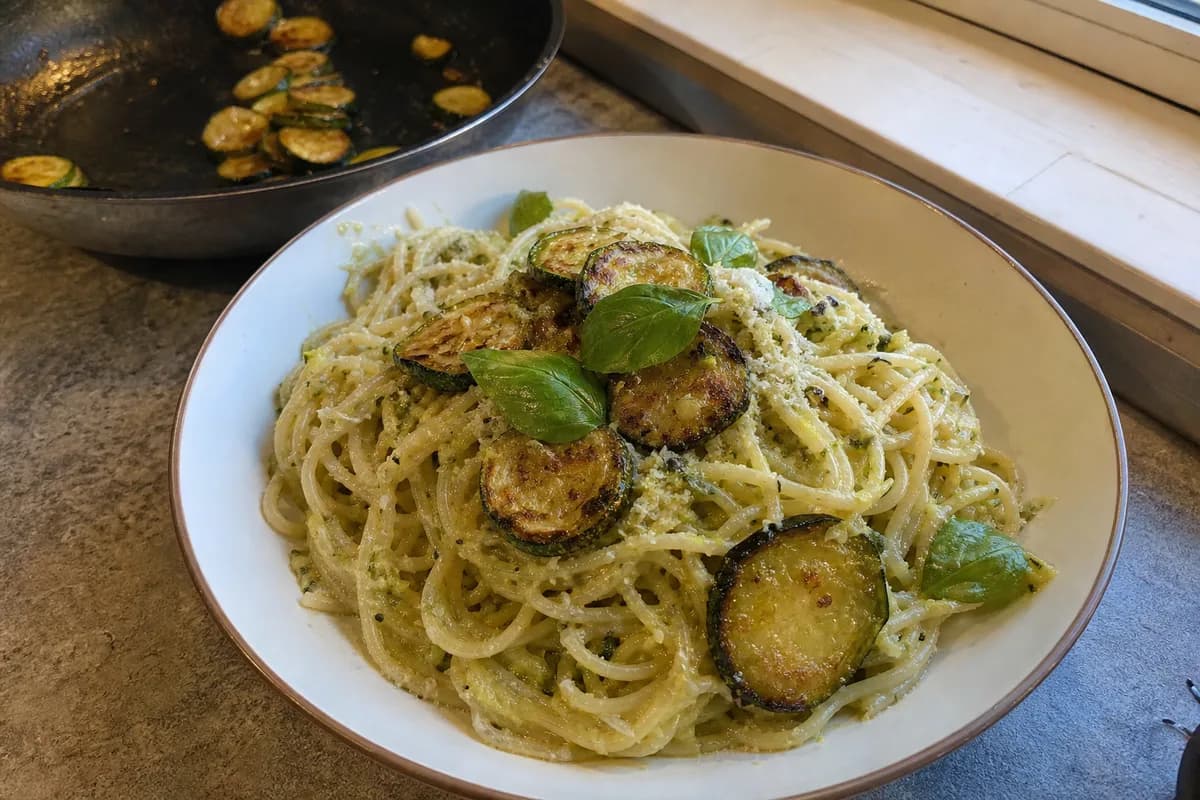
Spaghetti alla Nerano
Ingredients
- 500 g courgettes
- 4 tbsp olive oil
- 1 bunch basil
- 180 g spaghetti
- 1 garlic clove
- 60 g freshly grated Provolone or Pecorino
- 20 g butter
- 1 pinch salt
- 1 pinch black pepper
Instructions
- 1Slice courgettes about 3 mm thick. Heat 3 tbsp olive oil in a large pan and fry in three or four batches for 4 to 5 minutes each until golden. Transfer to a plate, lightly salt and add half the basil, roughly torn. Rest for at least 15 minutes.
- 2Cook spaghetti in plenty of salted water for a minute less than the packet says.
- 3Near the end of cooking, fry the halved garlic clove in the remaining oil for a minute, then remove. Add courgettes and basil and roughly mash about a third with a fork.
- 4Transfer spaghetti to the pan with about 150 ml cooking water. Add butter and grated cheese and turn off the heat. Toss vigorously for one to two minutes until creamy. Add pepper, then more salt only if needed.
- 5Serve immediately with the remaining basil.
Nutrition: 620 kcal · 21 g protein · 72 g carbs · 27 g fat
View recipe →10. Vegan berry and kiwi cake
The wholemeal base is topped with whipped coconut cream and fruit. Chill the full-fat coconut milk beforehand so the solid portion separates, and cool the cake fully before topping. The recipe makes twelve slices. It contains sugar and is simply a cake for sharing; berries do not need to justify dessert.
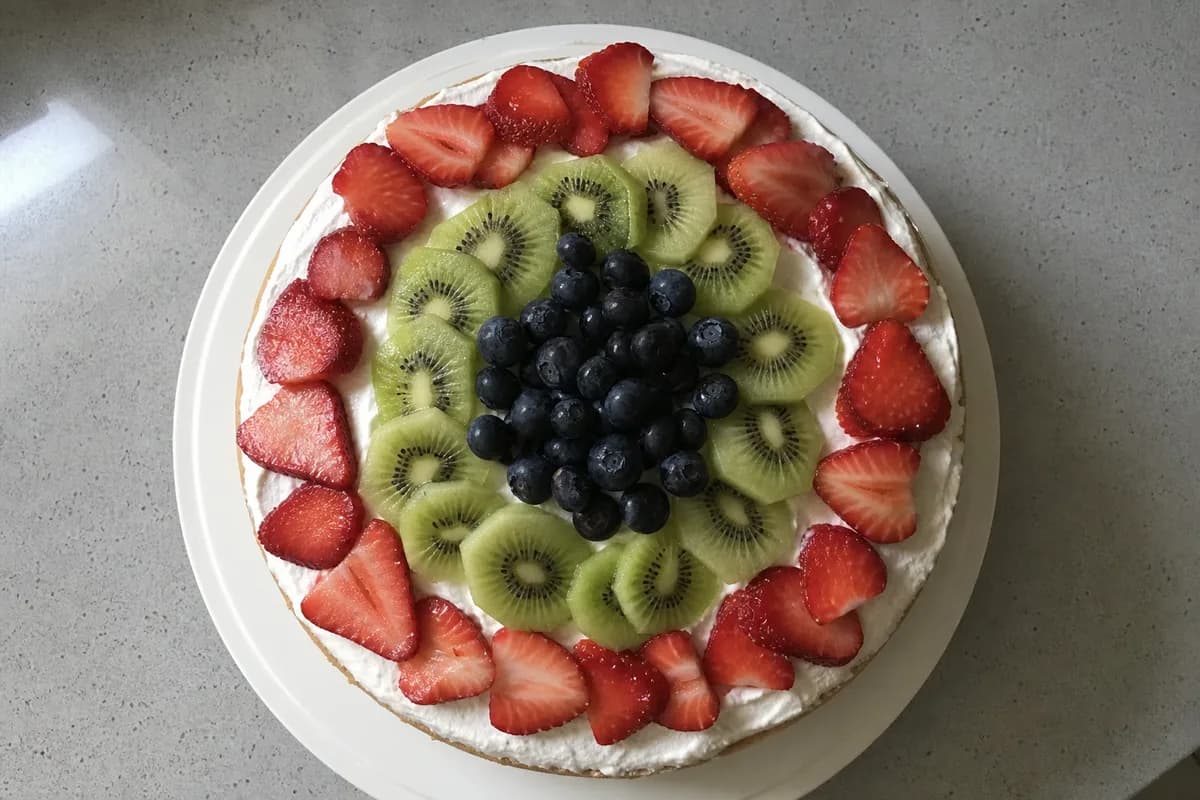
Vegan berry and kiwi cake
Ingredients
- 250 g wholemeal flour
- 2 tsp baking powder
- 180 g sugar
- 1 tsp vanilla sugar
- 240 ml plant milk, oat or almond
- 80 ml rapeseed oil
- 1 tsp apple cider vinegar
- 480 ml full-fat coconut milk, chilled
- 3 tsp icing sugar
- 300 g strawberries
- 3 kiwis
- 150 g blueberries
- 2 tsp agave syrup
Instructions
- 1Preheat the oven to 180°C conventional heat and line the base of a 26 cm springform tin with baking paper.
- 2Mix flour, baking powder, sugar and vanilla sugar in a large bowl. Combine plant milk, oil and vinegar, add to the dry ingredients and stir briefly until smooth.
- 3Pour into the tin, bake for about 30 minutes and test with a skewer. Allow the cake to cool completely.
- 4Carefully scoop only the solid part from the chilled coconut milk and whip with icing sugar until firm.
- 5Spread coconut cream over the cold cake. Arrange fruit from the outside inward: a ring of sliced strawberries, then kiwi, with blueberries in the centre. Drizzle with agave if desired.
- 6Chill the cake for at least 30 minutes to firm the cream, then cut into slices.
Nutrition: 280 kcal · 4 g protein · 36 g carbs · 14 g fat
View recipe →Planning a few meals
Choose two or three recipes for your shopping list. The kefir bowl, quinoa salad and salmon bowl are single servings. The apple bowl, potato skillet, beetroot bowl, lentil skillet, chicken and spaghetti each make two. The cake makes twelve slices; use the portion controls with the baking tin and cooking method in mind rather than assuming every batch size bakes identically.
Listed nutrition values are estimates from the recipe source and vary with ingredients and substitutions. For the background topics, read food around ovulation. The phase label is for browsing, not a deadline.
Frequently asked questions
How can I know exactly when I ovulate?
Calendar tools estimate; they do not confirm an exact date. LH tests, cervical mucus observations and temperature charts provide different information, each with limits. Temperature changes are mainly retrospective. Our basal temperature guide explains more. You do not need confirmation to cook these meals, and this article is not contraceptive guidance.
Must I eat them on days 13–15?
No. Ovulation does not always happen on those days, and these recipes do not require timing. Use them in any phase according to appetite, preferences and dietary needs.
Can food relieve ovulation pain?
These recipes cannot promise pain relief. Severe, persistent or worsening pelvic pain needs assessment; sudden severe pain or pain with possible pregnancy calls for prompt care. Do not assume every mid-cycle pain is ordinary ovulation pain.
Are they suitable when trying to conceive?
They can provide meal ideas, subject to your individual needs and food safety requirements. They do not replace preconception advice, including discussion of folic acid and any medicines. No recipe guarantees conception.
Choose the dish that fits your day. Continue with ovulation-phase food or ten luteal-phase recipes for more ideas.