Some days before your period call for simple food: a warm curry, pasta, breakfast prepared the night before or a chocolate dessert. These ten recipes offer different options, without requiring you to cook according to a strict cycle calendar.
Most take around 20–35 minutes of preparation and cooking. Baked potatoes need longer, the mousse needs chilling and overnight oats need a night in the fridge. Those waiting times matter when choosing what to make today.
Why these ingredients?
Appetite and preferences can change during the luteal phase, but the size and pattern of those changes vary. There is no fixed extra calorie allowance that everyone needs and no ingredient that guarantees relief from PMS.
Magnesium: seeds, nuts, wholegrains and greens contribute different amounts. Their presence does not turn a meal into a treatment for cramps or sleep difficulties.
Vitamin B6: potatoes, chickpeas, bananas and fish can contribute to intake. Its role in normal metabolism does not prove that eating more will lift your mood or stop cravings.
Carbohydrates: sweet potatoes, wholemeal pasta, oats and millet provide food energy, with fibre varying by ingredient. Pair them with protein, vegetables and fats according to your appetite. You do not have to earn or avoid a carbohydrate food because of the cycle day.
The ten recipes
1. Sweet potato and peanut curry
Sweet potato brings colour and carbohydrate, peanut butter adds flavour and spinach folds easily into the sauce. Allow around 35 minutes. The method uses a little cooking oil in addition to the listed ingredients; keep some to hand. Cook the basmati rice alongside the curry according to its packet.
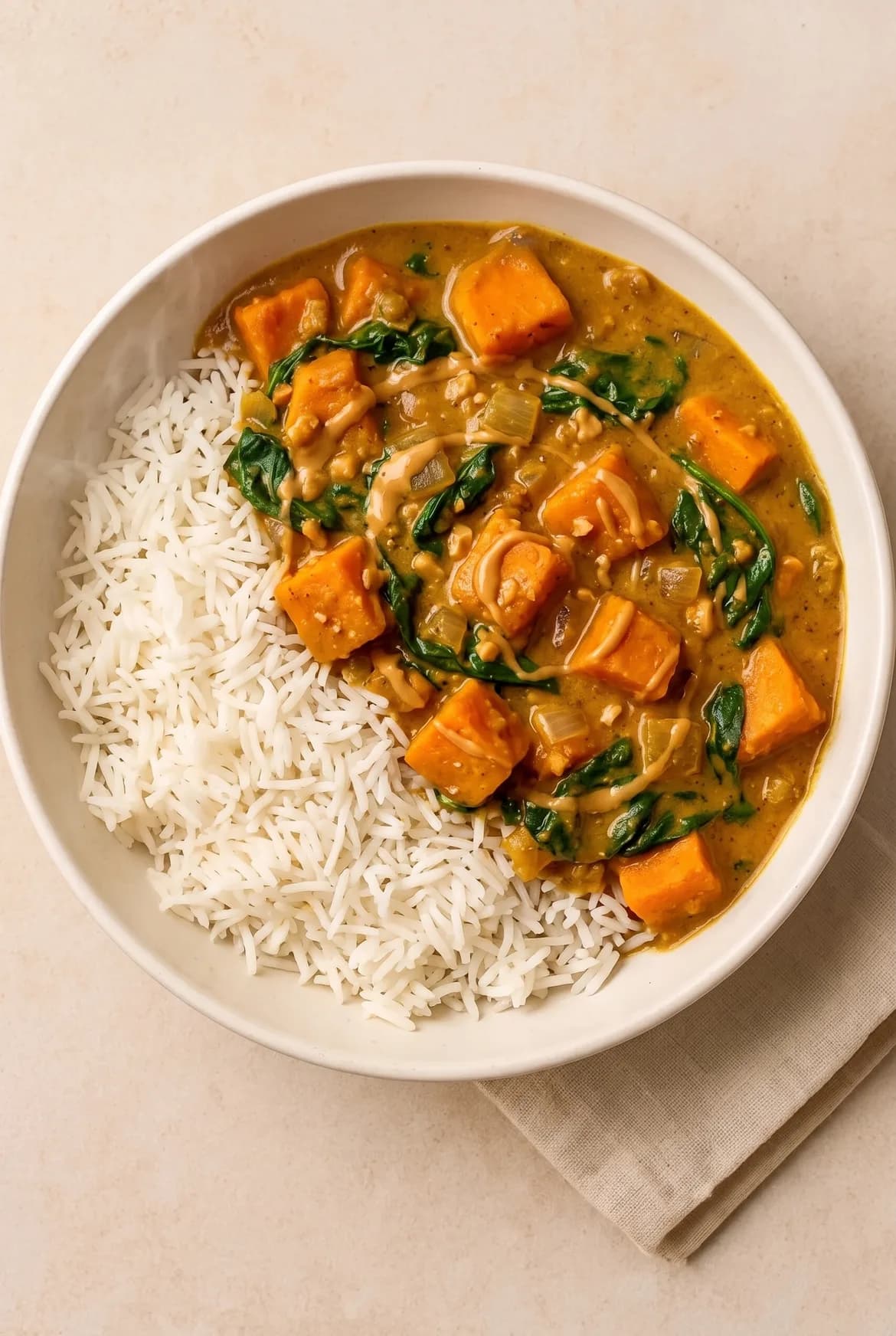
Sweet potato and peanut curry
Ingredients
- 400 g sweet potatoes
- 1 can coconut milk (400 ml)
- 3 tbsp peanut butter
- 200 g spinach
- 1 onion
- 2 garlic cloves
- 1 tbsp curry powder
- 1 tsp turmeric
- 200 g basmati rice
- Salt and pepper
Instructions
- 1Peel and dice the sweet potatoes.
- 2Soften the onion and garlic in a little oil.
- 3Briefly toast the curry powder and turmeric.
- 4Add the sweet potatoes and pour in the coconut milk.
- 5Simmer for 15 minutes, then stir in the peanut butter.
- 6Fold in the spinach until wilted.
- 7Serve with cooked basmati rice.
Nutrition: 780 kcal · 18 g protein · 95 g carbs · 38 g fat
View recipe →2. Banana oat pancakes with cashew butter
Ripe banana sweetens the batter and oats give it texture. Letting it rest helps before frying. Cashew butter and berries complete the topping; no promise about blood sugar or cravings is needed to enjoy them for breakfast.
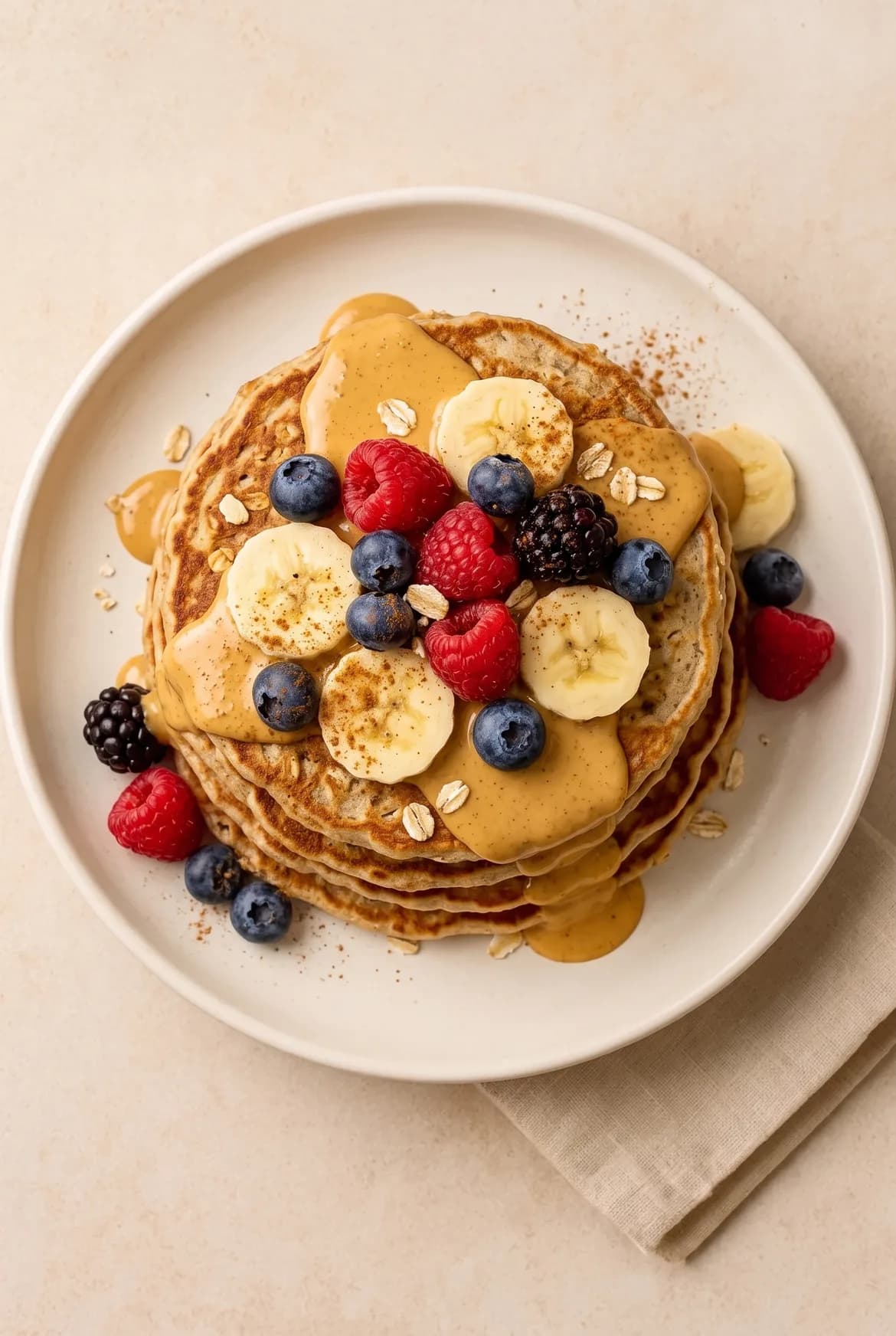
Banana oat pancakes with cashew butter
Ingredients
- 2 ripe bananas
- 100 g oats
- 2 eggs
- 1 pinch cinnamon
- 1 tsp baking powder
- 2 tbsp cashew butter
- Fresh berries to serve
- 1 tbsp coconut oil for frying
Instructions
- 1Mash the bananas and mix with the oats, eggs, cinnamon and baking powder.
- 2Leave the batter to thicken for 5 minutes.
- 3Heat coconut oil in a frying pan and cook small pancakes for 2 to 3 minutes on each side.
- 4Serve with cashew butter and berries.
Nutrition: 480 kcal · 15 g protein · 60 g carbs · 20 g fat
View recipe →3. Sesame-crusted salmon with broccoli millet
The sesame crust contrasts with the millet and broccoli. Cook the fish through, adapting the time to its thickness. Salmon provides EPA and DHA; these differ from the ALA in nuts and seeds. Our omega-3 guide explains the distinction.
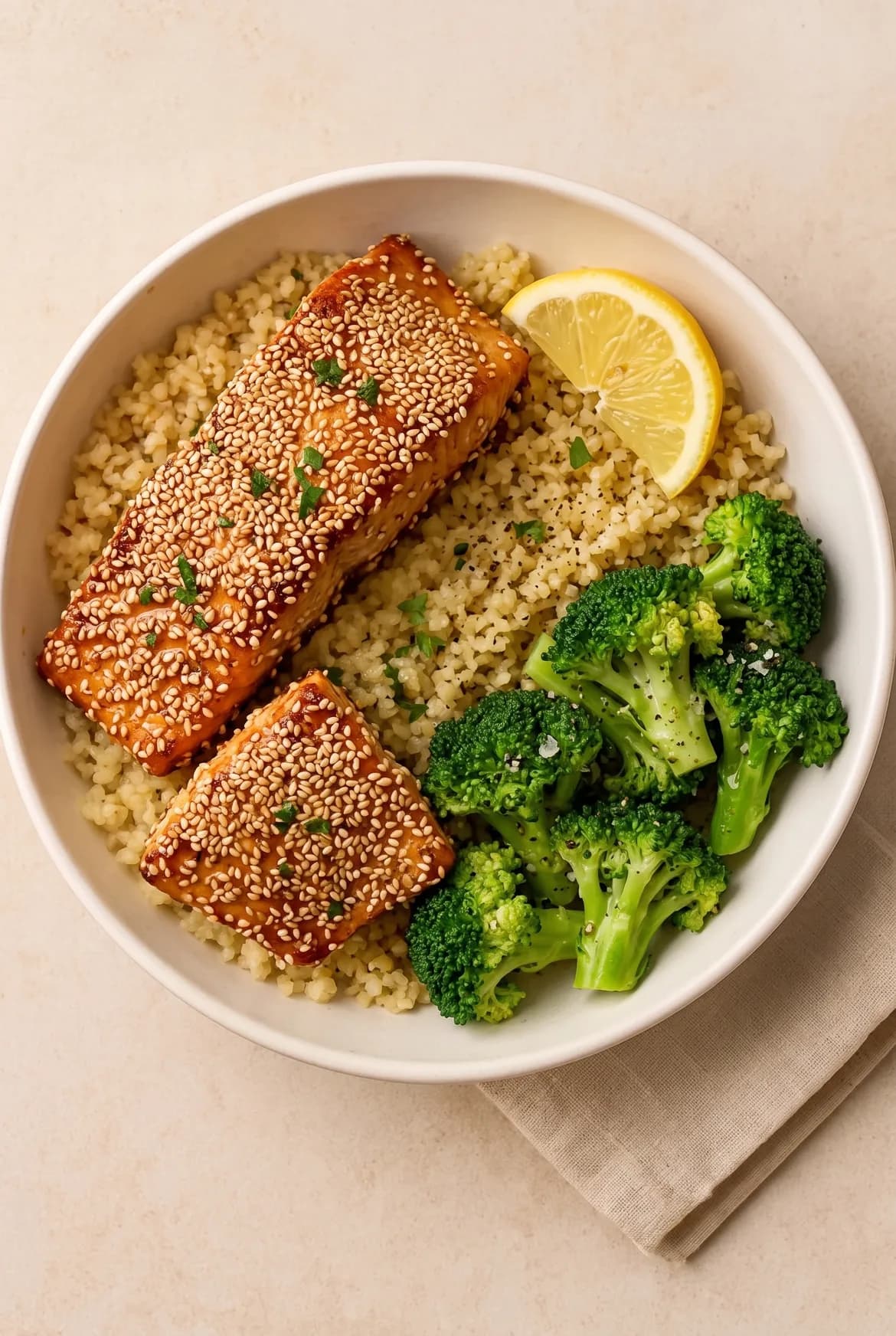
Sesame-crusted salmon with broccoli millet
Ingredients
- 2 salmon fillets (150 g each)
- 3 tbsp sesame seeds
- 1 tbsp soy sauce
- 200 g millet
- 300 g broccoli
- 1 tbsp olive oil
- Juice of half a lemon
- Salt and pepper
Instructions
- 1Cook the millet according to the packet instructions.
- 2Divide the broccoli into florets and steam for 5 minutes.
- 3Brush the salmon with soy sauce and coat with sesame seeds.
- 4Fry in olive oil over medium heat for 4 minutes on each side, until cooked through.
- 5Combine the millet and broccoli, add lemon juice and place the salmon on top.
Nutrition: 640 kcal · 38 g protein · 58 g carbs · 28 g fat
View recipe →4. Chickpea and spinach stew
This version uses chopped tomatoes, cumin and paprika. It is distinct from the passata-based chickpea recipe in our other collection. Canned chickpeas make it quick, and optional wholemeal bread gives you a way to adjust the meal to your hunger.
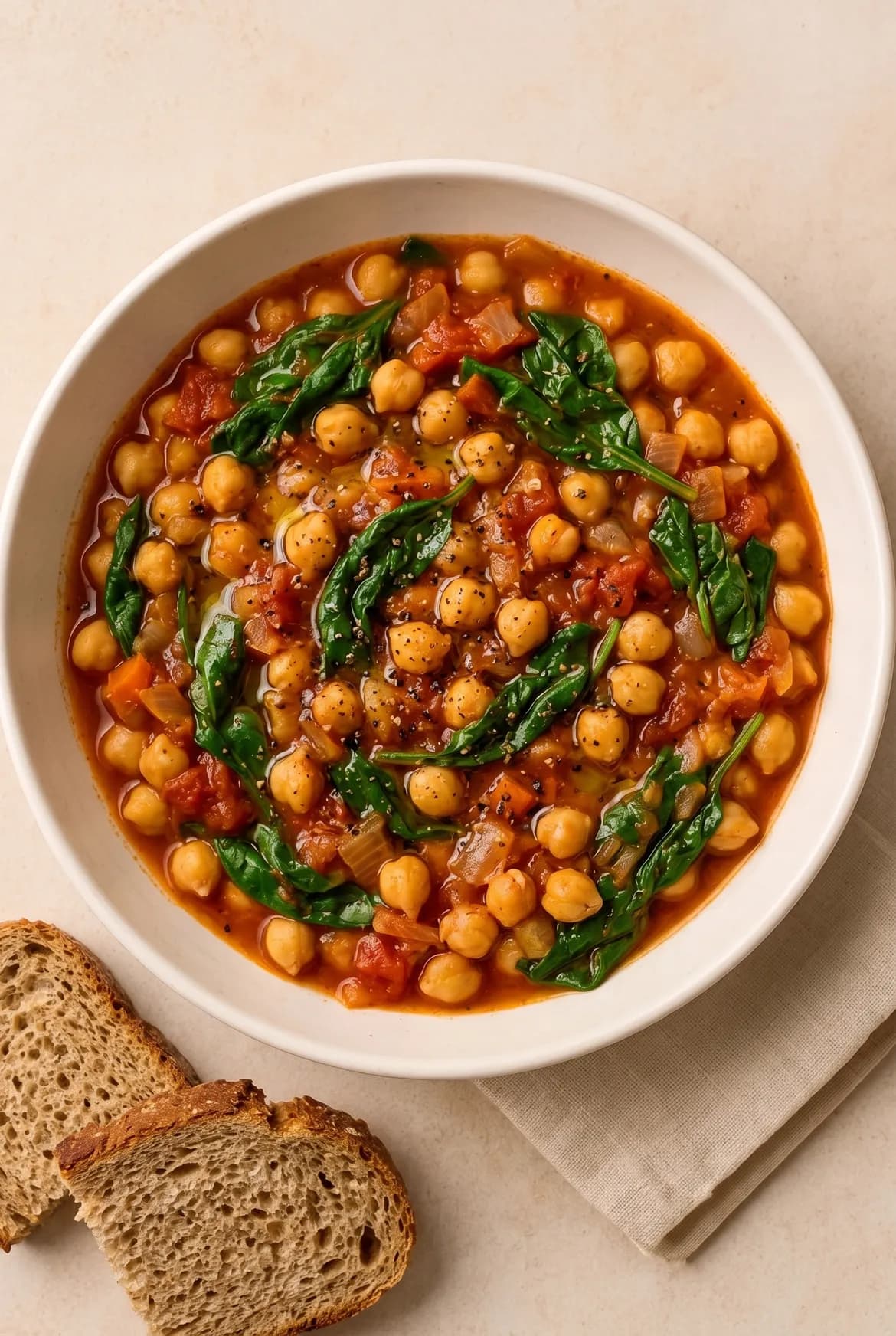
Chickpea and spinach stew
Ingredients
- 1 can chickpeas (400 g, drained)
- 200 g fresh spinach
- 1 can chopped tomatoes (400 g)
- 1 onion
- 2 garlic cloves
- 1 tsp ground cumin
- 1 tsp paprika
- 2 tbsp olive oil
- Salt and pepper
- Optional: 2 slices wholemeal bread
Instructions
- 1Soften the onion and garlic in olive oil.
- 2Briefly toast the cumin and paprika.
- 3Add the tomatoes and chickpeas and simmer for 15 minutes.
- 4Fold in the spinach and let it wilt.
- 5Season with salt and pepper and serve with wholemeal bread if desired.
Nutrition: 420 kcal · 16 g protein · 50 g carbs · 16 g fat
View recipe →5. Dark cocoa and avocado mousse
Avocado supplies the creamy texture; cocoa and maple syrup provide the chocolate flavour. Chill for at least half an hour after blending. Wanting chocolate is not a reliable sign of magnesium deficiency, and dessert does not need a medical justification.
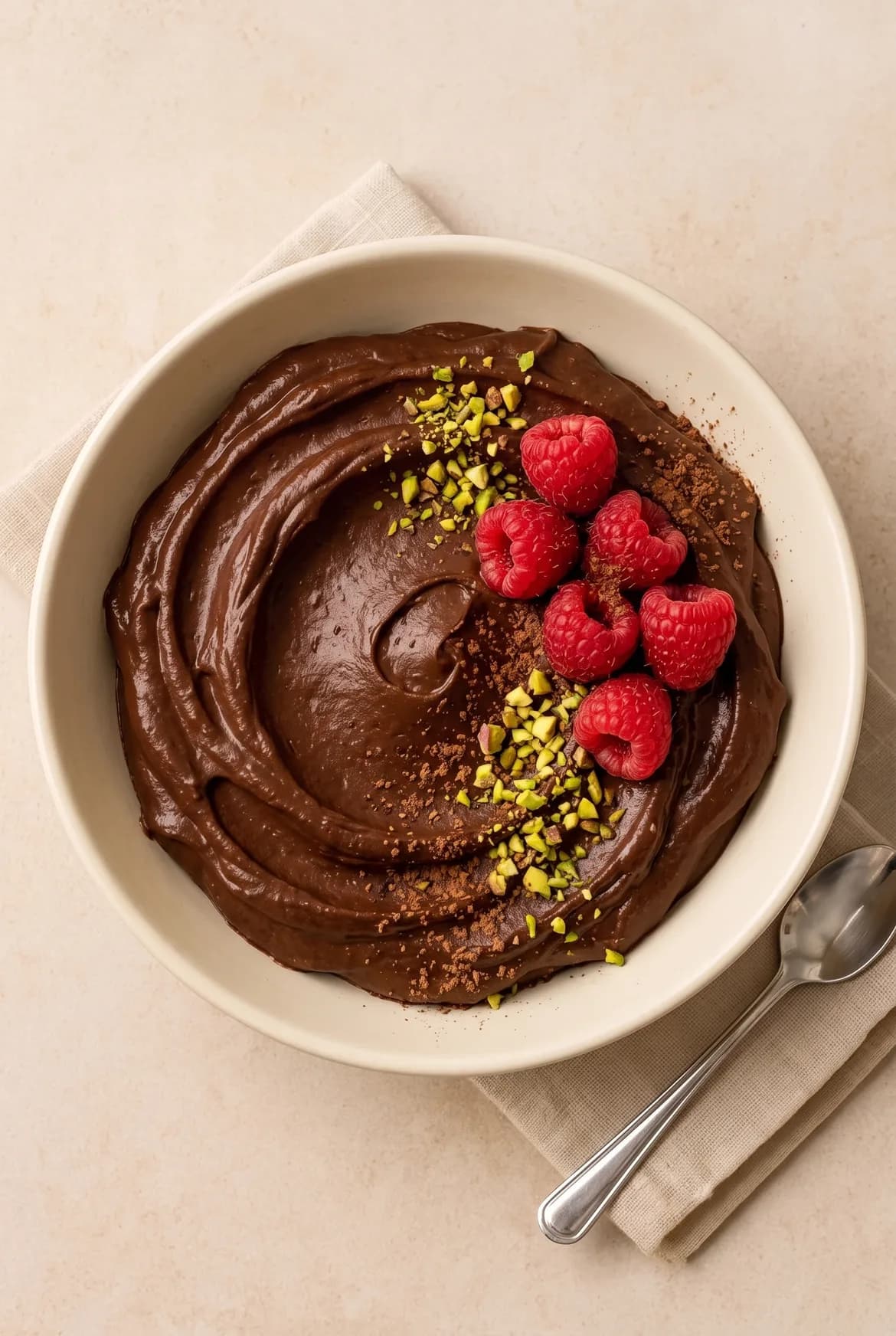
Dark cocoa and avocado mousse
Ingredients
- 2 ripe avocados
- 40 g unsweetened cocoa powder
- 3 tbsp maple syrup
- 1 pinch sea salt
- 80 ml oat milk
- Optional: raspberries and chopped pistachios
Instructions
- 1Halve and stone the avocados and put the flesh in a blender.
- 2Add the cocoa, maple syrup, sea salt and oat milk.
- 3Blend until smooth and creamy.
- 4Divide between two bowls and refrigerate for at least 30 minutes.
- 5Garnish with raspberries and pistachios if desired.
Nutrition: 360 kcal · 6 g protein · 32 g carbs · 26 g fat
View recipe →6. Wholemeal pasta with walnut pesto and rocket
Walnuts give this pesto a different flavour from the basil-and-pine-nut version. They contain ALA, an omega-3 that is only partly converted to EPA and DHA. Reserve pasta water to loosen the sauce and choose a suitable cheese or plant alternative if you eat vegetarian or vegan.
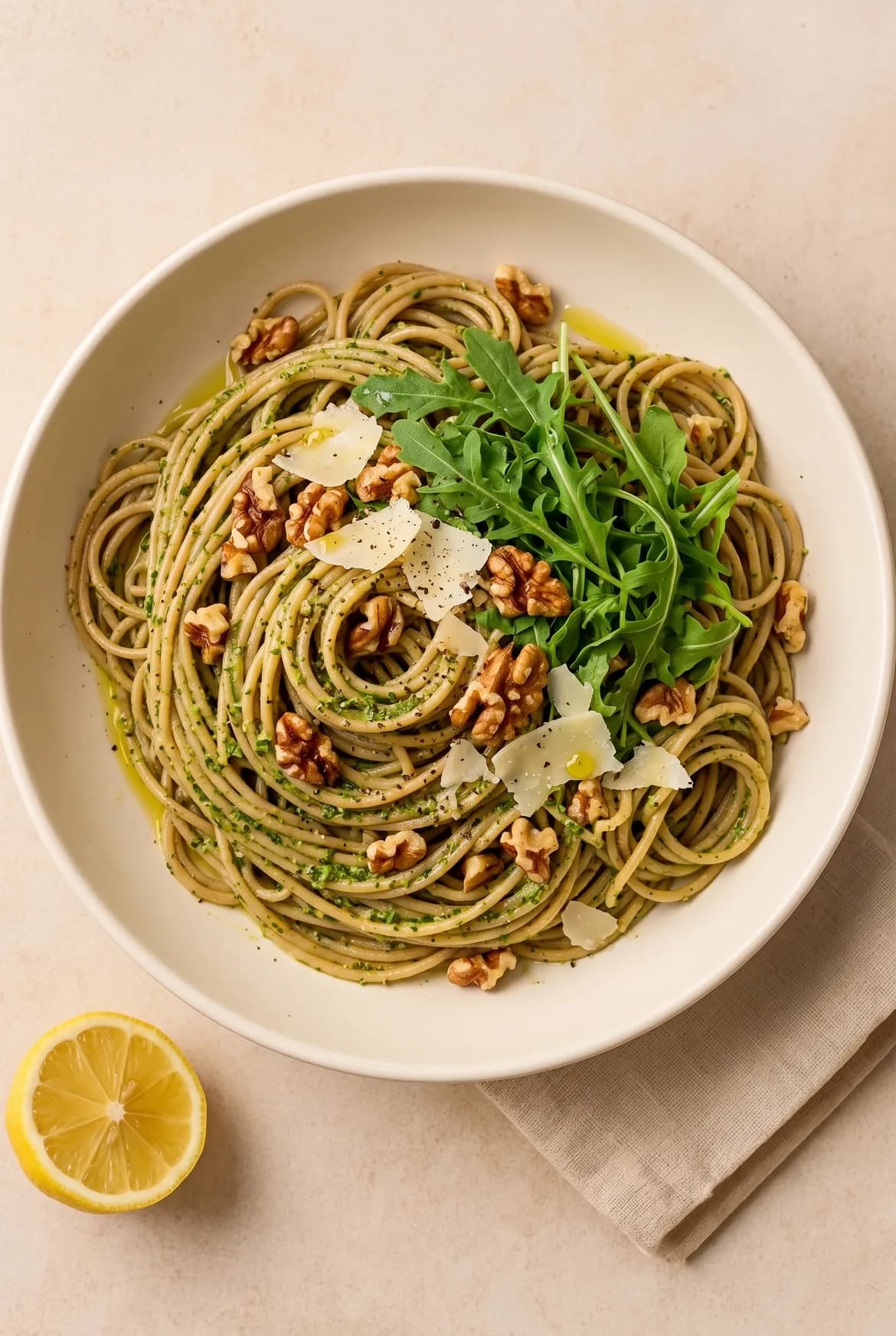
Wholemeal pasta with walnut pesto and rocket
Ingredients
- 250 g wholemeal spaghetti
- 60 g walnuts
- 30 g Parmesan or vegan alternative
- 1 garlic clove
- 80 ml olive oil
- Handful of rocket
- Juice of half a lemon
- Salt and pepper
Instructions
- 1Cook the pasta al dente according to the packet instructions.
- 2Blend the walnuts, Parmesan, garlic, olive oil and lemon juice into a pesto.
- 3Drain the pasta, reserving a little cooking water.
- 4Mix the pesto with the pasta, adding cooking water to loosen if needed.
- 5Fold in the rocket and season with salt and pepper.
Nutrition: 780 kcal · 20 g protein · 80 g carbs · 42 g fat
View recipe →7. Pumpkin and lentil soup with ginger
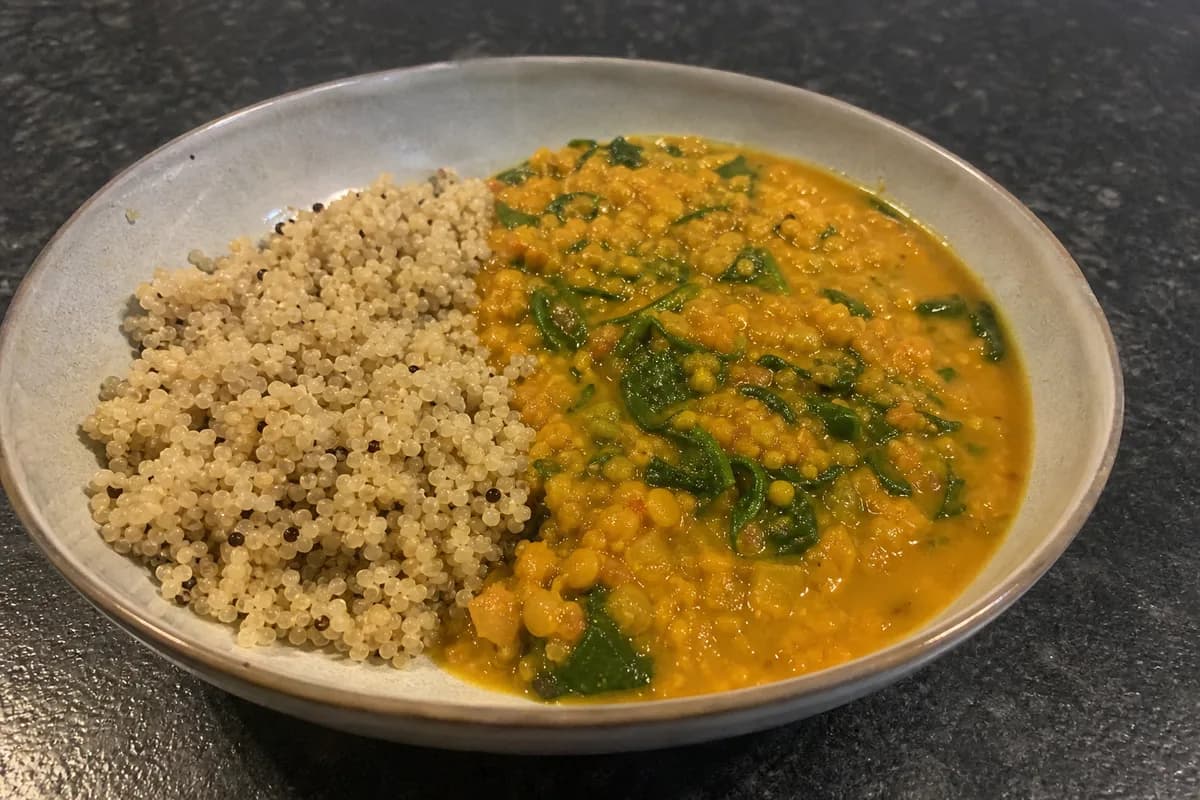
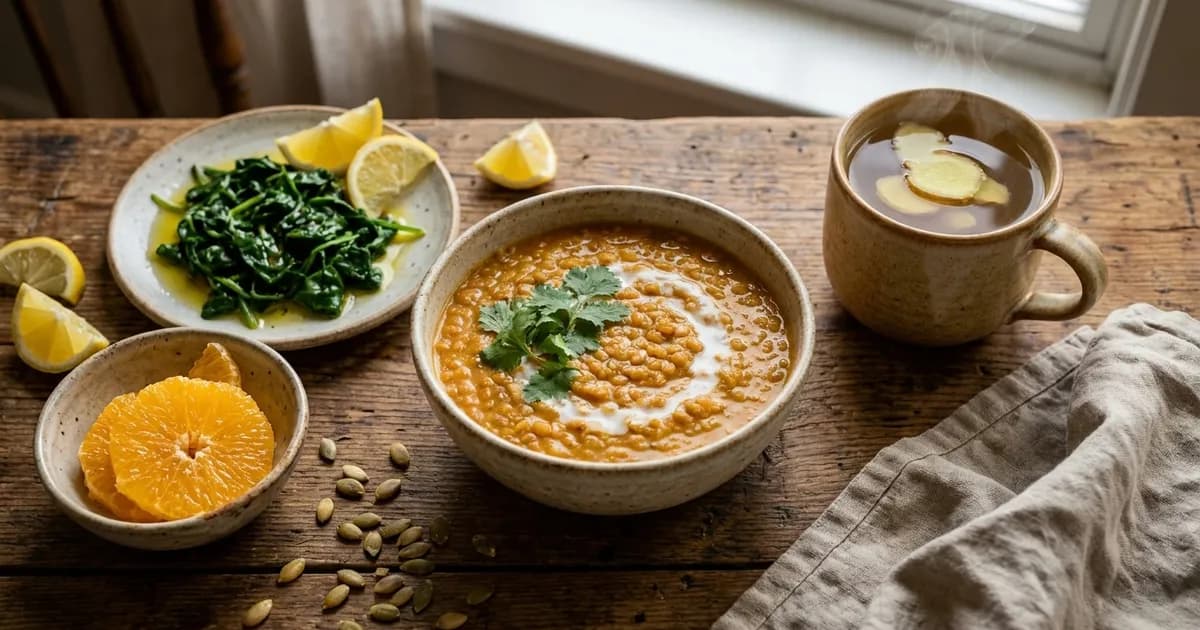
Red lentils and Hokkaido pumpkin blend into a smooth soup. Ginger adds flavour rather than a guaranteed treatment for nausea. The method uses a little oil for the onion and ginger. This is a useful batch-cooking option: cool leftovers promptly, refrigerate or freeze, and reheat thoroughly.
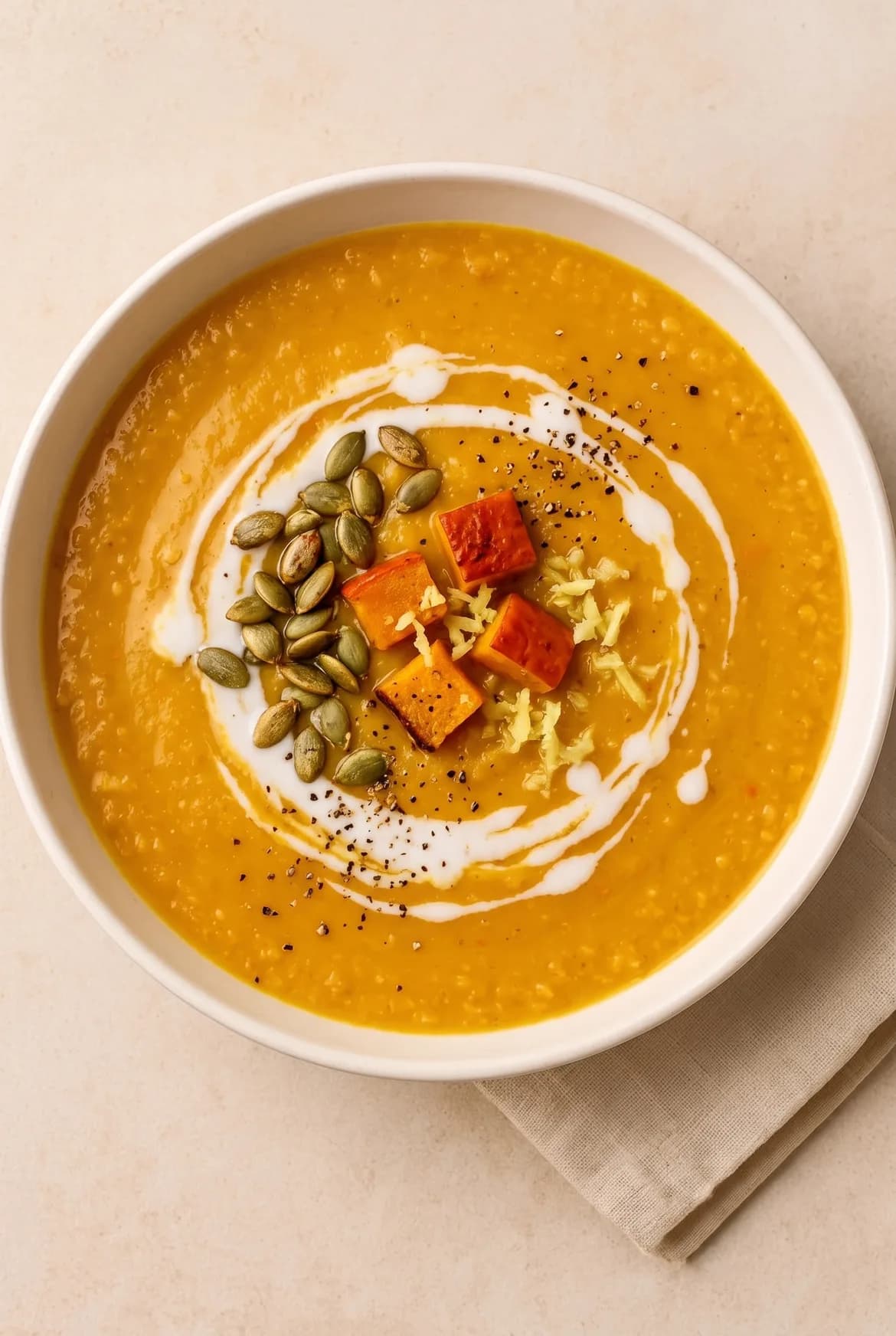
Pumpkin and lentil soup with ginger
Ingredients
- 500 g Hokkaido pumpkin
- 150 g red lentils
- 1 piece ginger (about 3 cm)
- 1 onion
- 600 ml vegetable stock
- 200 ml coconut milk
- 1 tsp turmeric
- Salt and pepper
- Optional: pumpkin seeds to serve
Instructions
- 1Wash and deseed the pumpkin and cut into chunks; the Hokkaido skin can stay on.
- 2Finely chop the onion and ginger and soften in a little oil.
- 3Add the pumpkin and lentils, then pour in the stock.
- 4Add the turmeric and simmer for 20 minutes.
- 5Stir in the coconut milk and blend until smooth.
- 6Serve sprinkled with pumpkin seeds if desired.
Nutrition: 280 kcal · 11 g protein · 35 g carbs · 10 g fat
View recipe →8. Quinoa bowl with edamame and tahini dressing
Quinoa is cooked like a grain although botanically it is a pseudocereal. Edamame contributes plant protein, while red cabbage adds colour and crunch. Follow the packet cooking instructions for frozen edamame; tahini and lime tie the bowl together.
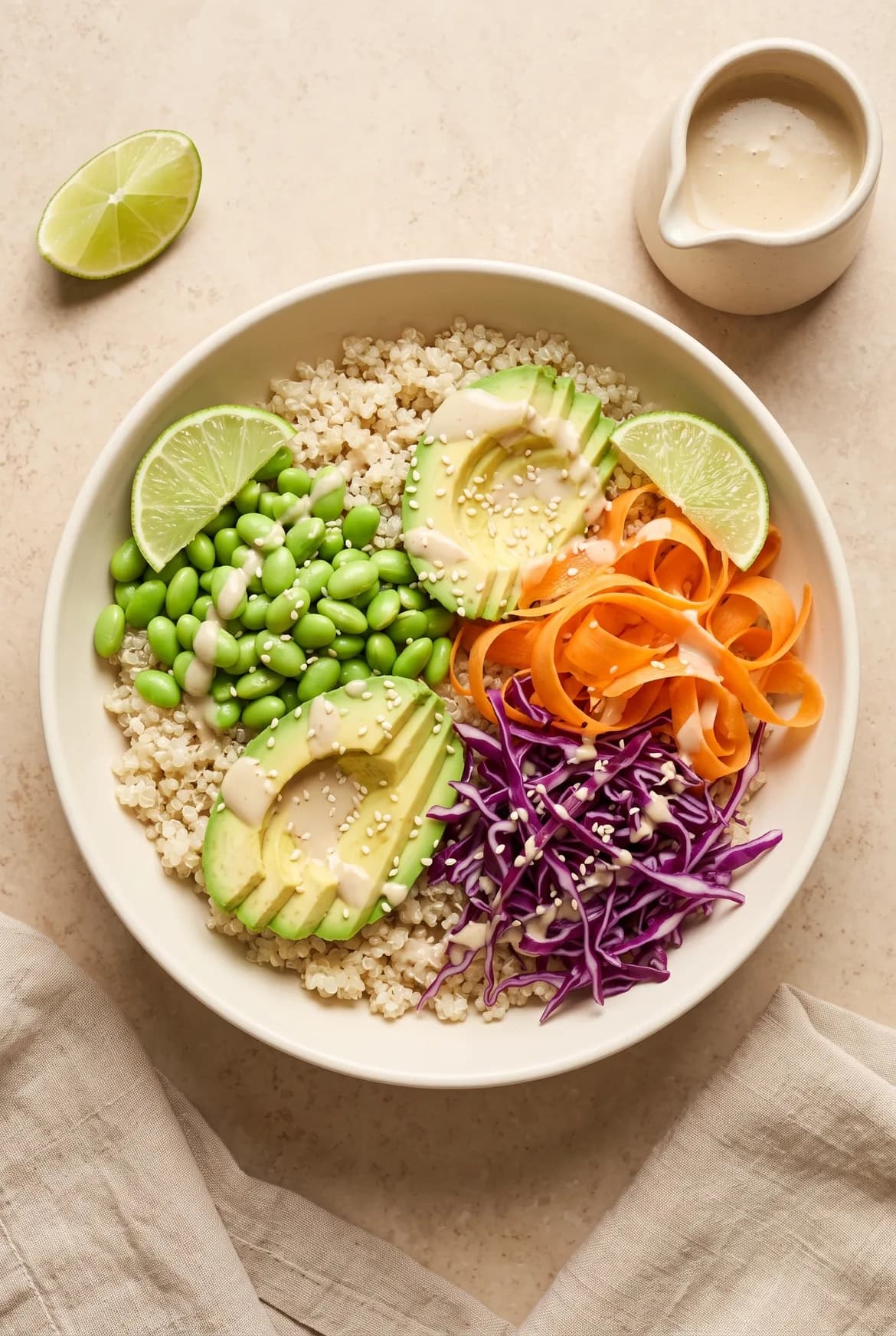
Quinoa bowl with edamame and tahini dressing
Ingredients
- 200 g quinoa
- 150 g frozen shelled edamame
- 1 avocado
- 1 carrot
- 100 g red cabbage
- 2 tbsp tahini
- 1 tbsp soy sauce
- Juice of one lime
- 1 tsp maple syrup
- Sesame seeds to serve
Instructions
- 1Cook the quinoa according to the packet instructions.
- 2Cook the edamame briefly in boiling water, following the packet instructions.
- 3Grate the carrot, finely slice the red cabbage and cut the avocado into wedges.
- 4Mix the tahini, soy sauce, lime juice and maple syrup for the dressing, adding a little water if needed.
- 5Arrange everything in a bowl, drizzle with dressing and scatter over sesame seeds.
Nutrition: 640 kcal · 24 g protein · 70 g carbs · 30 g fat
View recipe →9. Baked potatoes with herbed quark and flaxseed
The oven does most of the work while you mix the topping. Quark contributes protein and the herbs provide flavour. Use ground flaxseed intended for this uncooked use and follow its label. The potatoes need around 45 minutes in the oven, plus preparation, and may take longer depending on size.
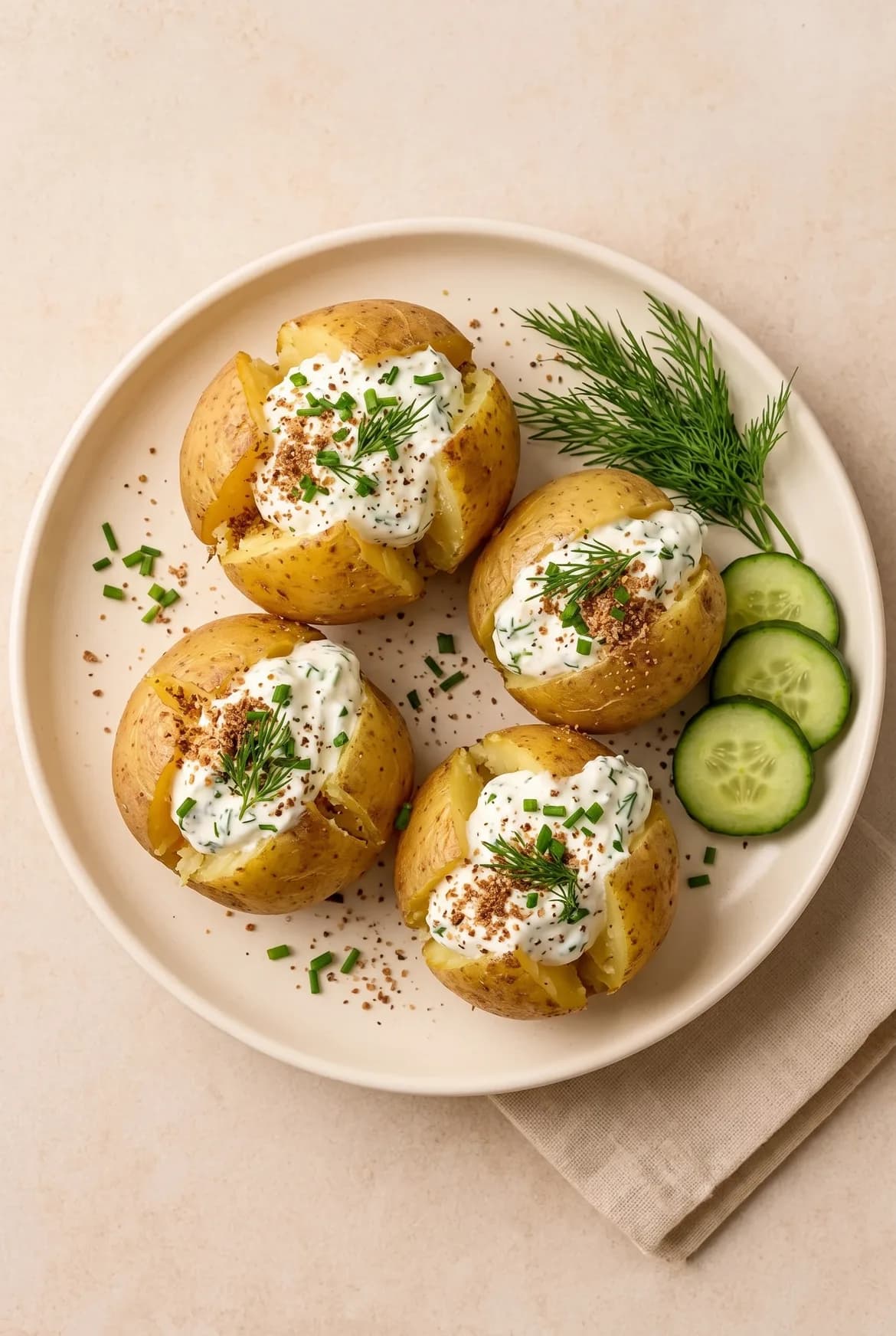
Baked potatoes with herbed quark and flaxseed
Ingredients
- 4 medium waxy potatoes
- 250 g quark or skyr
- 2 tbsp ground flaxseed
- 1 bunch chives
- 1 bunch dill
- 1 small cucumber
- Salt and pepper
- 1 tbsp olive oil
Instructions
- 1Wash the potatoes, rub with olive oil and bake at 200°C for 45 minutes, until tender.
- 2Finely chop the herbs and dice the cucumber.
- 3Mix the quark with the herbs, cucumber, flaxseed, salt and pepper.
- 4Split the potatoes and generously spoon over the herbed quark.
Nutrition: 420 kcal · 22 g protein · 55 g carbs · 12 g fat
View recipe →10. Overnight oats with cocoa and pumpkin seeds
Mix the base in the evening and add the banana and pumpkin seeds in the morning. Chia helps thicken it; cocoa provides flavour. Keep the jar refrigerated overnight. This is a breakfast option, not a rule about what you should be allowed to eat in the morning.
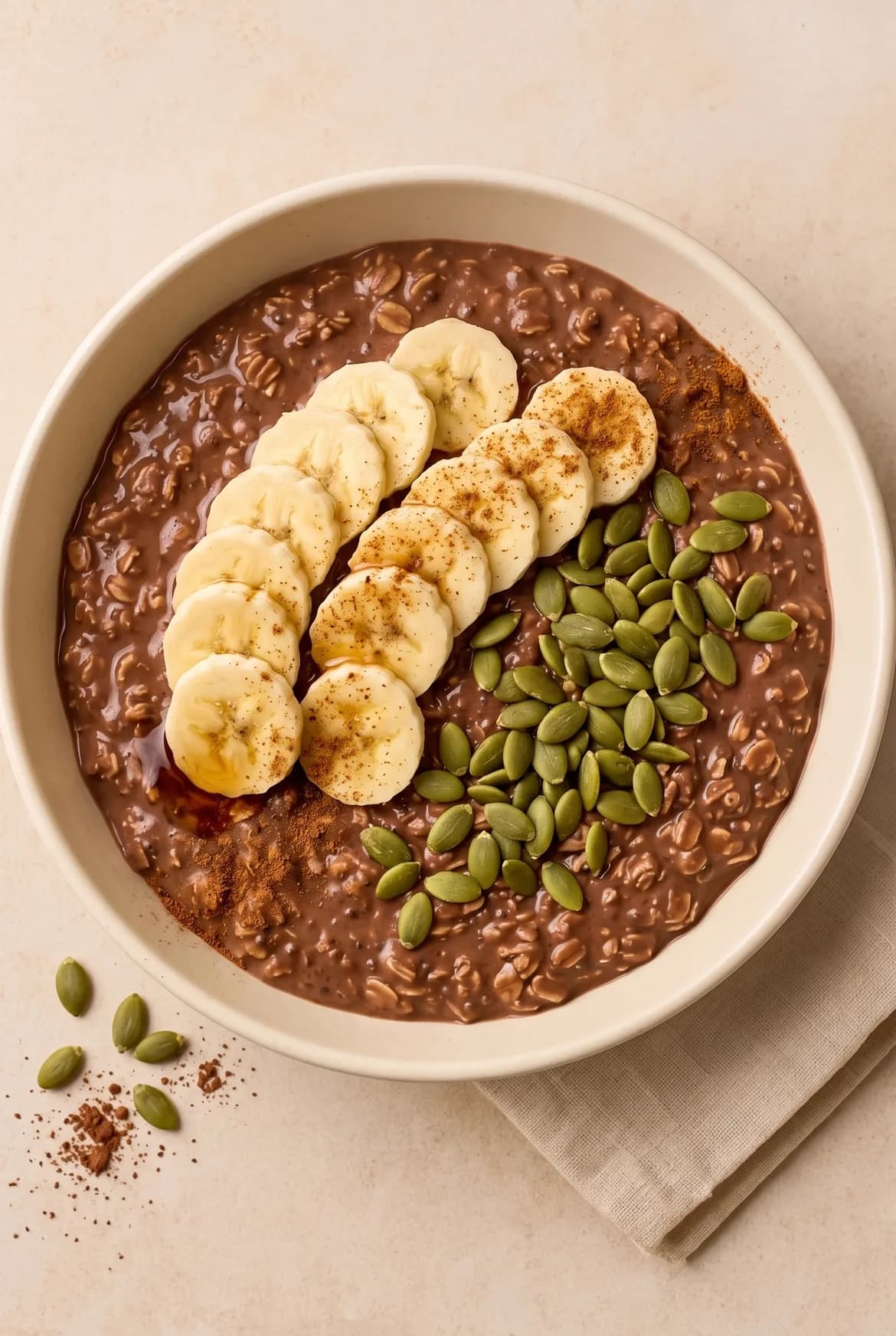
Overnight oats with cocoa and pumpkin seeds
Ingredients
- 80 g oats
- 200 ml oat milk
- 1 tbsp chia seeds
- 1 tbsp cocoa powder
- 1 tbsp maple syrup
- 2 tbsp pumpkin seeds
- 1 banana
- Pinch of cinnamon
Instructions
- 1Mix the oats, oat milk, chia seeds, cocoa, maple syrup and cinnamon in a jar.
- 2Cover and refrigerate overnight.
- 3In the morning, slice the banana and arrange on the oats with the pumpkin seeds.
Nutrition: 620 kcal · 18 g protein · 85 g carbs · 22 g fat
View recipe →Making the recipes fit your week
Pick two or three that appeal to you. Soup and stew suit cooking extra portions; pancakes and overnight oats cover different breakfast routines. The mousse is simply a dessert, not a «cheat» to compensate for later.
Use the portion controls for ingredient planning. Nutrition figures are estimates copied from the recipe source, not laboratory measurements, and substitutions change them. See also food during the luteal phase and magnesium and the cycle.
Frequently asked questions
Can I eat these outside the luteal phase?
Yes. The phase label is a way to browse ideas, not a restriction. Choose meals according to preferences, allergies, hunger and practical needs on any cycle day.
Which recipes can be made vegan?
Several already use plant ingredients. For pancakes, use a suitable egg replacement and expect a different texture. Try sesame-coated tofu instead of salmon, a plant alternative instead of quark and nutritional yeast or vegan cheese instead of Parmesan. Check product labels, including stock and sauces. These swaps change the nutrition estimates.
Is food alone enough for PMS?
Not necessarily. If symptoms interfere with daily life, seek an assessment. Severe mood symptoms may need specific care, including consideration of premenstrual dysphoric disorder. Sleep, movement and meals can accompany care, but these recipes are not a replacement for treatment.
Do I need more magnesium in the luteal phase?
There is no universal phase-specific dose in this collection. The DGE reference for adult women is around 300 mg per day from total intake; that is not a supplement prescription. Do not automatically increase supplements because of a cycle day. Individual advice depends on your intake, health and any medication.
Start with whichever dish sounds useful today. For more options, explore breakfast ideas, ten period recipes, ten follicular-phase recipes, or the iron diet guide.