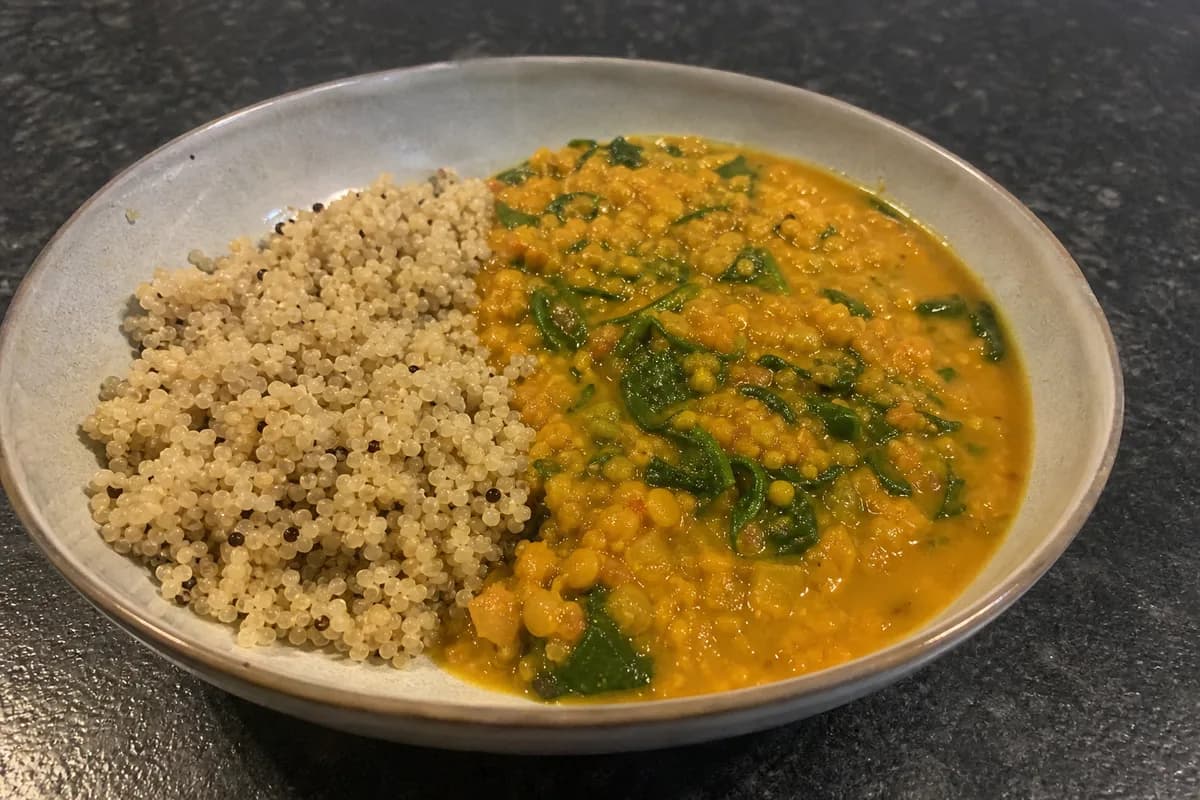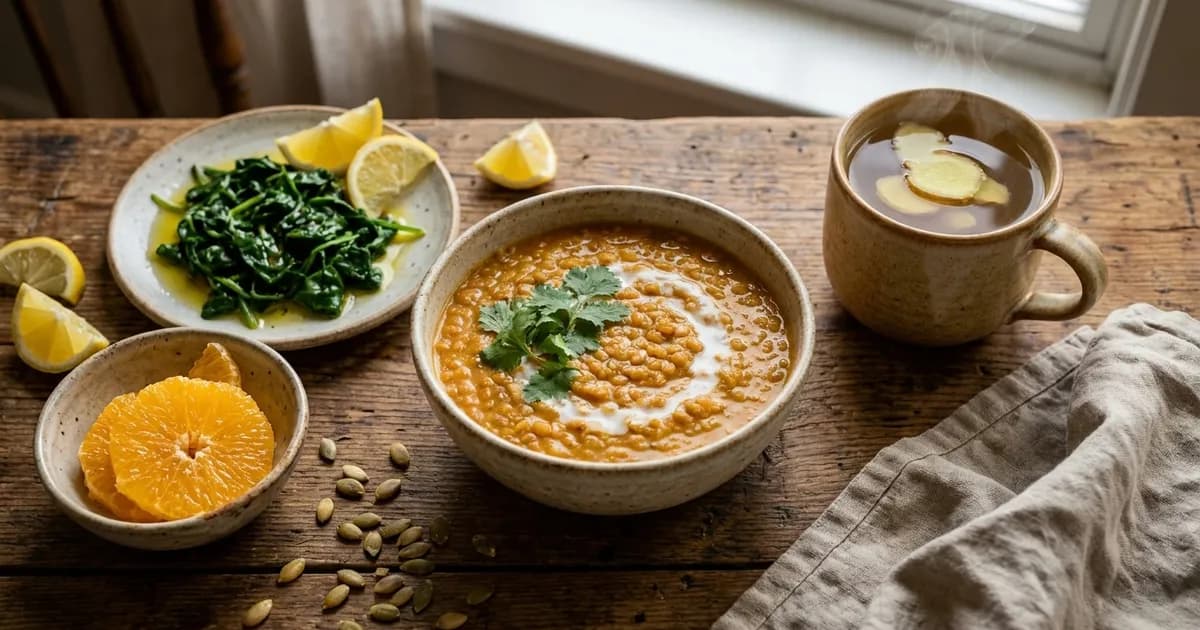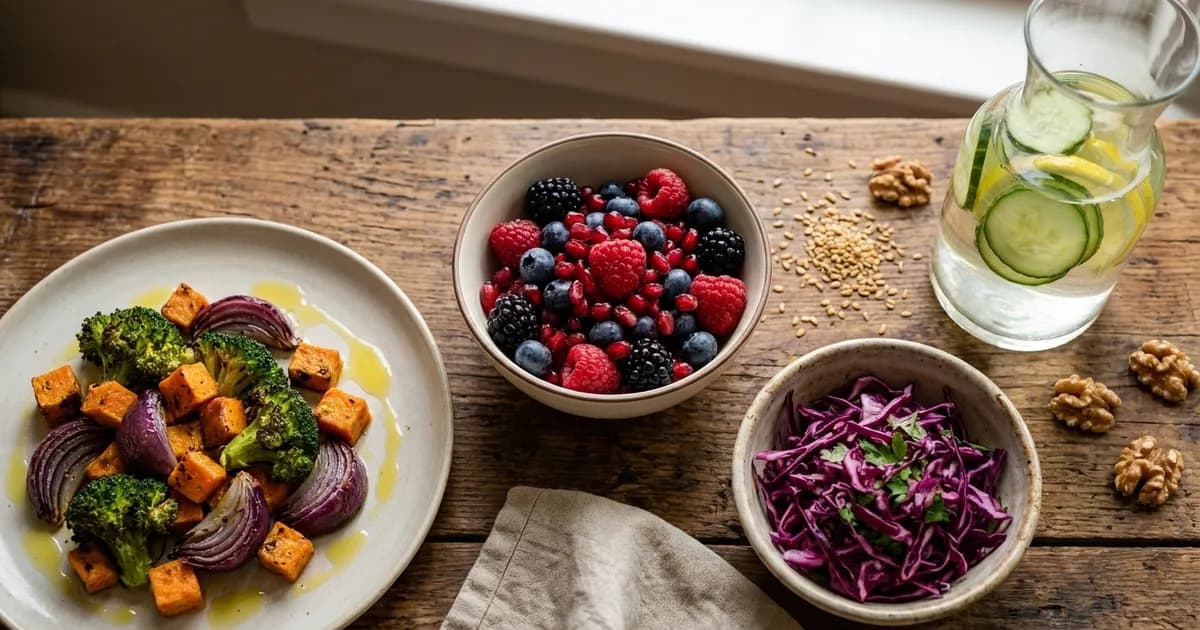
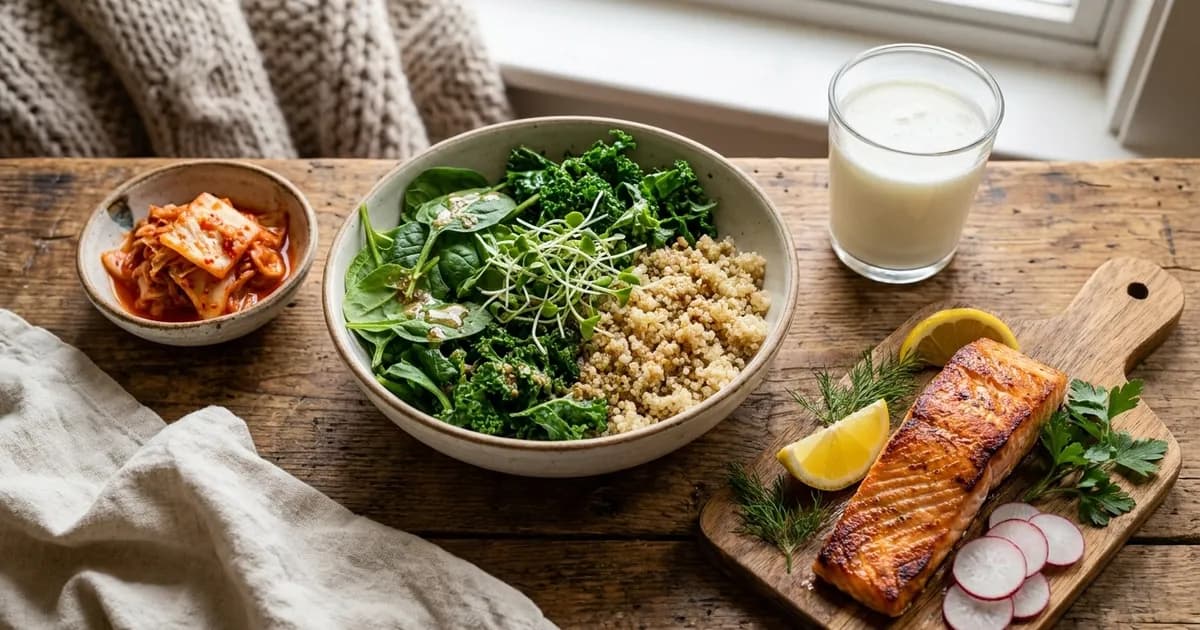
Fresh salads, warm pasta and a breakfast with coconut and chocolate: these ten recipes give you options for the first part of the cycle. Some people notice more interest in cooking after their period; others do not. You do not need a particular mood or hormone pattern to enjoy these meals.
Eight recipes have listed preparation and cooking times totalling 25 minutes or less. The rice bowl takes around 30 minutes and the chicken salad around 35. Actual cooking time can vary, especially when ingredients need longer to cook through.
Why these ingredients?
Carbohydrates and fibre. Wholemeal bread, oats and beans can contribute fibre as well as energy. Ordinary pasta and rice also have a place. Research into insulin sensitivity across the cycle does not justify telling everyone to eat less carbohydrate or protein in a particular phase.
Fermented foods. Skyr, yoghurt and some other dairy products are made with cultures. The product and processing affect whether live cultures remain. Research into gut microbes and oestrogen metabolism is developing; a fermented food does not guarantee a change in hormone levels. Kimchi, sauerkraut, kefir, miso and tempeh are optional ways to vary meals if you enjoy and tolerate them.
Protein. Eggs, fish, poultry, dairy and legumes offer different sources. Your needs depend on factors such as age and activity, not just a phase label. There is no reason to deliberately under-eat protein during follicular development.
Choose breakfast, lunchbox or dinner
Porridge, avocado toast and egg spread suit breakfast. Summer pasta and the courgette skillet are straightforward warm meals. For a lunchbox, keep salad dressing and toasted seeds separate until eating.
Simplify shopping: herbs, lemon, yoghurt and beans recur. Pick two meals with shared ingredients and use the drained bean quantities specified. Frozen peas and canned beans save preparation.
Vegetarian options: choose cheese made with suitable rennet for the pistou. Cooked edamame can replace tuna in the rice bowl, with different flavour and nutrition. Read more about follicular-phase food.
The ten recipes
1. Coconut chocolate porridge with skyr
Oats form the base, skyr adds protein and coconut and dark chocolate provide the flavour. The chopped chocolate softens on the warm porridge. For a cold variation, soak oats and coconut drink in the fridge overnight and add skyr and toppings in the morning. That is a variation, with a different waiting time.
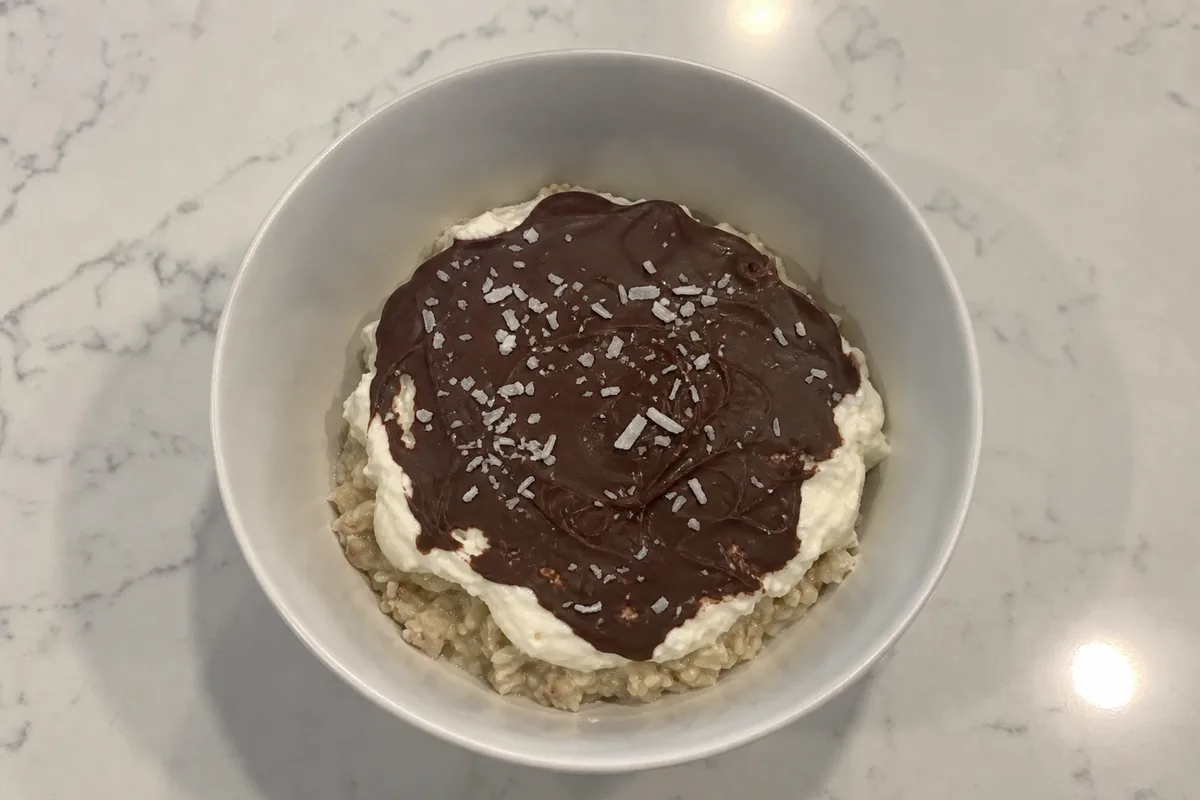
Coconut chocolate porridge with skyr
Ingredients
- 2 tbsp coconut chips
- 40 g fine rolled oats
- 150 ml unsweetened coconut drink
- 1 pinch salt
- 150 g plain skyr
- 1 tsp maple syrup
- 20 g dark chocolate (at least 70%)
- ½ banana, optional
Instructions
- 1Toast the coconut chips in a dry pan for 1 to 2 minutes until golden and set aside.
- 2Bring the oats, coconut drink and salt to the boil in a small saucepan. Simmer, stirring, for 3 to 4 minutes until creamy. Remove from the heat and cool for a minute.
- 3Stir two thirds of the skyr and the maple syrup into the porridge.
- 4Spoon into a bowl and add the remaining skyr. Roughly chop the chocolate and scatter it over, followed by the coconut chips and banana slices if desired.
Nutrition: 430 kcal · 24 g protein · 45 g carbs · 16 g fat
View recipe →2. Avocado and egg toast with cress
Wholemeal toast, a cooked egg and avocado make a quick breakfast. Cress adds a peppery finish. The shopping list includes a whole avocado, but the method uses half; cover and refrigerate the remaining half promptly. A stone left in the fruit is not a substitute for proper storage.
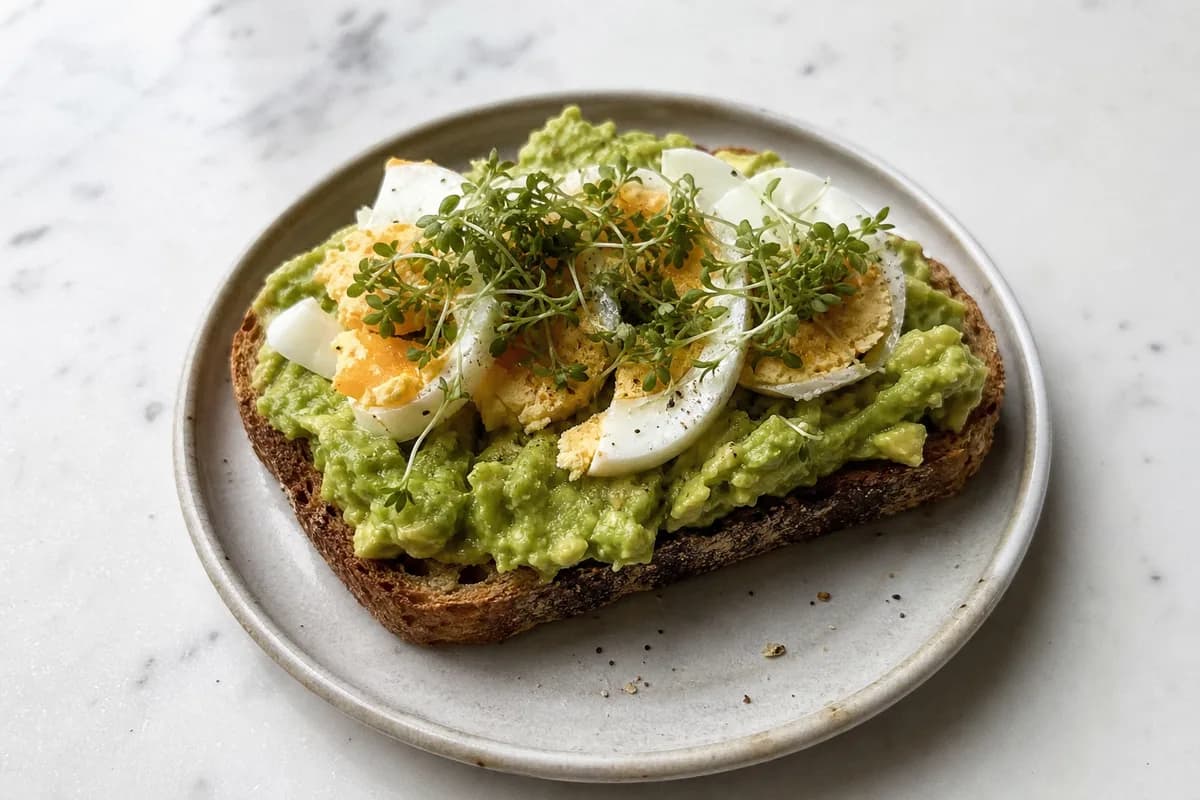
Avocado and egg toast with cress
Ingredients
- 1 slice wholemeal bread
- 1 avocado
- 1 boiled egg
- 1 tsp lemon juice
- 1 pinch salt
- 1 pinch pepper
- 4 tbsp fresh cress or sprouts
Instructions
- 1Toast the wholemeal bread.
- 2Halve the avocado and mash one half with lemon juice, salt and pepper using a fork. Cover the other half and refrigerate promptly.
- 3Spread the avocado evenly over the toast.
- 4Slice the boiled egg and arrange it on top.
- 5Add a little more salt and pepper if needed.
- 6Finish with the fresh cress or sprouts.
Nutrition: 350 kcal · 15 g protein · 30 g carbs · 20 g fat
View recipe →3. Egg and cottage cheese spread
Egg and cottage cheese combine into a spread with acidity from vinegar and mustard. Choose wholemeal spelt toast if you prefer. Refrigerate the spread promptly in a covered container and use it soon, following the storage guidance for the ingredients. Keep it chilled when taking it to work.
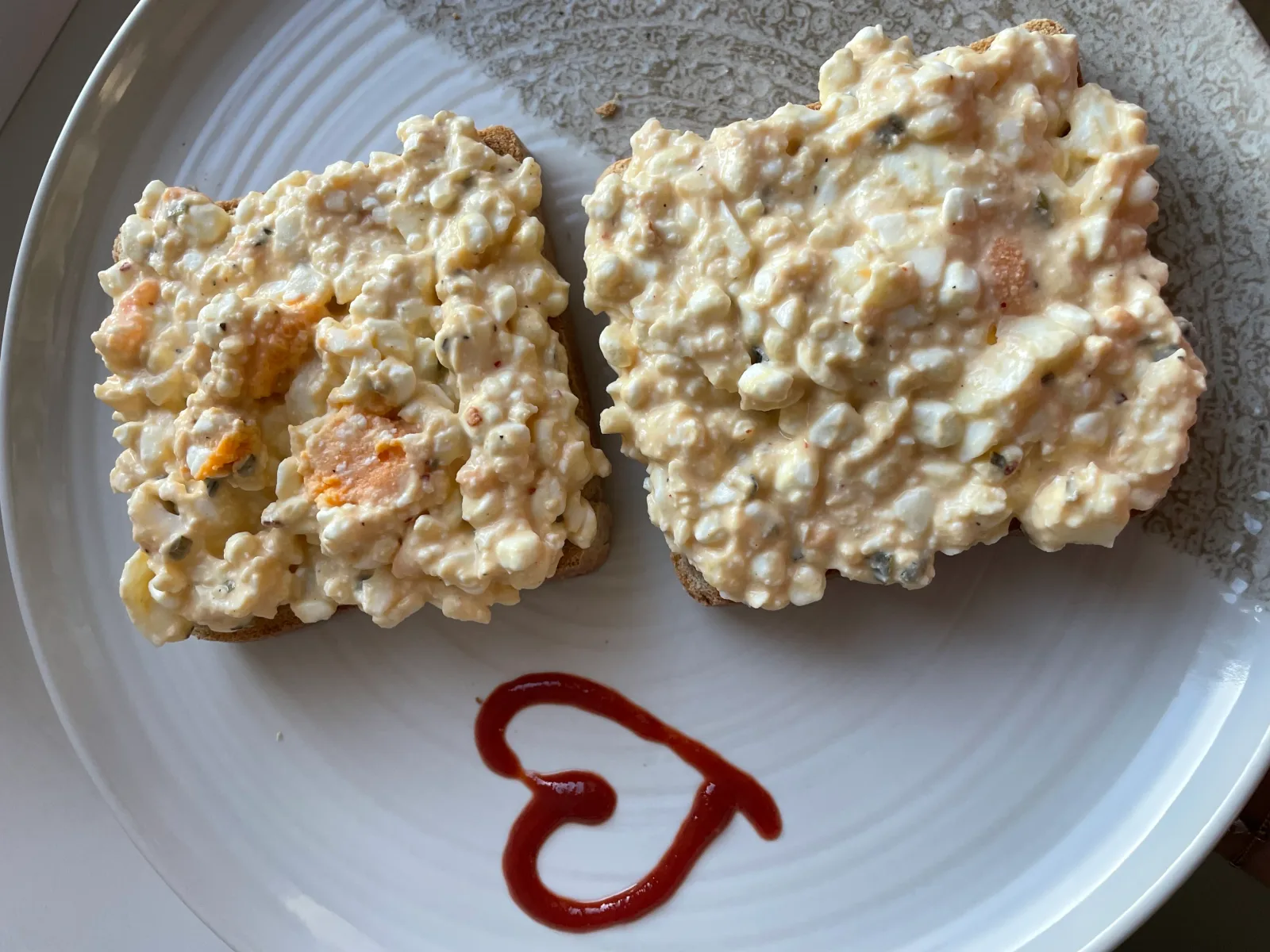
Egg and cottage cheese spread
Ingredients
- 2 eggs
- 125 g cottage cheese with chives
- 1.5 tsp apple cider vinegar
- 1/2 tsp tarragon mustard
- 2 slices spelt toast
- 1 pinch salt
- 1 pinch pepper
- 1 pinch chilli flakes
Instructions
- 1Hard-boil the eggs and cool under cold water.
- 2Peel the eggs and mash them in a bowl with a fork.
- 3Mix with the cottage cheese, vinegar and mustard.
- 4Season with salt, pepper and chilli flakes.
- 5Toast the spelt bread until golden and spread with the egg mixture.
Nutrition: 250 kcal · 20 g protein · 15 g carbs · 12 g fat
View recipe →4. Kale salad with pomegranate and feta
Massaging kale with oil and salt softens the leaves without cooking. Apple, orange and pomegranate add different textures; flaxseed oil goes into the cold dressing. This recipe makes two portions. It is a way to eat greens, not a method for eliminating excess oestrogen.
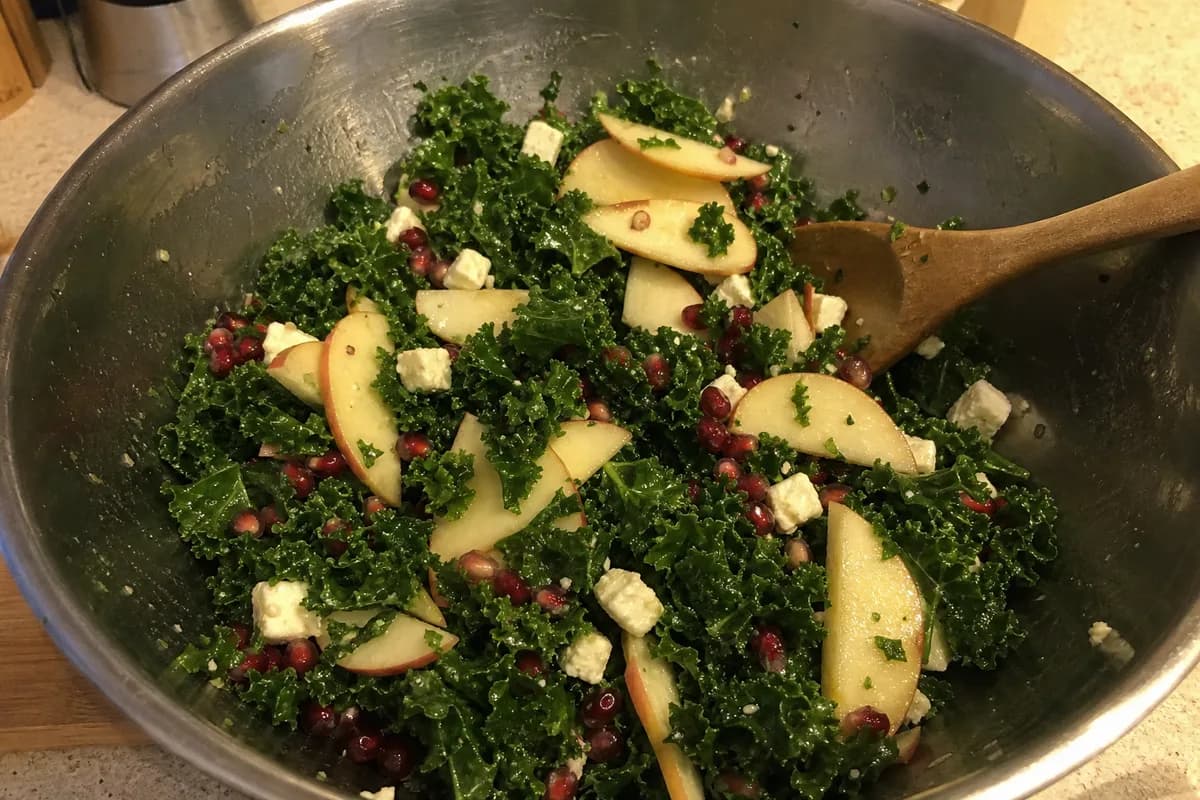
Kale salad with pomegranate and feta
Ingredients
- 200 g trimmed kale, stalks removed
- 1 tbsp olive oil
- ½ tsp salt
- 30 g walnuts
- 1 orange
- 1 small apple
- ½ pomegranate
- 80 g feta
- 2 tbsp flaxseed oil
- 1 tsp apple cider vinegar
- 1 tsp medium-hot mustard
- 1 tsp maple syrup
- 1 pinch pepper
Instructions
- 1Wash and dry the kale and tear into bite-sized pieces. Put in a large bowl, add olive oil and salt and massage firmly for 2 to 3 minutes until darker and softer.
- 2Toast the walnuts in a dry pan for about 3 minutes and roughly chop.
- 3Peel the orange with a knife, removing the white pith, and cut out the segments. Squeeze the juice from the remaining membranes into a small bowl. Cut the apple into fine sticks and remove the pomegranate seeds.
- 4For the dressing, mix 1 tbsp orange juice with vinegar, mustard and maple syrup. Whisk in the flaxseed oil and add pepper.
- 5Fold the apple, orange and pomegranate into the kale, add the dressing and toss. Crumble over the feta and scatter with walnuts.
Nutrition: 390 kcal · 12 g protein · 27 g carbs · 26 g fat
View recipe →5. Green goddess salad with spinach and peas
Avocado, yoghurt, lemon and herbs make the creamy dressing. Peas add plant protein and pumpkin seeds add crunch. Follow the frozen pea packet if it requires more cooking than the quick preparation described. For context, see our iron guide and seed cycling article; the salad is not a treatment for deficiency.
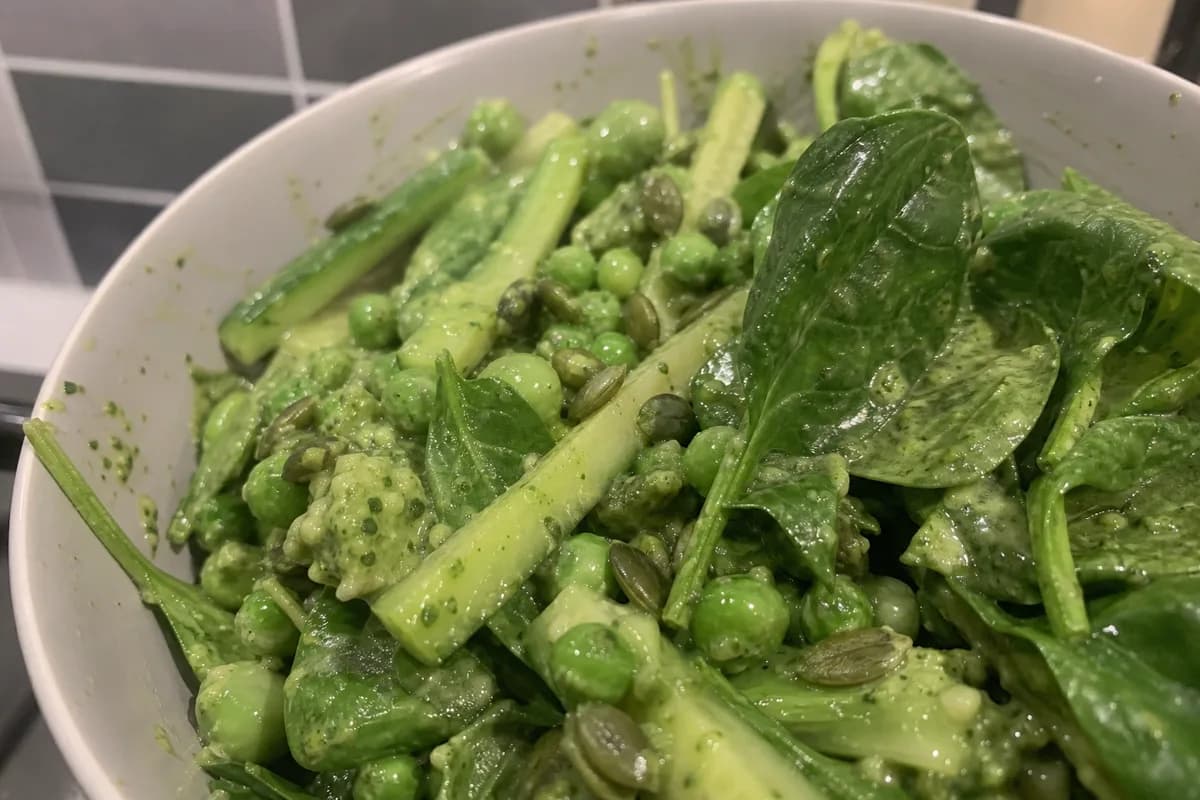
Green goddess salad with spinach and peas
Ingredients
- 150 g frozen peas
- 3 tbsp pumpkin seeds
- 1 ripe avocado
- 150 g plain yoghurt (3.5%)
- ½ lemon, juice only
- 1 small garlic clove
- 1 handful mixed herbs: parsley, chives, dill or basil
- 2 tbsp olive oil
- 150 g baby spinach
- 1 small romaine lettuce
- ½ cucumber
- 4 radishes
- 1 pinch salt
- 1 pinch pepper
Instructions
- 1Put the peas in a sieve, pour over boiling water and leave for a minute, then cool under cold water. Follow the packet if it requires longer cooking.
- 2Toast the pumpkin seeds in a dry pan until they start to pop, then cool.
- 3Blend the avocado flesh, yoghurt, lemon juice, garlic, herbs and olive oil until smooth. Season with salt and pepper; add 1 to 2 tbsp water if too thick.
- 4Slice the romaine into strips, the cucumber into half-moons and the radishes thinly. Mix with the spinach and peas in a bowl.
- 5Fold in the dressing or spoon it generously over the salad, scatter with pumpkin seeds and serve immediately.
Nutrition: 360 kcal · 13 g protein · 22 g carbs · 25 g fat
View recipe →6. Summer pistou soup
Cannellini beans, green beans, leeks and courgette form the soup, with basil, garlic and Parmesan stirred in as pistou. Cook green beans thoroughly, extending the indicative time if needed. Cool extra portions promptly and store chilled or freeze; do not assume the recipe timing establishes a shelf life.
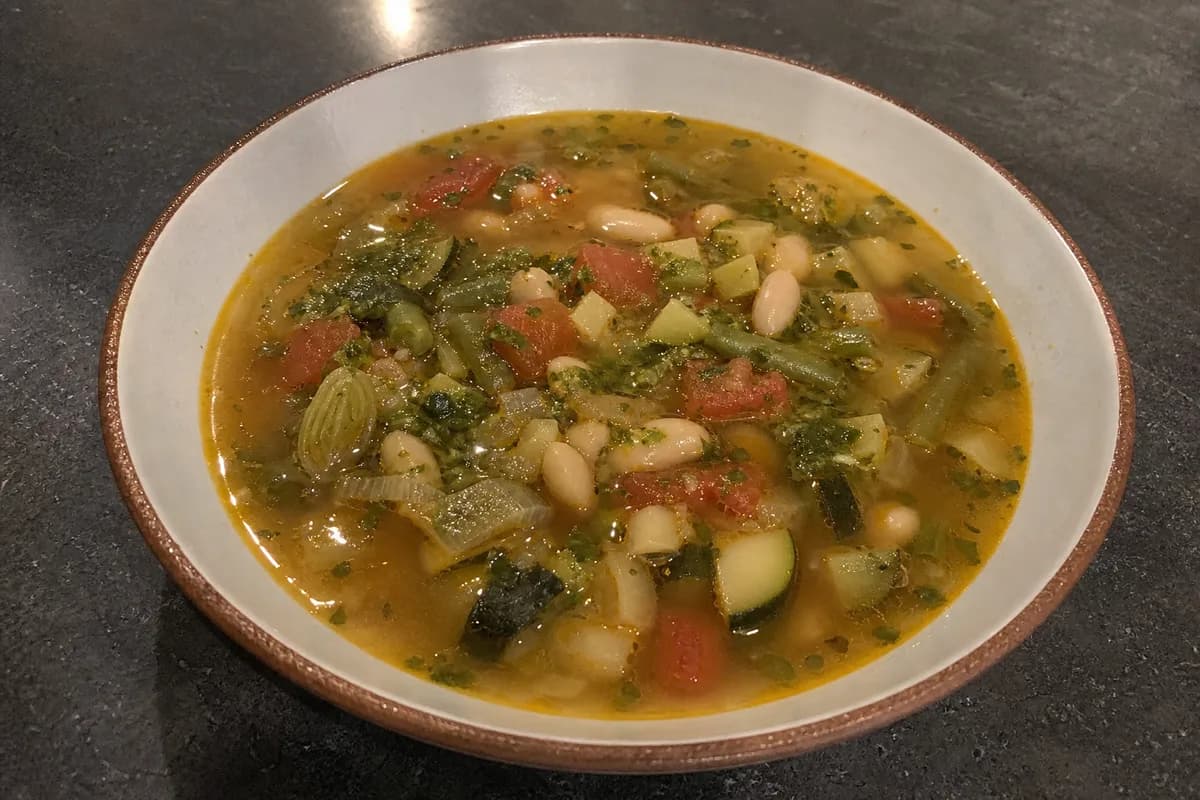
Summer pistou soup
Ingredients
- 1 tbsp rapeseed oil
- 2 leeks
- 1 courgette
- 1 litre vegetable stock
- 400 g drained cannellini beans
- 200 g green beans
- 3 tomatoes
- 3 garlic cloves
- 1 cup basil
- 40 g Parmesan
Instructions
- 1Heat the rapeseed oil in a large saucepan.
- 2Gently soften the finely chopped leeks and diced courgette for about 5 minutes.
- 3Pour in the stock and add about three quarters of the cannellini beans, the green beans and half the chopped tomatoes.
- 4Simmer for 5 to 8 minutes until tender, allowing longer as needed to cook the green beans thoroughly.
- 5For the pistou, blend the remaining cannellini beans and tomatoes with the garlic and basil, then stir in the Parmesan.
- 6Stir the pistou into the soup, simmer for another 1 minute and adjust the seasoning.
Nutrition: 370 kcal · 21 g protein · 45 g carbs · 10 g fat
View recipe →7. Fresh summer pasta
Tomatoes, basil, mozzarella and lemon give the dish a Caprese-like flavour. Only the pasta needs cooking. Standard spaghetti is used here; wholemeal pasta is an option if you want to change it. Follow the cooking time on your chosen packet.
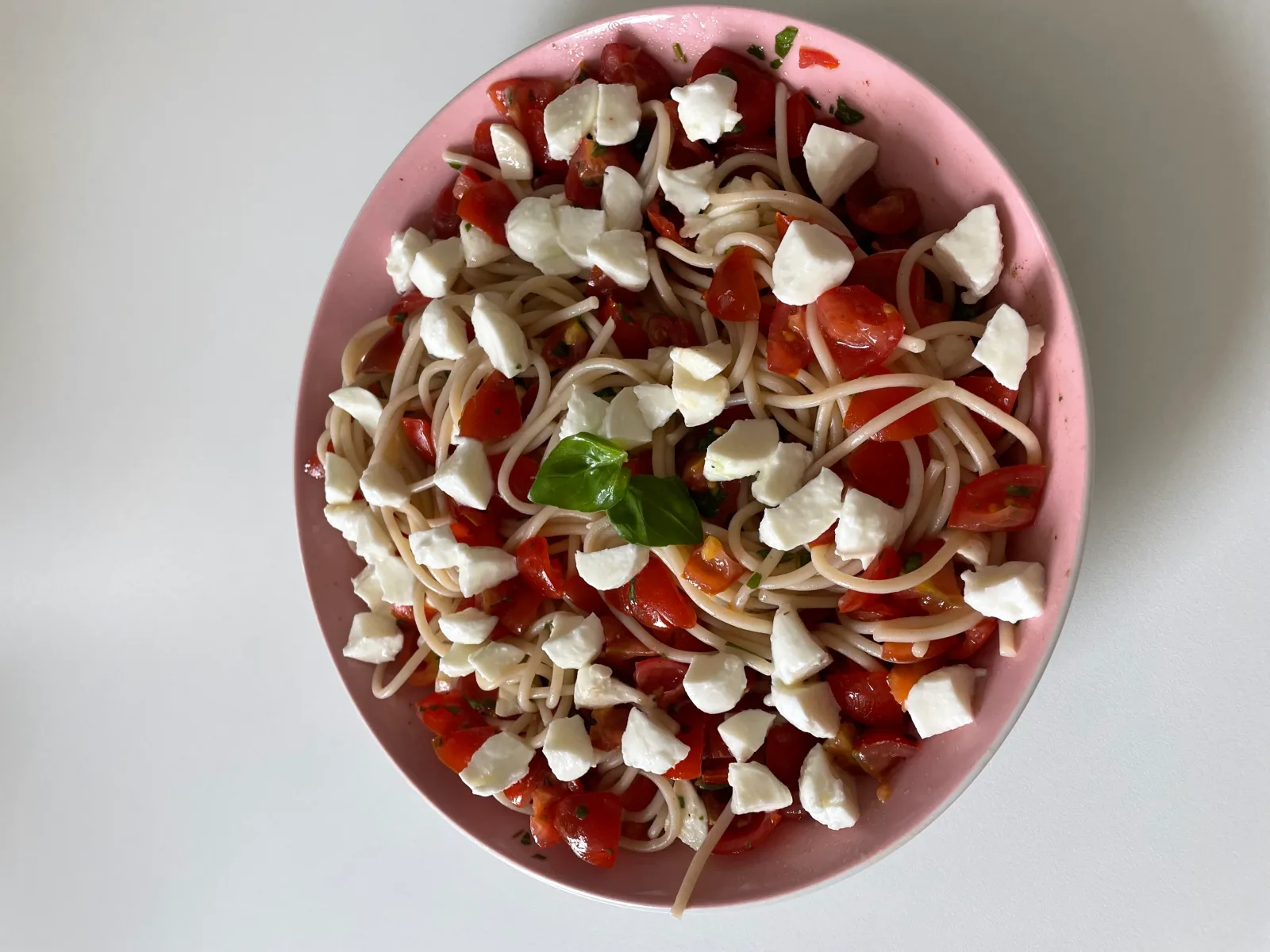
Fresh summer pasta
Ingredients
- 100 g spaghetti
- 300 g tomatoes
- 1 lemon
- 10 g basil
- 100 g mozzarella
- 10 ml olive oil
Instructions
- 1Cook the spaghetti al dente according to the packet.
- 2Wash the tomatoes and basil. Cut the tomatoes into bite-sized pieces and roughly chop the basil.
- 3Dice the mozzarella.
- 4Squeeze the lemon.
- 5In a large bowl, mix the drained spaghetti with tomatoes, basil, mozzarella and lemon juice.
- 6Drizzle with olive oil, toss well and serve immediately.
Nutrition: 450 kcal · 20 g protein · 55 g carbs · 18 g fat
View recipe →8. Creamy courgette and mushroom skillet
Frying mushrooms and courgette separately helps them brown before the crème fraîche sauce comes together. Allow about 25 minutes including preparation. Heating a cultured dairy product means you should not assume it supplies live cultures. Add cooked white beans or a fried egg if you want a more substantial variation.
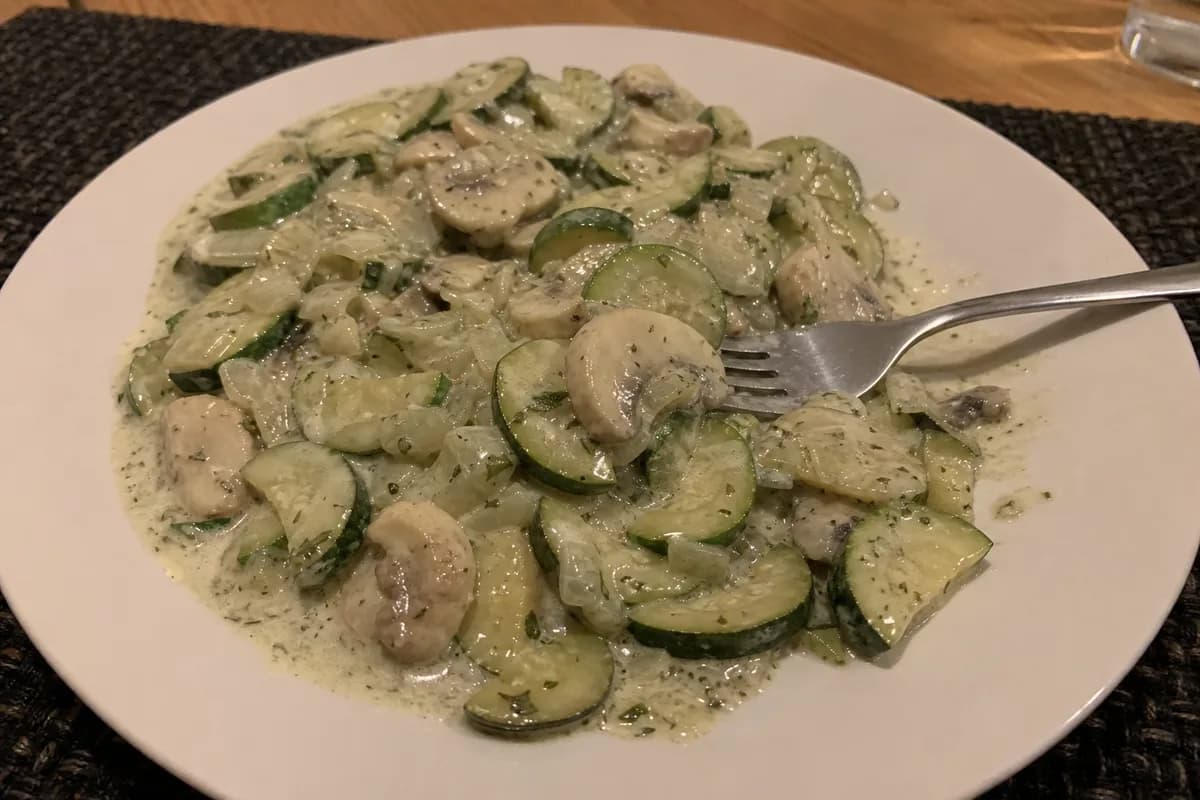
Creamy courgette and mushroom skillet
Ingredients
- 2 medium courgettes (about 450 g)
- 250 g chestnut mushrooms
- 1 shallot
- 2 garlic cloves
- 2 tbsp olive oil
- 1 tsp dried thyme
- 50 ml vegetable stock
- 100 g crème fraîche
- 1 tsp lemon zest
- 1 tbsp lemon juice
- ½ bunch parsley or dill
- 1 pinch salt
- 1 pinch pepper
- 30 g Parmesan, optional
Instructions
- 1Wipe and quarter the mushrooms. Halve the courgettes lengthways and cut into 1 cm half-moons. Finely dice the shallot and slice the garlic.
- 2Heat 1 tbsp olive oil in a large frying pan until very hot. Fry the mushrooms for 2 minutes without stirring, then toss for 2 minutes, season with salt and remove.
- 3Add the remaining oil and fry the courgettes over high heat for 4 to 5 minutes, stirring occasionally so they brown. Add the shallot, garlic and thyme and cook for a minute.
- 4Pour in the stock, return the mushrooms and stir in the crème fraîche. Simmer for 2 minutes until slightly thickened.
- 5Stir in the lemon zest, juice and chopped herbs and season with salt and pepper. Serve with shaved Parmesan if desired.
Nutrition: 310 kcal · 9 g protein · 12 g carbs · 25 g fat
View recipe →9. Sushi-style tuna rice bowl
Canned tuna is mixed with Greek yoghurt, sriracha and sesame oil; there is no raw fish or sushi rolling involved. Nori adds its characteristic flavour. Wholegrain rice can replace white rice but usually changes the cooking time. Serve promptly and cool any rice leftovers quickly before refrigerating. See also gut health tips.
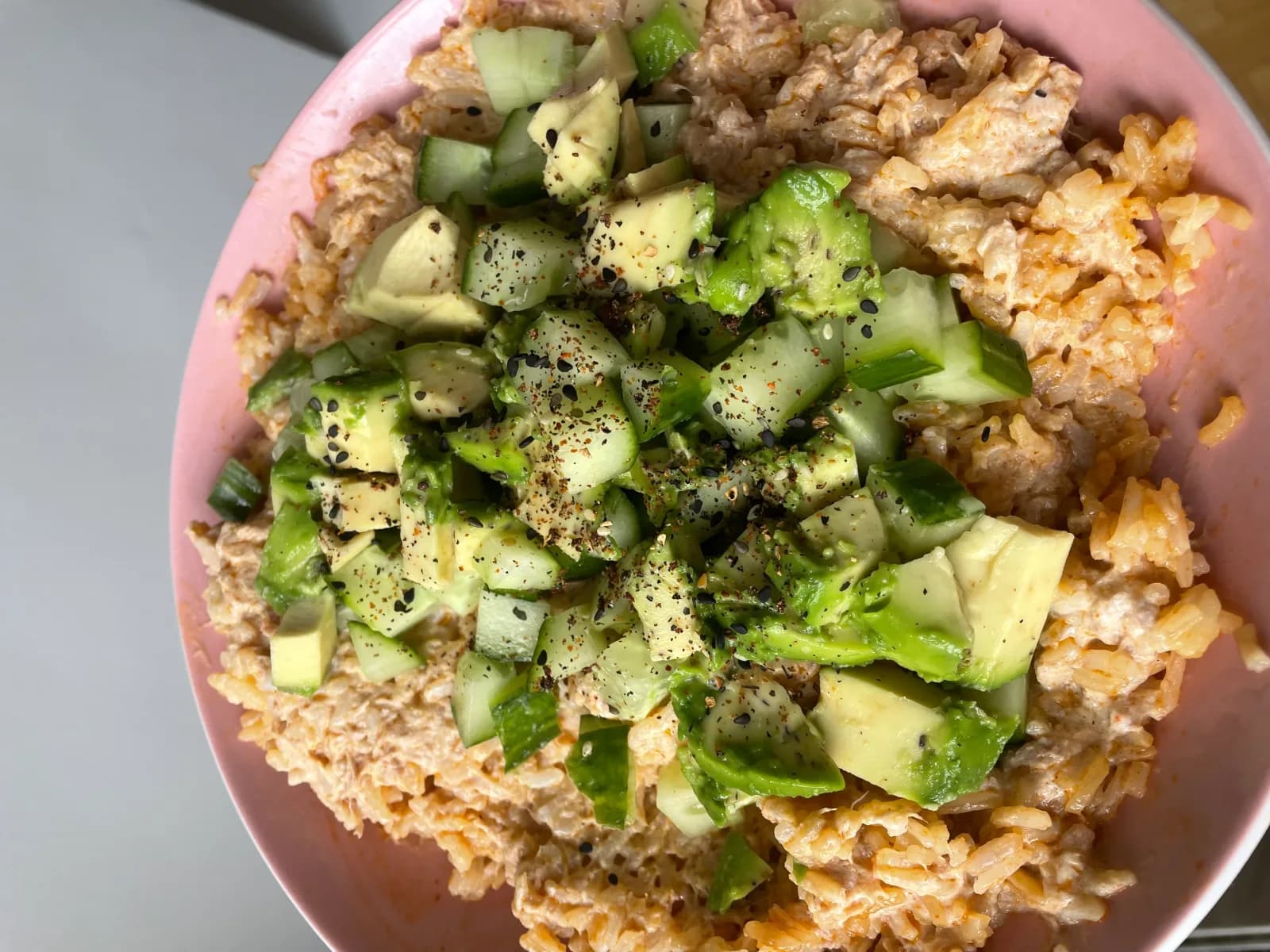
Sushi-style tuna rice bowl
Ingredients
- 100 g rice
- 150 g canned tuna
- 150 g Greek yoghurt
- 1 tbsp soy sauce
- 2 tsp sriracha
- 2 tsp sesame oil
- 1/2 lemon
- 1 pinch paprika
- 1 pinch salt
- 80 g avocado
- 100 g cucumber
- 1/2 nori sheet
Instructions
- 1Cook the rice according to the packet, preferably without salt because the tuna mixture is well seasoned.
- 2Mix the drained tuna with yoghurt, sriracha, paprika, soy sauce, juice of half the lemon and sesame oil. Add salt if needed and let stand briefly.
- 3Cut the avocado and cucumber into bite-sized pieces.
- 4Mix the cooked rice with the dressed tuna.
- 5Top the bowl with avocado, cucumber and finely cut nori.
Nutrition: 550 kcal · 35 g protein · 60 g carbs · 20 g fat
View recipe →10. Sliced chicken with avocado and mixed beans
Chicken, black beans, green beans, corn and avocado make a substantial salad for two. Cook both chicken and green beans thoroughly. Rest the chicken before slicing, then place it over the salad with herbs and lime dressing.
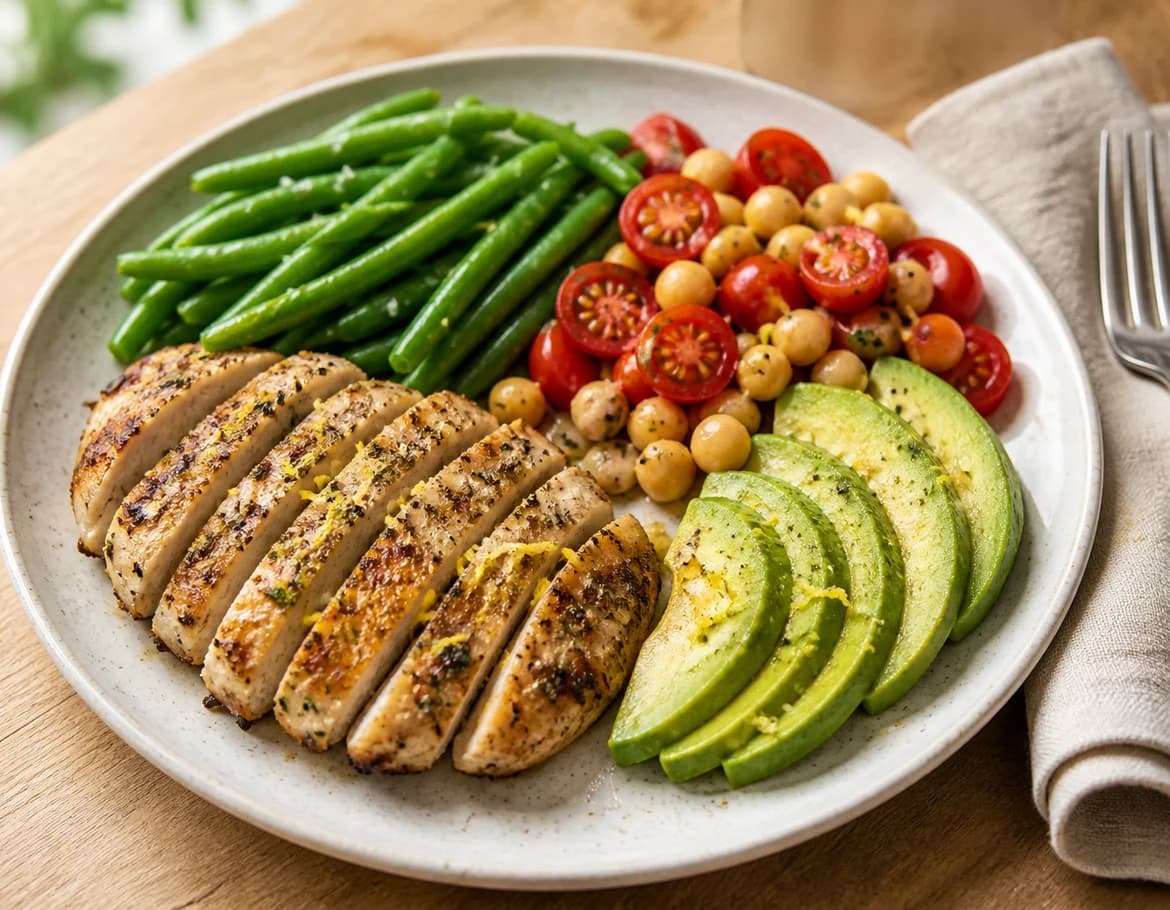
Sliced chicken with avocado and mixed beans
Ingredients
- 2 chicken breast fillets (about 150 g each)
- 2 tbsp olive oil
- 1 lime, zest and juice
- 1 tsp smoked paprika
- ½ tsp ground cumin
- 200 g fresh green beans
- 1 can black beans (240 g drained weight)
- 100 g sweetcorn, canned or from the cob
- 1 red onion
- 150 g cherry tomatoes
- 1 red chilli
- 1 avocado
- ½ bunch coriander or parsley
- 1 pinch salt
- 1 pinch pepper
Instructions
- 1Flatten the chicken to about 2 cm thick and rub with 1 tbsp olive oil, lime zest, paprika, cumin and salt. Marinate for 10 minutes.
- 2Trim the green beans and boil in salted water for 4 minutes, continuing as needed until thoroughly cooked. Cool under cold water and halve.
- 3Thinly slice the onion and marinate in lime juice and a pinch of salt for 5 minutes. Quarter the tomatoes, finely chop the chilli, dice the avocado and chop the herbs.
- 4Mix both types of beans, corn, tomatoes, chilli and onion with its lime juice and the remaining oil. Gently fold in avocado and season.
- 5Heat a frying pan well and cook the chicken for 4 to 5 minutes on each side, until cooked through. Rest on a board for 5 minutes and slice diagonally.
- 6Arrange the chicken over the bean salad and scatter with herbs.
Nutrition: 560 kcal · 45 g protein · 38 g carbs · 25 g fat
View recipe →Making the recipes fit your routine
Choose two or three dishes rather than working through all ten. Five recipes are listed for one serving; kale salad, green goddess salad, pistou, courgette skillet and chicken salad each make two. Use the portion controls to plan quantities, and keep chilled ingredients cold in a lunchbox.
A little sauerkraut or kimchi can be an optional side if you like it. You do not need to add a fermented product to every meal. Nutrition values are source estimates and change with brands, portions and substitutions.
Frequently asked questions
Do I need fermented food every day?
No. There is no established daily dose for «hormone balance». Choose foods you enjoy as part of a varied diet; a yoghurt or fermented vegetable can be an option, not a requirement.
What if kimchi or sauerkraut does not agree with me?
You can leave it out. Yoghurt, kefir, skyr, quark, tempeh or miso may offer alternatives, but tolerance is individual and not all contain live cultures when eaten. Do not force yourself to tolerate persistent symptoms in pursuit of a cycle routine.
Can I eat these recipes while taking the pill?
Yes, subject to your usual dietary needs. Many hormonal contraceptives suppress ovulation, and bleeding patterns may not represent a natural ovulatory cycle. The meals do not require ovulation to occur; strict phase timing is unnecessary.
Why is my cycle irregular or sometimes absent?
There are several possible reasons, including pregnancy, PCOS, thyroid conditions or insufficient energy intake. An article cannot determine the cause. Repeatedly missed periods or changes that concern you should be assessed rather than managed only through food.
For more ideas, explore follicular-phase nutrition and ten luteal-phase recipes. Choose the meals that fit your day; there is no perfect cycle menu to complete.