Search for foods that increase progesterone and you will find confident lists: eat these seeds, add that fruit, and your levels go up. The reality is less exciting and more useful. Progesterone is made by your own body, mostly after ovulation, and no food delivers it or switches it on directly. What your plate can do is make sure the nutrients involved in ovulation and the second half of your cycle are not in short supply. This guide covers what that means in practice, where the research is thin, and which signs are worth taking to a doctor.
Quick answer
- Progesterone mainly comes from the corpus luteum, a temporary structure that forms in the ovary after ovulation. No ovulation, no meaningful rise in progesterone.
- No food contains usable progesterone. Vitamin B6, zinc, magnesium and vitamin C play roles in the processes around the cycle. Avoiding a shortfall makes sense; going far beyond your needs has not been shown to add anything.
- Eating enough overall, sleeping regularly and giving your stress response a break are the groundwork for regular ovulation.
- Short cycles, spotting before your period or trouble getting pregnant deserve a proper medical check rather than a supplement experiment.
Where progesterone comes from
After an egg is released, the follicle it came from turns into the corpus luteum. For roughly two weeks it produces progesterone, which prepares the uterine lining for a possible pregnancy and nudges your resting body temperature up slightly. That small shift is what you see when you track your basal body temperature.
If there is no pregnancy, the corpus luteum breaks down, progesterone drops and your period starts. So when progesterone is low in the second half of the cycle, the usual reason is that ovulation did not happen, happened late, or the corpus luteum did not last long. In many cases, "how do I increase progesterone?" is really "what does my body need to ovulate regularly?"
One more thing worth knowing: most hormonal contraceptives prevent ovulation, so your own progesterone stays low while you use them. That is how they work. It is not a deficiency that food needs to fix.
No food contains progesterone
Progesterone is a steroid hormone your body builds from cholesterol. Some plants contain compounds with a similar backbone, the best known being diosgenin from wild yam. Labs can turn diosgenin into progesterone, but the human body cannot. That is why "natural progesterone" yam creams do not do what their label suggests.
What food can provide is the raw material and the helpers: enough energy and fat overall, plus vitamins and minerals involved in egg maturation, ovulation and metabolism. Four of them come up again and again in the progesterone conversation.
Nutrients linked to progesterone
| Nutrient | What it does | Where to find it |
|---|---|---|
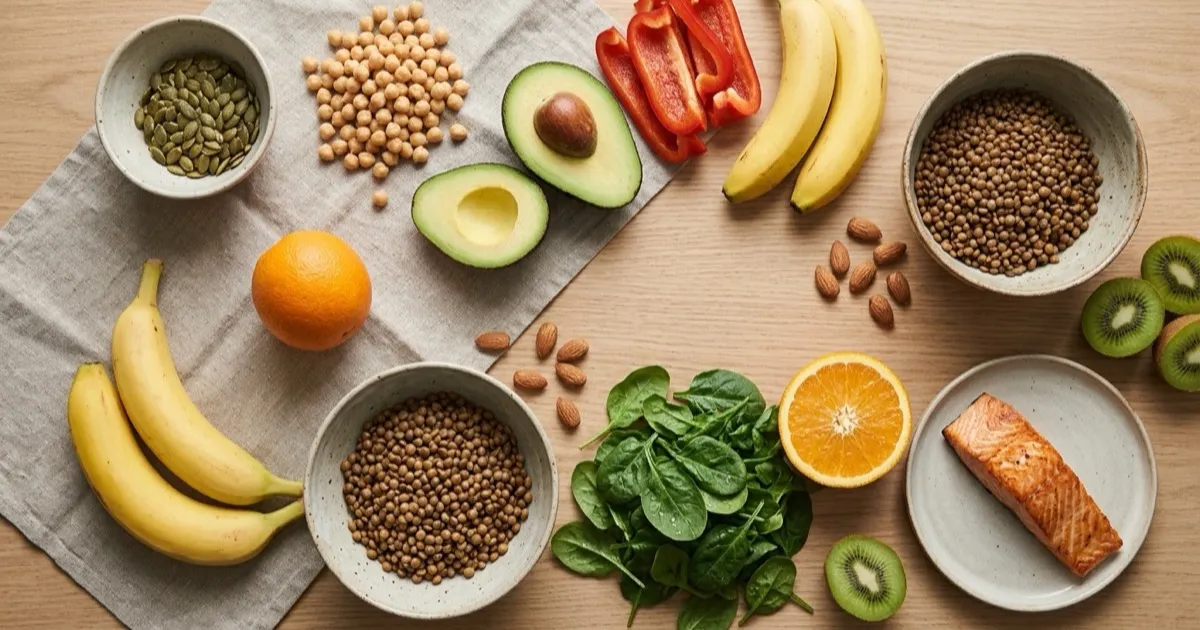
| Vitamin B6 | Helps the body use protein and make chemical messengers in the nervous system. Studied in PMS. | Chickpeas, oats, chicken, turkey, salmon, bananas, potatoes, peanuts |
| Zinc | Needed for cell division, egg maturation and many enzymes. Absorbed less well from plant foods. | Pumpkin seeds, oats, lentils, beef, shellfish, cheese, eggs |
| Magnesium | Involved in muscle and nerve function and energy metabolism. Studied in PMS and period pain. | Pumpkin seeds, almonds, wholegrain bread, beans, spinach, dark chocolate |
| Vitamin C | Antioxidant, studied in connection with the corpus luteum. Improves iron absorption from plant foods. | Peppers, citrus fruit, kiwi, broccoli, strawberries, blackcurrants |
Vitamin B6
B6 is the nutrient most often named in progesterone articles, and the evidence behind that is weaker than the confidence suggests. A systematic review in the BMJ pooled nine trials with 940 women and found that B6 was more likely than placebo to ease premenstrual symptoms. The authors also stressed that most of those trials were of low quality. And they measured symptoms, not hormone levels, so the review says nothing about whether B6 raises progesterone.
According to the NHS, women aged 19 to 64 need about 1.2 mg a day, which a varied diet usually covers. The same page warns that taking 200 mg or more a day for long periods can cause nerve damage, and that the safety of doses between 10 mg and 200 mg is unclear. If you are thinking about a B6 supplement, talk it through with a doctor or pharmacist first.
Zinc
Zinc is involved in egg maturation, and a genuine deficiency can disrupt the cycle. There is no good evidence that extra zinc raises progesterone in someone who already gets enough. The NHS puts the daily need for women at about 7 mg. Phytate in wholegrains and pulses binds zinc and reduces how much you absorb. Soaking, sprouting and sourdough fermentation break some of it down, which matters most if you eat little or no meat.
Magnesium
Magnesium research in this area is mostly about PMS and cramps rather than progesterone itself. There are signs that needs shift a little in the second half of the cycle. For daily amounts, food sources and supplement forms, see our guide to magnesium and the cycle.
Vitamin C
Vitamin C also comes up in research on the corpus luteum, which is where the progesterone link comes from. An older study in Fertility and Sterility (Henmi et al., 2003) looked at vitamin C supplements and progesterone levels in women with a luteal phase defect. That is one study, in a specific group, using supplements. It does not mean that an extra orange will change your hormone levels. Most people meet their needs easily with fruit and vegetables.
The luteal phase connection
The luteal phase runs from ovulation to your next period, and it is progesterone's phase. Many people notice it through a bigger appetite, slightly higher temperature, lighter sleep or cravings in the last few days. Energy needs rise a little, so regular meals with protein, slow-release carbohydrates and vegetables tend to work better than cutting back.
For a practical plan, including what to eat, portion ideas and common pitfalls, read Luteal Phase Foods: What to Eat and What to Adjust. If you want ready-made meals, try our 10 luteal phase recipes.
Habits that matter: energy, stress and sleep
Because progesterone depends on ovulation, anything that disrupts ovulation affects progesterone too. None of the following is a guarantee, but together they form the foundation.
Eat enough. Long stretches of eating too little, very high training loads or rapid weight loss tell your body that resources are scarce. One possible result is late or missed ovulation. Regular, filling meals with enough fat do more here than any single "progesterone food". Conditions such as PCOS can also interfere with ovulation; our PCOS diet guide looks at what food can and cannot do there.
Give stress an off switch. The systems that handle stress and the ones that run your cycle talk to each other, and ongoing pressure can push ovulation back. Our guide on how to lower cortisol has everyday ideas that do not involve supplements.
Protect your sleep. A steady sleep schedule keeps your internal clock stable, and that clock is linked to hormone signalling. Consistent bed and wake times, a dark room and less screen light in the evening are simple places to start. Sleeping worse in the days before your period is common and not, on its own, a sign that something is wrong.
What you can skip
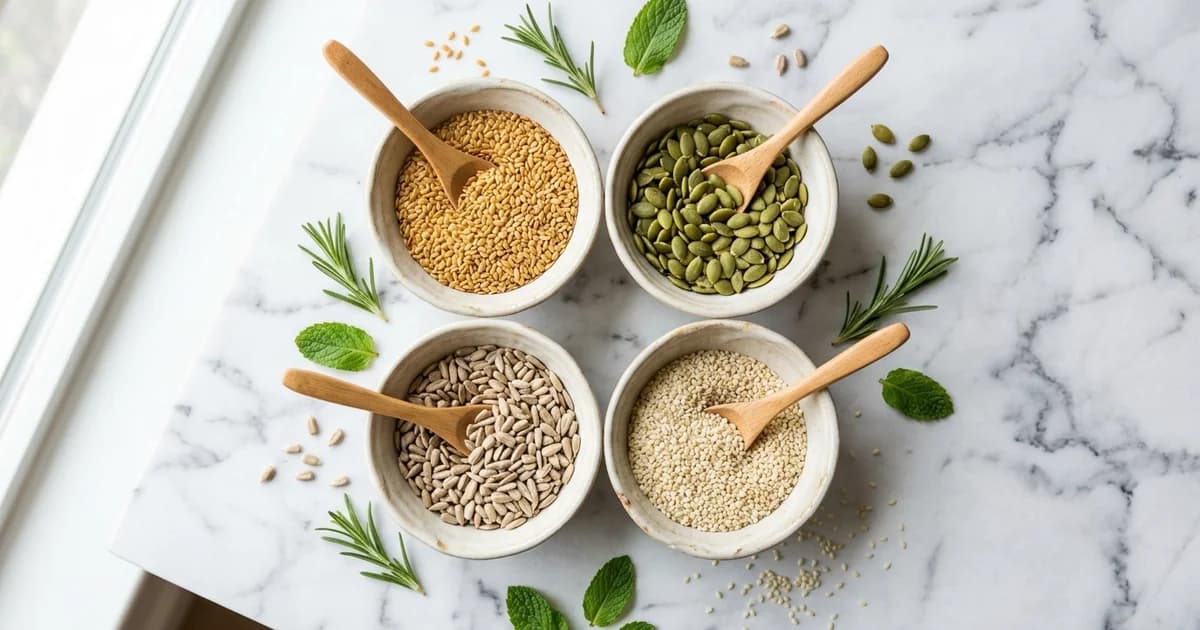
Wild yam creams and capsules sold as "natural progesterone" rely on a conversion your body cannot make. Vitex (chasteberry) is widely marketed for the cycle, but it may interact with medicines and hormonal contraception, so check with a doctor before taking it. Seed cycling is popular, but there is little research behind it; the seeds are nutritious, and that is about as far as the evidence goes.
Progesterone itself, as a cream, tablet or pessary, is a medicine. Use it only under medical supervision, especially if you are trying to conceive or are pregnant.
When to see a doctor
Food and habits are a good base, but they are not a diagnosis. Book an appointment with your GP or gynaecologist if:
- your cycles are regularly shorter than 21 days or longer than 35 days, or your period stops for several months.
- you have spotting in the days before your period for several cycles in a row.
- your temperature chart shows no clear rise, or the higher phase lasts only a few days.
- you have been trying to get pregnant for a year, or for six months if you are 35 or older.
- you have had a miscarriage, or you bleed during pregnancy.
Progesterone can be measured with a blood test, but the result only makes sense when the timing is right: roughly seven days before your next expected period. A single value from a random cycle day tells you very little, and home saliva tests are not a reliable basis for a diagnosis.
Frequently Asked Questions
What foods increase progesterone?
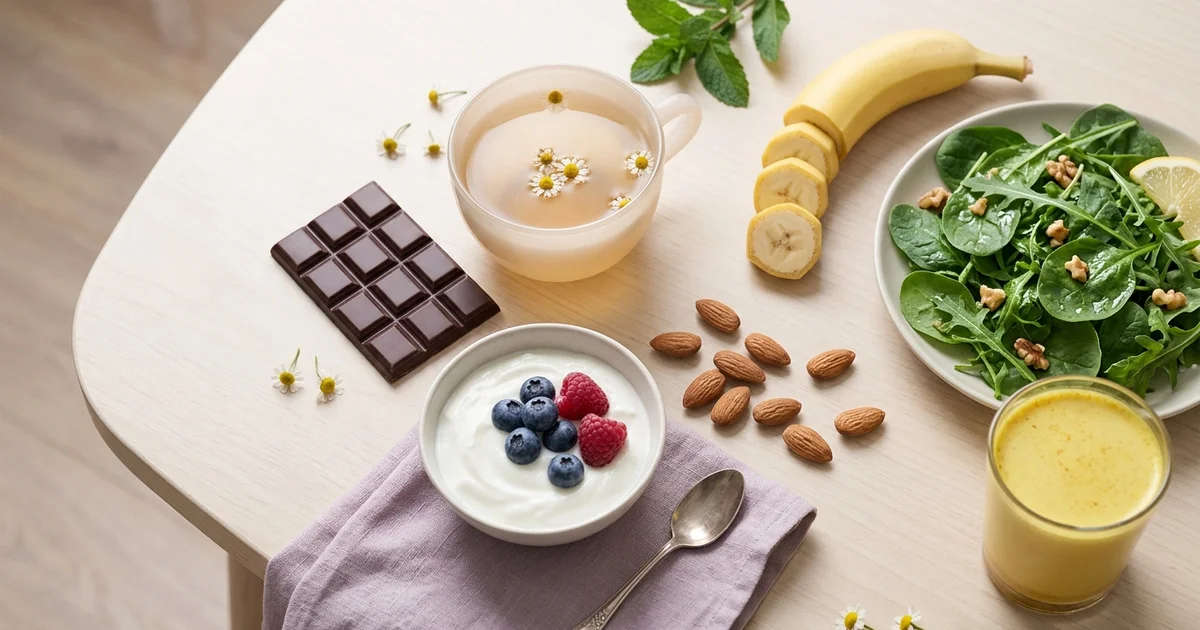
No food raises progesterone directly or contains it in a form your body can use. What helps is a varied diet with enough energy that supplies vitamin B6, zinc, magnesium and vitamin C, for example pulses, pumpkin seeds, oats, vegetables, fruit, fish and eggs.
How can I increase progesterone naturally?
Your body makes progesterone after ovulation, so natural approaches focus on supporting regular ovulation: eating enough, sleeping well, managing stress and avoiding extreme diets or training loads. Whether that changes anything for you depends on the cause. If there is a medical reason behind low progesterone, these steps are often not enough on their own.
What are signs of low progesterone?
Possible signs include short cycles, spotting before your period, a short rise on your temperature chart or difficulty getting pregnant. All of these have many possible causes, though. The only way to know is a medical assessment with a blood test taken at the right point in your cycle.
Does vitamin B6 increase progesterone?
There is no solid evidence that vitamin B6 raises progesterone levels. It has mainly been studied for premenstrual symptoms, and the quality of those studies is mixed. Food covers most people's needs. High-dose supplements can cause nerve damage over time, so only take them after talking to a doctor.
Does wild yam increase progesterone?
Based on current knowledge, no. Wild yam contains diosgenin, which can be turned into progesterone in a laboratory, but the human body cannot make that conversion. Wild yam creams and capsules are not a substitute for a medical check or prescribed treatment.
Conclusion
You cannot eat your way to higher progesterone. It depends on ovulation, and ovulation depends mostly on enough energy, a manageable level of stress, decent sleep and a diet that does not run short on nutrients such as vitamin B6, zinc, magnesium and vitamin C. Pulses, pumpkin seeds, oats and colourful vegetables cover a lot of that ground. If your cycle still shows clear signs of low progesterone, that is a good reason to see a doctor rather than add another supplement.
Keep reading:
- Luteal Phase Foods: What to Eat and What to Adjust
- Ten foods to vary, without hormone-balancing promises
- Magnesium and the cycle
This article does not replace medical advice. If you have cycle problems or are trying to conceive, please talk to your doctor.